 Julia Davidson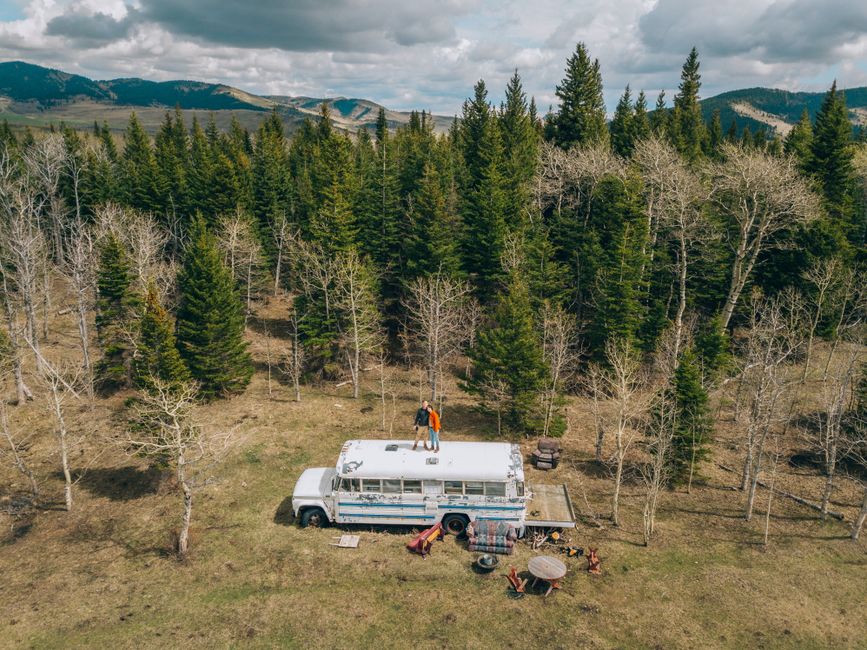
Something shifted this spring, and if you’ve been watching campground booking patterns the way I have, you felt it before anyone put numbers to it. Campspot just put numbers to it. Their “Dust-Off Summer” trend report, released May 19, 2026, surveyed 1,453 campers and turned up data that frankly stopped me mid-scroll. Seventy-nine percent of respondents said they’re actively reducing air travel. Sixty percent are avoiding flights altogether when they can. That’s not a trend. That’s a rerouting.
For full-time RVers, this is our moment. Not in a smug way. In a “the infrastructure is finally catching up to the demand” way.
The Flight Fatigue Is Real and It’s Not Going Away
I’ll be honest: I’ve been watching the flight-avoidance conversation build for a couple of years, but I expected it to stay at the level of vague frustration. What surprised me was how decisively people are acting on it. Campspot’s report found that 86% of respondents want to explore more of the United States via road trips specifically in 2026, and 80% said they’ve taken an RV or camping trip because it felt like the “smartest vacation option” available. Not just cheaper. Smarter. That framing matters.
The airport experience has eroded in ways that are hard to quantify but easy to feel: the unpredictability, the fees that materialize at every checkpoint, the sense that you’re not a traveler anymore but a unit being processed. When people say they’re choosing road trips because it’s “smart,” they’re not just doing math. They’re reclaiming something. RVers figured this out years ago. Now the broader American vacation-taking public is catching up fast.
The Numbers That Actually Move the Needle
| Accommodation Type | Nightly Rate | Weekly Cost | Key Difference |
|---|---|---|---|
| RV Campground Site | $66.86 | $468.02 | Full hookups, your own kitchen/bathroom/bed |
| Glamping Accommodation | $186.06 | $1,302.42 | Canvas wall, curated fire pit, fixed location |
| Difference | 2.78x higher | 2.78x higher | RV travels with you; glamping stays put |
Let’s talk cost, because this is where the report gets genuinely interesting for anyone trying to justify their rig payment or convince a skeptical spouse that the lifestyle pencils out.
Campspot’s booking data puts the average nightly RV site rate for summer 2026 at $66.86. The average nightly rate for lodging-style glamping accommodations on the same platform is $186.06. That’s nearly three times the cost for a canvas wall and a curated fire pit versus a full hookup pad where you’ve got your own kitchen, bathroom, and bed. I’ve stayed in glamping setups. Some of them are genuinely lovely. But the math doesn’t lie, and neither does the fact that your RV travels with you rather than waiting at a fixed destination.
For families especially, this stacks up fast. A week at $66.86 a night is $468. A week at $186.06 is $1,302. Add airfare, rental cars, and hotel incidentals and you’re looking at a cost structure that makes the RV lifestyle look less like an eccentricity and more like a reasonable financial decision. Campspot’s full report lays out the booking data clearly if you want to dig into the methodology yourself.
The Radius Run Is Reshaping How People Plan
One of the more fascinating findings in the report is what Campspot calls “The Radius Run.” Sixty-nine percent of camping trips now happen within a six-hour drive of home, and one in three campers are keeping getaways under four hours. This is not what the RV lifestyle looked like when I started eight years ago. The fantasy was always the cross-country odyssey, the big loop through national parks, the months-long migration. And that still exists. But it’s not the dominant pattern anymore.
What this tells me is that people are treating their rigs differently than the previous generation did. Instead of saving up for one massive trip per year, they’re doing shorter, more frequent runs close to home. There’s a lot to like about that model, honestly. Less wear on the drivetrain, lower fuel costs, easier to maintain your home base if you’re not fully full-time, and more flexibility to extend or cut a trip short when something breaks (and something always breaks).
The 77% of respondents who plan to extend their camping season into September to dodge peak crowds are also onto something I’ve been preaching for years. September is objectively better than July at most campgrounds. The crowds thin, the temperatures drop to something human, and the sites you couldn’t get in August suddenly have availability. If you’re still scheduling every trip around school-year rhythms, it’s worth revisiting that assumption.
The Infrastructure Is Expanding to Match the Moment
Here’s the piece of the 2026 picture that I think is underreported. On May 11, 2026, Gulf State Park in Gulf Shores, Alabama opened what is now the largest state park-operated RV campground in the country, according to Outdoor Alabama. Six hundred and seven sites built across what used to be a golf course. A state park doing that is significant. State parks operate on public funding and long planning cycles. They don’t build 607 RV sites because they think the surge is temporary.
This is the kind of supply-side signal that gets easy to miss when you’re focused on gas prices and campground reservation windows. The people who manage public land are looking at the same demand curves that Campspot is. When Alabama converts a golf course into the nation’s largest state park RV resort, it’s a bet that this isn’t a post-pandemic blip. It’s a structural shift in how Americans vacation.
I’ll be watching to see whether other states follow. The campground infrastructure in parts of the country has been genuinely strained the last few summers. If Gulf State Park is the first of several major expansions, that’s good news for everyone trying to find a decent site in July without booking four months out.
What This Means If You’re Already Living It
If you’re full-time or even half-time in an RV right now, the Campspot data validates something you’ve probably been feeling from inside the lifestyle: the roads are more crowded, the campgrounds are busier, and the culture around RVing has shifted in ways that are sometimes annoying and sometimes genuinely exciting. More demand creates friction. It also creates investment. Better facilities, more competition among campgrounds, and eventually more supply.
The $66.86 average nightly rate is still a reasonable number, though I’d note that “average” does a lot of work there. I’ve paid $28 for a no-frills state park site and $110 for a full-hookup resort spot with a pool and a dog park. Your actual costs will depend entirely on where you go and how far in advance you plan.
What the “Dust-Off Summer” moment really represents, I think, is a convergence. Cost fatigue with travel, dissatisfaction with air-travel logistics, and a genuine desire to see the country on its own terms rather than from 35,000 feet. RVers have been living that convergence as a lifestyle choice for years. This summer, a record share of Americans are arriving at the same conclusion from a completely different direction. Welcome to the party. The sites fill up fast, but the roads are still open.
Sources
- Campspot 2026 Dust-Off Summer Trend Report (PRWeb) (May 19, 2026)
- Campspot Dust-Off Summer Landing Page (May 2026)
- RVBusiness: Campspot Summer Travelers Prefer Drive-To Getaways (May 20, 2026)
- Outdoor Alabama: New RV Resort Opens at Gulf State Park (May 11, 2026)
- Campspot Ready Set Summer Sale Launch (PRWeb) (June 15, 2026)
Photo: Josh Hild via Pexels