 Tony Reeves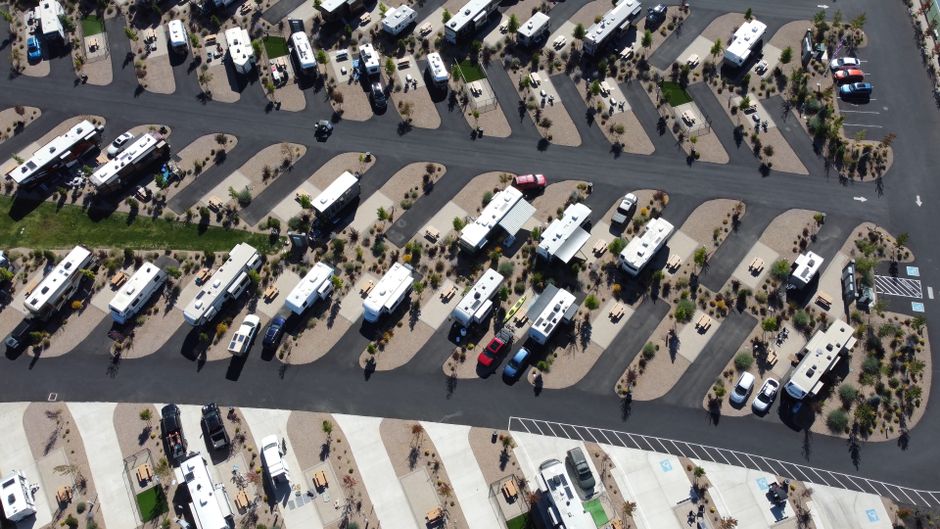
Most people assume the best time to buy an RV is spring, when dealerships are buzzing and the whole industry feels alive. That logic made sense once. Right now, in the summer of 2026, it’s exactly backwards. The conditions that create real leverage for a buyer, not just marginal savings but thousands of dollars of negotiating room, have quietly converged in a way that hasn’t happened since before the pandemic scrambled everything.
Here’s what’s actually going on: RV production just hit a historic floor, dealers are sitting on aging 2026 inventory while 2027 units start arriving, and gas prices dropped nearly 50 cents a gallon in a single month. Separately, any one of those things is mildly interesting. Together, they’re the kind of market moment that people look back on and either say “I bought then” or “I wish I had.”
The Production Numbers Are Genuinely Alarming
I’ll be honest, when I first saw the RVIA data published June 25, 2026, I had to read it twice. May 2026 wholesale shipments came in at just 22,900 units. That’s the lowest single production month since before 2016. It’s lower than any month during 2020, the year COVID shut factories down entirely. The RV industry, right now, is producing fewer RVs than it did during a pandemic.
Year-to-date shipments through May are down 14.4% versus 2025, and the RVIA has already cut its full-year forecast to somewhere between 300,000 and 328,100 units, down from 342,200 units produced in 2025. That’s not a minor correction. Manufacturers are feeling it operationally too. Alliance RV cut most of its assembly lines from five days to four in response to weak spring sales. Consumer registrations plunged nearly 22% year-over-year in March 2026.
What this means for a buyer: the people building and selling RVs are under real financial pressure. That pressure flows downhill to dealers, and dealers pass it to you in the form of discounts.
125,000 Units and Dropping Fast
New RV listings on RVTrader.com stood at 125,235 units as of July 1, 2026, down 6,149 units in a single month. That’s a 4.7% drop in available new inventory in 30 days, and it’s happening for a specific reason. Dealers are actively pushing out 2026 model-year stock to make room for 2027 inventory arriving earlier than expected. As RV Miles reported in their June 2026 industry breakdown, the combination of overbuilt 2024-2025 inventories and softer-than-expected 2026 demand has left a lot of dealers in a cash-flow squeeze they need to resolve before fall.
A leftover 2026 model sitting on a lot costs a dealer money every month in floor plan financing. Every week that passes without a sale is a week of carrying cost. That’s not abstract pressure. It’s a very concrete motivation to deal, and right now there are still 125,000 of those units out there.
The Gas Price Drop Changes the Math on Ownership
Spring 2026 was rough for RV travel demand. High fuel prices through May kept a lot of people parked, literally, and contributed directly to those weak registration numbers. Forbes noted in June that high fuel prices had become a meaningful suppressor of RV consumer demand, not just travel frequency but purchase decisions.
That changed fast. The national average gas price dropped to $3.847 per gallon by July 1, 2026, a decline of 47.5 cents in roughly a month. For a Class A motorhome getting 8 miles per gallon and running 15,000 miles a year, that’s nearly $900 in annual fuel savings compared to spring prices. For a fifth-wheel owner towing with a diesel pickup, the numbers are different but the relief is real.
What surprised me was how quickly this shift could flip the psychology of the buying decision. Fuel cost is one of the biggest mental barriers for first-time buyers. When it drops sharply, right as dealers are already discounting, the timing stacks in the buyer’s favor.
The Financing Reality (Don’t Let Anyone Gloss Over This)
The one piece of this picture that isn’t buyer-friendly is loan rates. The average RV loan rate right now sits at 7.53% according to LendingTree data cited by Bish’s RV in their June 2026 industry update. That’s not catastrophic, but it’s not 2021 either. On a $75,000 RV financed over 15 years, 7.53% means you’re paying significantly more in total interest than buyers did three years ago.
Here’s how the current financing environment compares to what’s offsetting it:
| Factor | Current Condition | Impact on Buyer |
|---|---|---|
| Average RV loan rate | 7.53% (LendingTree) | Higher monthly payments vs. 2021-2022 |
| National avg gas price | $3.847/gal (July 1, 2026) | Down 47.5 cents from spring high |
| New RV inventory (RVTrader) | 125,235 units, falling fast | Short window for selection + leverage |
| RVIA full-year forecast | 300,000–328,100 units | Lowest production cycle in a decade |
| May 2026 wholesale shipments | 22,900 units | Lowest single month since pre-2016 |
The rate environment is a real cost. But a dealer discounting a $75,000 rig by $8,000 to $12,000 to move a 2026 model is partially neutralizing that financing burden up front. Negotiate the price hard first, then deal with the rate separately. Credit unions often beat dealer financing by a full point or more.
What This Window Actually Looks Like on a Lot
I’ve bought two RVs. Both times I waited too long and gave up more leverage than I should have. The mistake most buyers make is assuming the window stays open. It doesn’t. Once 2027 inventory fills the lots, dealers have fresh product with full margins and no carrying cost urgency. The discounting pressure evaporates.
Right now, late July through September 2026 is likely the peak of that pressure. Inventory is falling (down almost 5% in a single month), 2027 models are inbound, and dealers know what their floor plan interest is costing them. That’s a specific and time-limited combination.
This isn’t a moment to rush into a bad unit or ignore your checklist. A motivated dealer is not the same as a desperate one, and you still need to inspect the slides, test the roof seams, and look under every cabinet. But if you’ve been waiting for the right conditions to make a serious offer, the research here is clear: this summer is about as favorable as it’s been in years. The window is real, and it’s already closing.
Sources
- RV News – RV Industry in Peril? – July 2026 (published July 2, 2026)
- RV Sales Hurting As High Fuel Prices Cool Demand – Forbes (published June 17, 2026)
- RV Industry Sales Decline in 2026 – RV Miles (published June 2026)
- RV Industry Update 2026: Used RV Trends, Interest Rates & What Buyers Should Know – Bish’s RV (published June 2026)
Photo: Viktoria B. via Pexels