 Greg Hoffman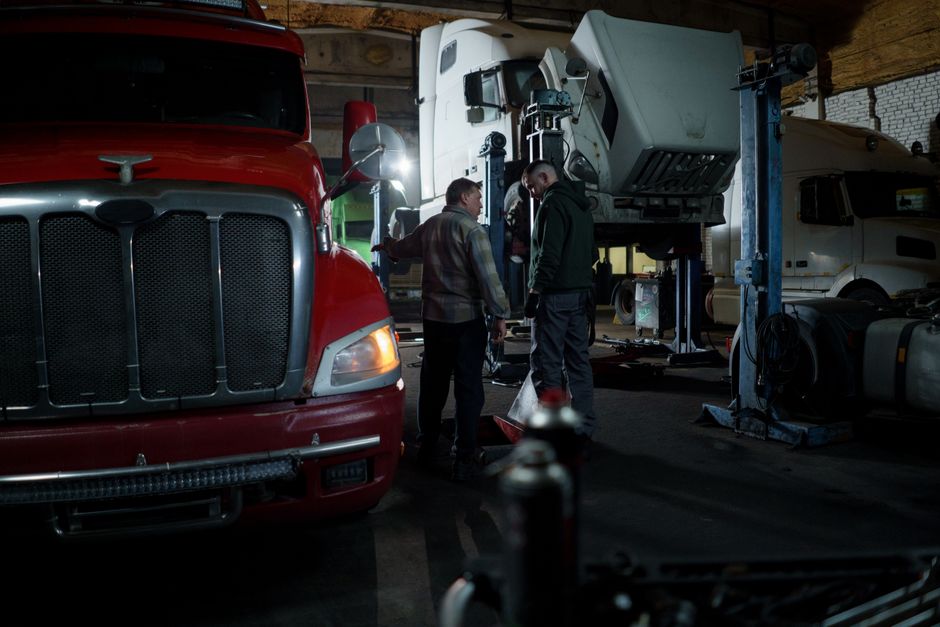
Most diesel motorhome owners have a ghost-fault story. Mine happened outside Amarillo in the summer of 2022, a Cummins ISB in my Tiffin throwing a DEF quality fault at mile marker 62 on I-40, the dash lighting up like a Christmas tree, the engine derating to a crawl before I could even get safely to the shoulder. The DEF fluid was fine. I’d just filled it. The sensor was lying, and I still paid $340 for a tow and two nights at a Holiday Inn while a dealer reset a code that should never have triggered in the first place. That story, it turns out, has been the diesel RV owner story for over a decade. On March 27, 2026, the EPA took a serious swing at ending it.
What the EPA Actually Changed
EPA Administrator Lee Zeldin announced guidance on March 27 that removes the Urea Quality Sensor requirement from all diesel equipment. For years, diesel engines have been required to carry a dedicated sensor that tests the quality of the DEF fluid itself, checking urea concentration and purity. Those sensors are notoriously finicky. They corrode, they miscalibrate, they throw false faults, and when they do, the engine management system doesn’t know the difference between a real emissions problem and a bad sensor reading. It just does what it was designed to do: punish the driver.
The new guidance says manufacturers can use NOx sensors instead to demonstrate emissions compliance. NOx sensors measure what actually matters from a regulatory standpoint: the nitrogen oxide output coming out of the tailpipe, rather than trying to infer it from fluid quality upstream. According to the EPA’s official release, approved software updates that switch existing engines to NOx-based monitoring can be installed without triggering Clean Air Act tampering violations. That’s a critical legal clarification, because it means engine manufacturers and dealers can push updates to existing platforms without fear of running afoul of federal emissions law.
The 2025 Changes Were Already a Big Deal
| Metric | Before 2025 Rule | After 2025 Rule | Impact |
|---|---|---|---|
| Engine derate on DEF fault | Within hours | 650 miles or 10 hours grace period | Real diagnostic time |
| Maximum derate distance | N/A | Up to 4,200 miles or 2 work weeks | Approximate Miami to Seattle |
| Power reduction severity | Complete shutdown | Mild derate allowing normal operation | Remote area safety |
| Sensor monitoring method | Urea Quality Sensor (current) | NOx sensors (guidance 2026) | Direct emissions measurement |
A lot of full-timers and diesel owners missed what happened in August 2025, and that context matters here. Before that earlier guidance took effect, a DEF fault could throttle your engine to 5 mph within hours of triggering. Five miles per hour. On a 40,000-pound Class A. That wasn’t a derate, that was a shutdown with extra steps.
Under the 2025 rule, the penalty structure changed significantly. When a DEF fault trips now, the driver gets a warning light and a window of 650 miles or 10 hours before any power reduction kicks in. After that, any derate has to be mild enough to allow “normal operation” for up to 4,200 miles or two full work weeks. That’s roughly the distance from Miami to Seattle. The change bought diesel RV owners real time to diagnose problems without being stranded, which for full-timers living in remote areas isn’t just inconvenient, it’s genuinely dangerous.
The March 2026 guidance builds on that by going after the root cause instead of just softening the consequences.
What This Means for Your Diesel Rig Right Now
The guidance is just that: guidance. Not yet permanent regulation. The RV Industry Association confirmed on April 14, 2026 that the EPA plans to issue a formal proposed rule later in 2026 to codify the policy shift, but that rulemaking hasn’t happened yet. Rules can change. Political administrations change. Anyone telling you this is set in stone is getting ahead of the facts.
What’s real right now: engine manufacturers have a clear legal pathway to push software updates to existing platforms. The question is how fast they actually do it. Cummins, Paccar, and Detroit Diesel are the engines most commonly found in diesel pusher motorhomes, and as of this writing none of them have made public announcements with specific rollout timelines for consumer RV platforms. The EPA’s February 2026 data-collection order went to manufacturers representing over 80% of all DEF system products, and 11 of 14 responded within a month, which suggests the agency is moving with unusual speed on implementation. But “moving fast for a federal regulatory process” is still not fast by real-world standards.
Call your engine manufacturer’s owner support line and ask specifically whether a NOx sensor compliance update is available for your engine serial number and year. Don’t ask the dealer first. Dealers often don’t know what software updates exist until they’re pushed to the shop system. Go straight to the source.
The Broader Context Most Coverage Is Missing
What surprised me in digging into this was how long the DEF sensor problem had been documented and essentially ignored at the federal level. The sensors themselves were never the most accurate way to monitor real-world emissions. NOx sensors, which measure actual exhaust output, are more direct and have become significantly cheaper and more reliable over the past several years. The fact that the Urea Quality Sensor requirement persisted as long as it did says more about regulatory inertia than sound engineering.
The February 2026 data collection effort, where the EPA sent formal orders to diesel equipment manufacturers and got responses from 11 of 14 within weeks, reportedly gave the agency what it needed to confirm that NOx-based compliance was technically sound across a broad range of applications. That’s not a minor administrative tweak. That’s the EPA essentially saying the old approach was unnecessarily punitive and that a better technical solution had existed for years.
For the diesel RV community specifically, this matters beyond the immediate repair frustration. Ghost DEF faults have driven some owners away from diesel pushers entirely, toward gas-powered alternatives or toward the growing toad-and-fifth-wheel crowd. Whether this change actually moves the needle on diesel RV ownership depends on how quickly manufacturers get updates deployed and how clearly they communicate that to existing owners.
Keep an eye on the formal rulemaking when it drops later in 2026. That’s when the legal permanence question gets answered and when manufacturers will have the clearest obligation to act. Until then, the guidance is real, the pathway is open, and for the first time in years, the regulatory momentum is actually working in the diesel RV owner’s favor.
Sources
- Trump Administration Announces Latest Action to Address DEF System Complaints , US EPA (March 27, 2026)
- EPA’s New Guidance Removes Requirement for DEF Sensors , US EPA Official Release (March 31, 2026)
- EPA Issues New Guidance Removing Requirement for Diesel Exhaust Fluid Sensors , RVIA (April 14, 2026)
- EPA Eliminates DEF Sensor Requirement on Diesels , Camper Report (April 14, 2026)
- News & Notes: May-June 2026 , Family RVing Magazine (May 1, 2026)
Photo: cottonbro studio via Pexels