 Julia Davidson
Every year, thousands of full-time RVers establish legal residency in South Dakota without spending more than a day there. It’s completely legal. And if you’re coming from California, Oregon, or New York, you’re probably looking at saving hundreds of dollars per month. South Dakota has no state income tax, vehicle registrations under $60 a year, and possibly the easiest domicile process in the country. If you haven’t looked into this yet, you’re leaving real money on the table.
Why South Dakota Beats the Other Popular Options
| State | Income Tax | Vehicle Registration | Notes |
|---|---|---|---|
| South Dakota | None | $42-$70/year (car); under $200/year (RV) | No inheritance tax; 4% sales tax |
| Texas | None | Varies | Requires driver’s license with driving test |
| Florida | None | Varies by county | Tightening residency rules |
Most RVers debating domicile narrow it down to South Dakota, Texas, or Florida. All three have zero state income tax, which sounds like a tie. It isn’t.
Texas wants a driver’s license from you, and that means passing a driving test unless you already have one. Florida’s been tightening residency rules, and registration costs vary wildly by county. South Dakota keeps it bare-bones and cheap. You’re looking at under $60 annually for a standard car. Motorcycles can be $18.
But here’s the thing nobody leads with: South Dakota also has no inheritance tax. For someone thinking about estate planning alongside full-time travel, that’s legitimately significant. Vehicle sales tax sits at 4%, which beats most places. And you can handle the entire domicile setup in one day if you plan the trip right.
If you’re still figuring out which rig to buy alongside where to domicile, our guide on the best RV for full-time living goes deep on the purchase side.
What “Domicile” Actually Means for Full-Time RVers
People confuse residency and domicile. They’re different. Residency usually requires physical presence. Domicile is your legal home, where you say you intend to return, even if you never do.
As a full-timer, you might not have a fixed address at all. You could be in a different state every week. South Dakota doesn’t care. The law lets you pick one state as home for driver’s licenses, registration, voting, and taxes. South Dakota asks for zero days per year on the ground. That’s the real selling point.
You do need a mailing address though. Mail forwarding services exist specifically for this. America’s Mailbox in Box Elder, Dakota Post in Sioux Falls, and My Dakota Address all run these operations. They give you a real street address (not a P.O. box, which won’t fly with most government offices), forward mail on your schedule, and handle registered packages and jury duty deferrals.
Our detailed breakdown of mail forwarding for full-time RVers is worth reading before you pick a service, since differences between providers can change your DMV appointment options.
The Step-by-Step Process to Establish South Dakota Domicile
This is how it works assuming you’re starting from scratch with no South Dakota license or registration.
Step 1: Choose a mail forwarding service. Sign up before the trip. You’ll get a real street address. This is now your legal address for everything.
Step 2: Update your records. Change your address with your bank, credit cards, insurance, and federal accounts like Social Security. You want the paper trail to show South Dakota residency.
Step 3: Book a trip to South Dakota. You have to show up in person at the county DMV. Most RVers pick Minnehaha County (Sioux Falls) or Pennington County (Rapid City) because both have traveler-friendly appointments and local mail forwarding services work directly with the DMV.
Step 4: Visit the DMV and get your South Dakota driver’s license. Bring your current out-of-state license, your Social Security card or a W-2, and two proofs of your South Dakota address. Bank statements and letters from your mail forwarding company work fine. Utility bills don’t, since you don’t have utilities there. You’ll do a vision test. If your current license is valid, you probably skip the driving test.
Step 5: Register your vehicle. Same DMV visit or at the treasurer’s office. You’ll pay the 4% excise tax on any vehicle registering for the first time in South Dakota. Renewals afterward are cheap and can happen by mail or online.
Step 6: Update your voter registration. South Dakota lets you register same-day. Hit the county auditor’s office if you want to.
Step 7: Update your insurance. Call your health, auto, and RV providers with your new South Dakota address. Insurance rates often shift with your state, sometimes in your favor.
Done right, this whole thing takes a business day. Some people finish in three or four hours.
Costs and Savings: What to Actually Expect
Let’s get specific, because “save money” means nothing without numbers.
Registration fees: A standard car runs about $42 to $70 per year. An RV or motorhome based on weight usually stays well under $200 annually, even for a Class A. California charges $500 to $800 per year for a newer RV.
State income tax savings: Depends on what you earn. A remote worker making $80,000 who used to live in California could be looking at $4,000 to $6,000 annually.
Sales tax on vehicle purchase: South Dakota’s 4% excise tax beats most states. A $100,000 motorhome costs you $4,000 in tax here instead of $8,750 in an 8.75% state.
Mail forwarding costs: $200 to $400 per year. Some charge per piece, others charge flat monthly or annual rates. Check before you commit.
Total first-year cost: One trip to South Dakota (fuel and a night or two), the mail forwarding setup, and excise tax if you’re registering for the first time. After that, costs drop dramatically.
Our article on how much RV life actually costs puts all this in wider context.
Common Pitfalls and How to Avoid Them
Sources
The process is straightforward. People still mess it up.
Using a P.O. box. DMV won’t take it. You need a real street address from a mail forwarding service. Confirm with them that the format works for South Dakota DMV before signing up.
Not collecting enough address proof. You need two documents showing your South Dakota address. Bank statements, credit card statements, and mail forwarding company letters all work. Get two or three mailed to your SD address before the appointment.
Forgetting about vehicle titles. If you owe money on the RV, the lender holds the title. You’ll need to work with them to get it sent to the South Dakota DMV. Start this early.
Thinking one trip lasts forever. You’ll renew your license and registration periodically. South Dakota licenses are good for five years. Renewals can happen remotely most of the time, but Real ID updates eventually require a visit.
Skipping the insurance update. Drive an RV registered in South Dakota while your insurance is still tied to your old state address, and you could have coverage problems. Update them the day your registration changes.
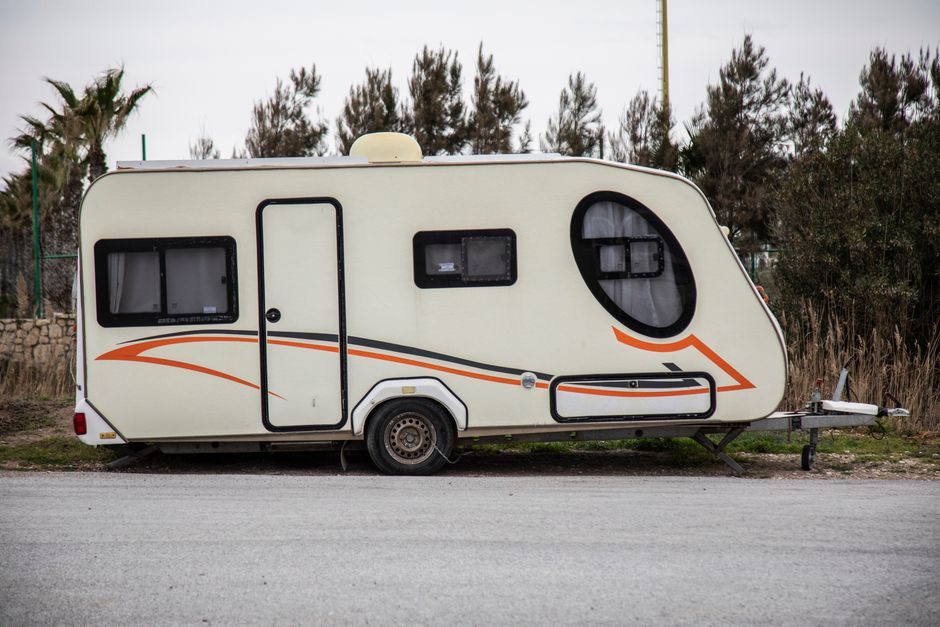
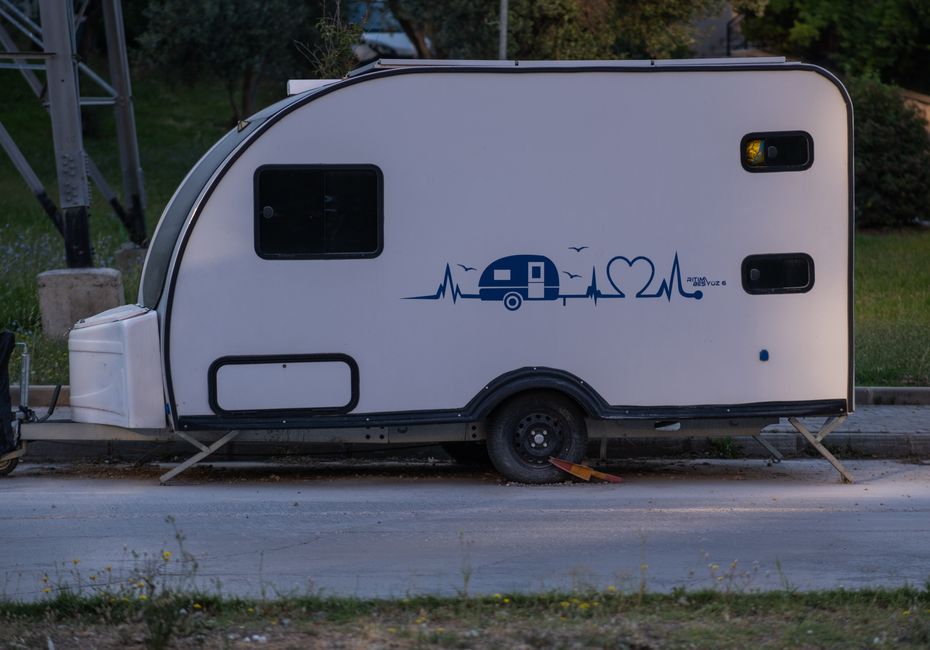
Photo: Maria Sablina via Pexels