 Tony Reeves
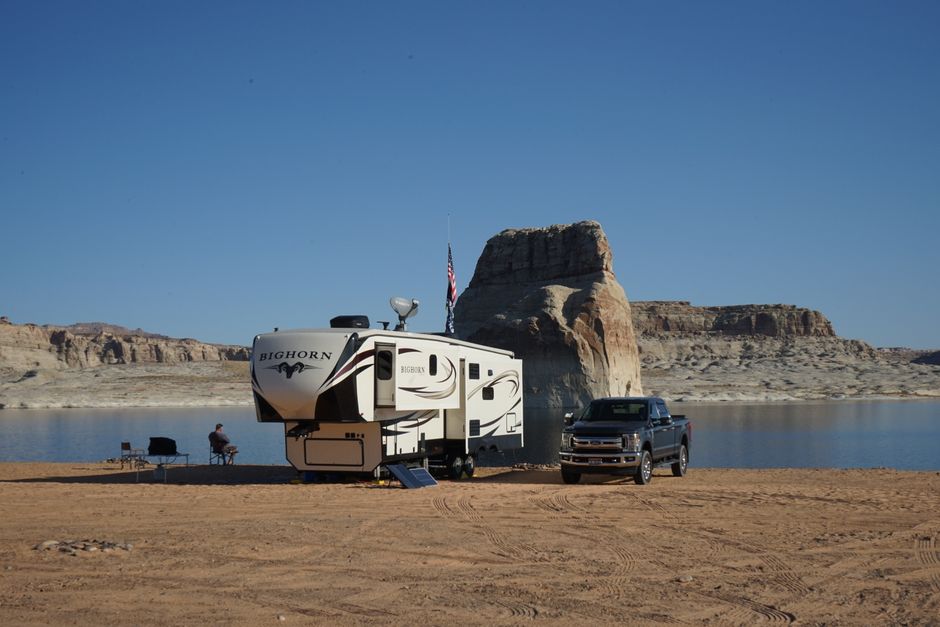
Three years ago, I watched a 36-foot fifth wheel come completely uncoupled from a pickup on I-40 outside Amarillo. The trailer swung wide, took out a guardrail, and came to rest in a ditch. Nobody was hurt, which was miraculous. The driver had been towing for years. He knew what he was doing, or thought he did. Turned out he’d skipped one pre-trip check that morning because he was running late. One check.
That moment stuck with me. I’ve been pulling trailers of various sizes for eight years now, and the thing that still gets me is how close the margin is between a routine drive and a catastrophe. Towing isn’t inherently dangerous, but it punishes complacency in ways that regular driving doesn’t.
So let me share what I’ve actually learned, including the stuff I got wrong before I knew better.
Know Your Numbers Before You Touch the Hitch
This sounds basic, but I can’t tell you how many people at campgrounds are towing rigs that exceed their truck’s capacity. Not by a huge amount. Just a little. Just enough.
Your truck has three numbers you need to know cold: GVWR (gross vehicle weight rating), GCWR (gross combined weight rating), and your tow rating. The tow rating is the one manufacturers advertise. It’s also the one most commonly misunderstood. That big number in the brochure? It’s almost always based on a base-model truck with no passengers, no cargo, no gear. The moment you load the truck, that number drops.
What most people don’t realize is that the GCWR is often the limiting factor, not the tow rating. Your truck might be rated to tow 14,000 lbs, but if the GCWR is 20,000 lbs and your loaded truck weighs 7,500 lbs, you’re already at 7,500 of your 20,000-lb ceiling before you hook anything up. Add a 13,000-lb trailer and you’re technically within tow rating but 500 lbs over GCWR. That’s an overloaded rig, and it affects braking distance, transmission heat, and tire load in ways you won’t notice until something goes wrong.
Get your rig to a CAT Scale (most truck stops have them, cost is around $13 per weighing as of 2026). Weigh it loaded the way you actually travel. I’ve done this at the Flying J in Kingman, Arizona with a buddy who was convinced he was within limits. He was 800 lbs over on his rear axle. One stop, $13, and information that probably saved his life.
Scenario: Reader realizes tow rating is 13,000 lbs and trailer’s dry weight is 11,200 lbs → Assumes he’s fine → Gets to a CAT scale and discovers loaded trailer is 13,400 lbs, rear axle of truck overloaded by 600 lbs → Redistributes cargo, adjusts weight distribution hitch, gets within limits.
The Hitch Setup Most People Rush
I rushed this for longer than I should admit. My first year towing, I was doing a visual check of the hitch ball and calling it good. What I wasn’t checking was the ball mount torque, the coupler latch fully seated, the safety chains crossed under the coupler (so they’d cradle the tongue if the coupler failed, not just drag), and the breakaway cable properly attached to the tow vehicle’s frame, not the hitch ball.
That last one is embarrassing to admit, but I’ve seen it done wrong by people who should know better, including at dealerships.
For fifth wheels, make sure the kingpin is locked and the locking jaws are fully engaged before you pull any safety pin. Tug the trailer forward manually before you drive. If it doesn’t move with you, you’re good. If there’s any play or it pops up even slightly, stop and re-seat.
Weight distribution hitches deserve their own conversation. If your trailer’s tongue weight is over roughly 10-12% of your tow vehicle’s weight, you need one. Most people with travel trailers over 6,000 lbs loaded weight should have one. Setup matters enormously: the bars need to be tensioned so the front of the tow vehicle lifts back to ride height, not just partially. I’ve seen weight distribution hitches installed but not tensioned correctly on probably a third of the rigs I’ve helped at campgrounds. It’s not doing much for you if it’s not set right.
Anti-sway bars are worth it if you’re on interstates regularly. The Equal-i-zer 4-Point Sway Control hitch (runs about $700-$900) does weight distribution and sway control in one unit and in my experience it’s one of the better investments for trailer towing in the 6,000-10,000 lb range.
Trailer Brakes: The System Everyone Assumes Is Working
| Component | Typical Cost | Key Specification |
|---|---|---|
| Proportional Brake Controller (Prodigy P3 / Tekonsha Envoy) | $150-$180 | Responds to deceleration forces; better than time-delayed units |
| Anti-Sway Bar Hitch (Equal-i-zer 4-Point) | $700-$900 | Combined weight distribution and sway control for 6,000-10,000 lb trailers |
| CAT Scale Weighing | ~$13 per session | Verifies actual loaded weight vs. GVWR/GCWR limits |
Here’s a thing I thought for years: if the trailer brakes engage when I press the brake pedal, they must be working properly. That’s wrong, and it cost me a nervous experience descending US-550 into Ouray, Colorado.
Trailer brake controllers need to be calibrated to your specific trailer’s weight. An electric brake controller set for a 5,000-lb trailer running a 9,000-lb trailer is providing maybe 60% of the braking force it should. The trailer will push. On flat ground you’ll barely notice. On a 7% grade with switchbacks, you’ll notice.
Proportional controllers (like the Prodigy P3 or the Tekonsha Envoy, both around $150-$180) are significantly better than time-delayed units for most towing situations. They respond to actual deceleration forces, not a timer. Worth the upgrade if you’re still running an older time-delayed unit.
Check your trailer’s brake magnets annually if you have drum brakes. They wear, and they don’t always fail dramatically. They just gradually provide less and less stopping power until one day you’re riding them harder than you should be. A brake magnet tester is cheap. Doing this check takes 20 minutes and is almost never on anyone’s maintenance list.
Scenario: Full-time family towing 30-foot travel trailer, brake controller was set to gain level 4 of 10 from factory → Mechanic recalibrated to 7 and adjusted proportional sensitivity → Noticed immediate improvement in stopping feel, especially on downhill grades in the Cascades.
Speed, Lanes, and the Ego Problem
I’ll be blunt: most towing accidents on the highway aren’t mechanical failures. They’re speed-related. I’ve driven 55 mph in a 75 mph zone and had trucks blast past me at 80 while pulling 40-foot fifth wheels. You can do it. Until you can’t.
At 65 mph, a 30-foot trailer that starts to sway can often be corrected. At 75 mph, you’re in genuine trouble fast. Physics doesn’t care about your timeline.
Stay right, keep it at or below 65, and accept that you will get passed. A lot. You’re pulling a house. That’s fine.
One more thing on this: avoid the left lane unless actively passing. Many states have laws requiring vehicles over a certain weight or length to stay right except to pass. As of June 2026, states including California, Washington, and Colorado have statutes that apply to towing vehicles. Know the rules in the states you’re crossing. FMCSA’s website has a reasonably updated reference on this.
Pre-Trip Walkaround That Actually Catches Problems
I do this every single morning and before every departure. Takes about eight minutes. That’s not an estimate, I’ve timed it.
Walk the perimeter of the tow vehicle and trailer. Check tires for low pressure or obvious damage (get a tire pressure monitoring system if you don’t have one, TireMinder and Lippert both make solid units for $150-$250). Check that all exterior storage doors are latched. Check your hitch connection again. Pull out the trailer’s slide-outs if you forgot to retract them (yes, this happens). Check that the lights work: brake lights, turn signals, running lights. Have someone help you or use a reflective surface.
Look under the trailer for anything dripping that shouldn’t be. Check that your sewer hose is stowed, not hanging off the back. I know that sounds absurd, but it happens.
Scenario: Skipped full walkthrough one morning running late → Drove 40 miles before realizing a storage bay door had swung open at highway speed and ejected roughly $300 worth of gear somewhere on US-89 in Arizona → Not recoverable. Full walkthrough takes less time than stopping to retrieve lost gear or file an accident report.
Sources
- FMCSA (Federal Motor Carrier Safety Administration): Regulations and guidance on towing weight limits and interstate towing laws, fmcsa.dot.gov
- National Highway Traffic Safety Administration (NHTSA): Trailer sway crash data and recommendations for brake controller calibration
- SAE International: Engineering standards for trailer hitch ratings, coupler design, and load distribution systems
- CAT Scale Company: Real-world weigh station data and guidelines for accurate loaded-weight measurement, catscale.com
- RV Industry Association (RVIA): Annual RV Owner Demographic and Usage Report (current edition), including towing safety incident trends
Photo: Quintin Gellar via Pexels