 Greg Hoffman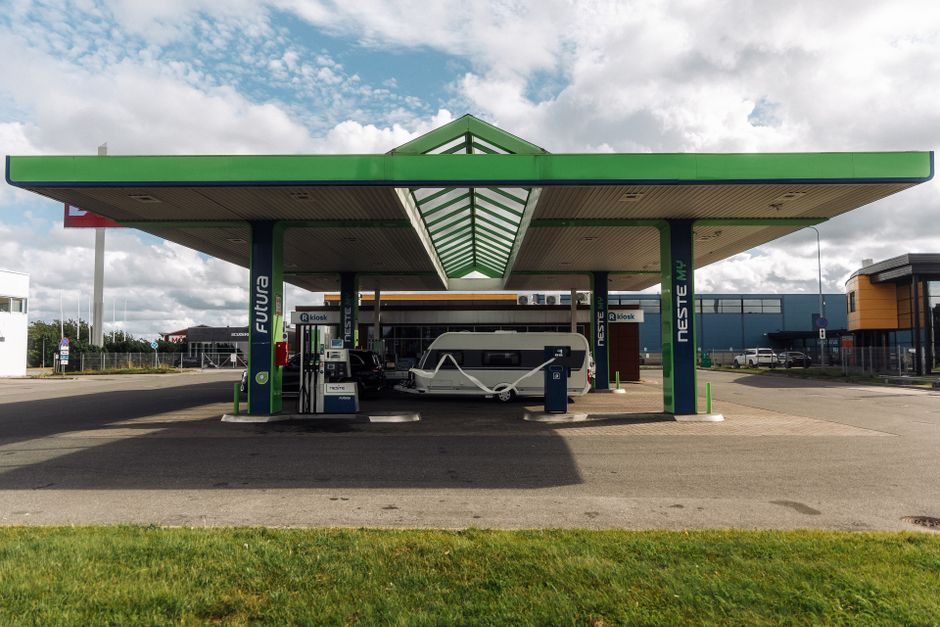
Parking lot overnight is one of those skills that sounds simple until the first time you get a knock at 2 a.m.
You might be wondering if this even applies to you, maybe you’ve got campground reservations lined up for your whole trip, or you’re still in the planning phase and parking lots feel like a last resort. Here’s what I tell people: parking lots aren’t a backup plan. They’re a fundamental part of full-time RV life. Over eight years I’ve slept in Walmart lots, Cracker Barrel back rows, casino overflow areas, truck stops, and church parking lots (with permission, always with permission). Some of those nights were genuinely pleasant. A few were miserable. The difference almost always came down to preparation and knowing the unwritten rules before you pull in.
Find the Right Spots Before You’re Desperate
The worst time to figure out where you’re parking is at 9 p.m. when you’re tired and low on fuel. I learned this the hard way outside of Amarillo in 2019, circling a frontage road for 45 minutes with a 32-foot Class A and no plan.
Here’s the approach that actually works: build your overnight options into your route before you leave in the morning. Apps like iOverlander, The Dyrt, and Campendium all show user-reported free and low-cost spots, including parking lot stays. Freecampsites.net has a specific filter for parking areas. I cross-reference at least two sources because lot policies change fast, a Walmart that allowed overnight parking in 2023 may have posted “No Overnight Parking” signs by 2026.
The phone call nobody wants to make but everyone should: call the store manager directly for big retailers. Walmart policy is technically store-by-store, managed at the local level. When you call and ask “do you allow overnight parking for RVs tonight,” the manager who says yes has effectively given you permission, and you’ll sleep better for it. Takes three minutes. Worth it every time.
Cracker Barrel has historically been the most RV-friendly chain in the country, and as of July 2026 most locations still welcome overnight guests in their back lots. They’re not advertising it loudly anymore, but it’s still largely honored. Park away from the entrance, don’t block employee parking, and go buy breakfast in the morning.
Reading a Parking Lot Before You Commit
Pull in slowly and actually look around. I mean really look.
Check for “No Overnight Parking” signs near the entrance and at the back of the lot, they’re sometimes only posted in one corner. Look for whether other big rigs or RVs are already there. That’s your green light. If you see zero trucks and the lot is otherwise empty at 7 p.m., that’s a yellow flag worth investigating.
Check the ground. Asphalt heaves, especially in areas with cold winters. A bad frost heave can tip a level site into a 4-degree slant, which is livable in a pinch but miserable for sleep and rough on your fridge (RV refrigerators need to be within about 3 degrees of level to run correctly, most people don’t know this and wonder why their food is lukewarm by morning). I keep a set of Lynx leveling blocks in a bag by the door specifically for lot situations where I don’t have time to scout.
Look at sight lines. A spot tucked behind a garden center wing with one dim light overhead sounds sketchy but is often more private and quieter than the open center of the lot with light pouring in all night. Privacy is underrated. And noise: lots near 24-hour drive-throughs are a particular kind of torture at 3 a.m.
The Etiquette That Keeps This Working for Everyone
Parking lot hospitality is a commons. Every RVer who abuses it makes it harder for the next one. This is the part I feel strongly about.
Don’t put out your awning, chairs, and welcome mat like you’re setting up camp. You’re a guest in a commercial parking lot. Keep your footprint contained to your vehicle. No outdoor cooking. No generators running past 9 p.m. in an area where people live nearby. Pull out by 8 or 9 a.m. at the latest, these are businesses, and nobody wants your 38-footer taking up six spaces during peak morning hours.
Shop at the store if it’s a retailer. Buy gas if it’s a truck stop. Buy a $14 meal if it’s Cracker Barrel. I’m not saying you’re obligated to spend money, but a small purchase turns you from a squatter into a customer, and that distinction matters when a manager is deciding whether to extend the courtesy again tomorrow.
One more thing: if you travel with a dog, pick up immediately and completely. I’ve seen “No RV Parking” signs go up within months of a cluster of RVers treating a lot like a dog park. Those signs affect every person who comes after you.
Comparing Your Options: Overnight Parking Costs and Tradeoffs
Not all free parking is created equal. Here’s a realistic breakdown of what different lot types actually cost and what you’re trading off:
| Location Type | Typical Cost | Noise Level | Safety | Amenities | Permission Needed? |
|---|---|---|---|---|---|
| Walmart (rural) | Free | Low-Medium | Good | None | Ask manager |
| Walmart (urban) | Free | High | Variable | None | Ask manager |
| Cracker Barrel | Free | Low | Good | Restaurant | Usually not |
| Casino parking | Free | Medium | Good (cameras) | Varies | Usually not |
| Truck stop (Love’s, TA) | Free–$15 | High | Good | Showers, food | No |
| Church lot (with permission) | Free | Very low | Excellent | None | Yes, always |
| Home Depot/Lowe’s | Free | Low | Variable | None | Ask manager |
| Hospital overflow | Free | Low | Good | None | Ask security |
The casino column is underrated. Many casino properties, especially in the Southwest and along I-10, actively welcome RVers because they know you’ll wander inside. Free Wi-Fi, good lighting, security cameras, and sometimes even a dump station. I’ve had genuinely comfortable nights at casino lots in Tucson, Biloxi, and up near Reno.
What Can Actually Go Wrong
Let me skip past the generic safety talk and be specific about what I’ve actually encountered.
The knock. Security guard, store employee, or occasionally a police officer asking you to move. This happens. It’s not an emergency. Be polite, say “of course,” ask if they know anywhere nearby you could go, and move without drama. I’ve had security guards who asked me to move then personally directed me to a better spot two blocks away. People are generally decent if you are.
Slide-outs in parking lots are a judgment call. I’ve extended my passenger-side slide in larger lots at 3 a.m. when I was clearly the only RV there. But I’ve also had a delivery truck show up at 5 a.m. and nearly clip it. My current rule: if I’m in a lot where trucks might move at night, slides stay in.
Carbon monoxide in parking lots adjacent to loading docks or near idling semis. If you’re parked within 50 feet of a diesel truck that idles all night (which they do, all night), crack a vent and make sure your CO detector works. Mine went off once outside a Flying J, not dramatically, but enough to wake me and send me to a different spot. A working CO and propane combo detector isn’t optional in my rig.
Worked examples from actual nights:
Solo overnight, Walmart in rural New Mexico, July 2023 → Called manager, got verbal OK, parked at far edge of lot facing highway, generator off by 9 p.m. → Slept uninterrupted, total cost $0, bought $23 of groceries in the morning.
Urban Cracker Barrel, Nashville area → Arrived at 8 p.m., back lot half full of RVs → No permission needed, used level blocks for a 2-degree slope, ate a $17 dinner → Left at 7:30 a.m. without incident.
Church lot in coastal Georgia → Spotted a Baptist church with a big overflow lot on a Wednesday evening → Knocked on the door of the adjacent parsonage, pastor said yes, offered to let me use the restroom inside → Best night’s sleep in two weeks, zero cost, left a thank-you note.
Sources
- Freecampsites.net: User-reported free camping database including parking lot stays, as of 2026.
- The Dyrt Pro: RV and camping app with user reviews and overnight parking reports.
- Walmart Corporate Policy (store-level management): Overnight RV parking is at each store manager’s discretion; no uniform national policy.
- iOverlander: Overlanding and RV community map with parking lot and free camping markers.
- RVIA (Recreation Vehicle Industry Association): Industry research on full-time RV living demographics and travel patterns.
Photo: Anton Massalov via Pexels