 Barbara Mitchell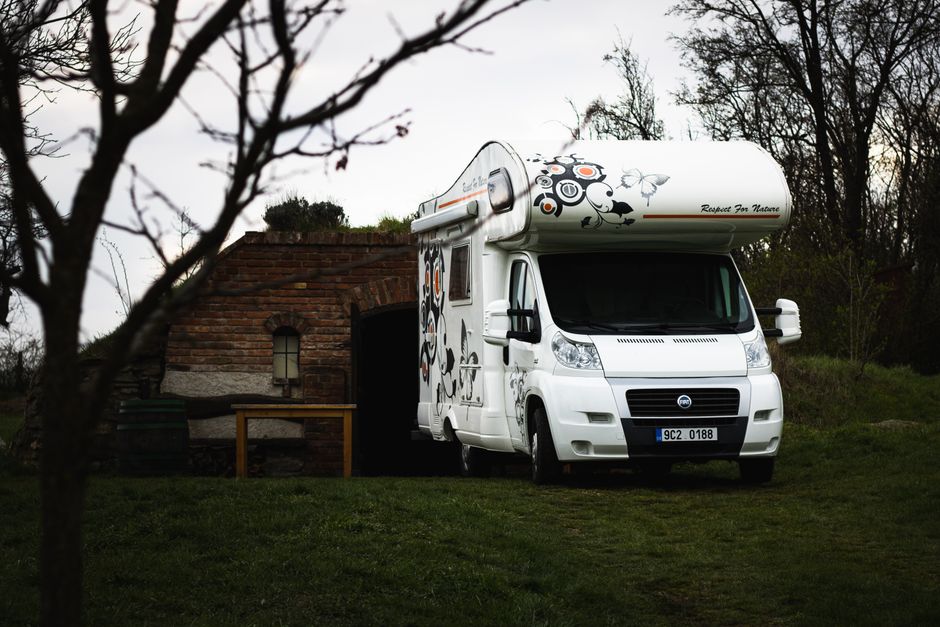
Most people who discover work camping think they’ve found a secret. Free campsite, a little part-time work, problem solved. I thought the same thing my second year on the road, and I’ll be honest: the reality was messier, more interesting, and ultimately more sustainable than I expected, but not in the ways the cheerful blog posts suggested.
Here’s what most of those posts leave out. Work camping isn’t a single thing. The term covers everything from a genuinely sweet deal at a Montana state park where you pull four-hour gate shifts three days a week, to an arrangement at a private Texas RV resort where you’re expected to be on call six days a week for a $200/month “site discount” that works out to about $4.50 an hour. The gap between those two experiences is enormous, and knowing how to tell them apart before you sign on is the whole game.
What the Work Actually Looks Like
Most RV park work camping positions fall into a few categories: camp host roles (greeting guests, light site maintenance, enforcing quiet hours), maintenance and groundskeeping, front desk and reservation work, and increasingly, social media or activities coordination at larger resorts. Some parks want a couple, expecting both people to work. Some are fine with a solo workamper. The hours vary wildly, from 15 hours a week to full 40-hour schedules.
The camp host model, which is probably the most common, usually runs something like this: you get a full hookup site in exchange for roughly 20-24 hours of work per week. That’s often structured as four to six hours a day, three or four days a week. You’re doing campground walks, cleaning bathrooms, answering questions from guests, and keeping a general eye on things. At a well-run park, that’s genuinely pleasant work. At a poorly run one, “camp host” is just a polite name for the person management calls every time something goes wrong.
I did a camp host stint at a Corps of Engineers lake campground in Oklahoma, and that was legitimately good. Six hours every other day, a beautiful lakeside site, and almost zero drama. The following year I tried a private RV resort in Arizona and the ratio of work to compensation was significantly worse. Same job title, completely different reality.
How the Economics Actually Work
| Position Type | Typical Hours/Week | Site Value (Monthly) | Effective Hourly Rate | Notes |
|---|---|---|---|---|
| Camp Host (most common) | 20-24 | $1,200-1,800 | $15-22 | 3-4 days/week, light maintenance & guest services |
| Maintenance/Groundskeeping | 20-40 | $1,200-1,800 | $15-22+ | Varies by skill level |
| Front Desk/Reservations | 20-40 | $1,200-1,800 | $15-22+ | May require specific hours |
| Trades (Diesel, Plumbing, Electrical) | 20-40 | $1,200-1,800 + $10-15/hr wage | $25-37+ | Hourly wages on top of free site; best compensation |
| Activities/Social Media Coordination | 20-40 | $1,200-1,800 | $15-22+ | Increasingly common at larger resorts |
This is where I want to push back against the most common framing in work camping discussions, which is that a free site equals free money. It often doesn’t.
Run the actual numbers. A full hookup site at a decent private campground runs $40-65 a night in most parts of the country as of this year. Call it $1,200-1,800 per month in site value. If you’re working 20 hours a week, that’s 80 hours a month. Divide your site value by hours worked and you get an effective hourly rate of roughly $15-22. That sounds reasonable until you account for the fact that you’re also locked into one location, potentially burning through propane and electricity faster because your rig is stationary, and giving up the flexibility that most of us went full-time to get.
That said, if you need to dramatically cut your monthly burn rate for a season, or you’ve landed somewhere you genuinely want to stay for a few months, the math flips. I spent a winter in the Florida Keys doing work camping at an RV resort, and the alternative would have been $2,400/month for a site. That winter the work camping deal was genuinely unbeatable. Location matters enormously.
Some parks offer hourly wages on top of the free site, typically $10-15 an hour for positions requiring specific skills (maintenance, plumbing, electrical). If you have an automotive or trades background, lead with that. I’ve had readers email me about landing $16/hour plus a free site doing diesel maintenance at a large private resort. That’s actually good money.
Finding Positions That Don’t Waste Your Time
The listings on Workamper News and Camphost.org are decent starting points. Harvest Hosts adjacent networks have their own informal circuits. For federal and state park positions, Recreation.gov and individual state park websites post host positions, and those tend to have more structure and more reliable hours.
What surprised me most was how much word-of-mouth still drives the good placements. The best position I ever had came through a conversation at a dump station in New Mexico. I’m not even joking. The couple pulling out had been hosting at a New Mexico state park for three seasons and mentioned they weren’t coming back the following year. I emailed the park manager directly that week, and she hired me off a phone call and a brief description of my background.
When you’re evaluating a listing, ask these questions before you commit: What are the exact scheduled hours and what happens when you go over? Is the site included for a partner/spouse who isn’t working? What’s the cancellation or exit policy if it’s not working out? Who do you report to and how many hosts does the park currently have? That last one matters because a park with twelve hosts and a management team of two is probably chaotic.
Get any agreement in writing. Even an email chain works. “Free site in exchange for 20 hours/week of camp hosting, approximately April through September” is enough to protect you from scope creep.
The Parts Nobody Puts in the Brochure
Sources
- Check current pricing on Amazon
- Poručík Kuna Lama
- to and how many hosts does the park currently have? That last one matters becaus
Working and living in the same place, surrounded by your employer’s guests 24 hours a day, is a specific kind of psychological pressure. Your home is your workplace. The person knocking on your door at 9pm to ask where the nearest Walmart is? You cannot just ignore them the way you’d leave a work email overnight.
Some people genuinely thrive in that environment. I’ve met work campers who’ve been doing the same park every summer for nine years and are completely happy. I’m not wired that way. I found that after about six weeks I started dreading walks around the campground because it meant interactions I wasn’t mentally prepared for.
The couples dynamic is also real. If one partner is significantly more social or more mechanically inclined than the other, the work often drifts toward the person who handles it better, which creates friction. Worth talking about before you sign a contract.
One practical note: if you’re doing this long-term, a good surge protector is non-negotiable when you’re plugged into a campground pedestal for months at a time. I use the Progressive Industries EMS-PT30C (around $270 currently) and it’s saved my rig at least twice from bad pedestals at parks where the electrical infrastructure was, let’s say, vintage. (Check current pricing on Amazon – the site may earn a commission on purchases.) Same logic applies to a quality water filter if you’re on hookups for an extended stay. Municipal water quality varies more than most people realize.
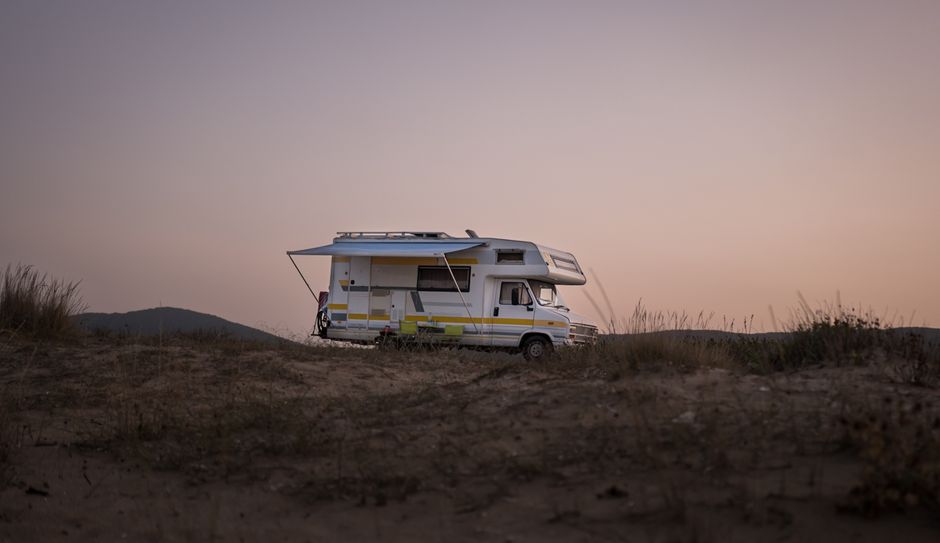
Photo: Poručík Kuna Lama via Pexels