 Greg Hoffman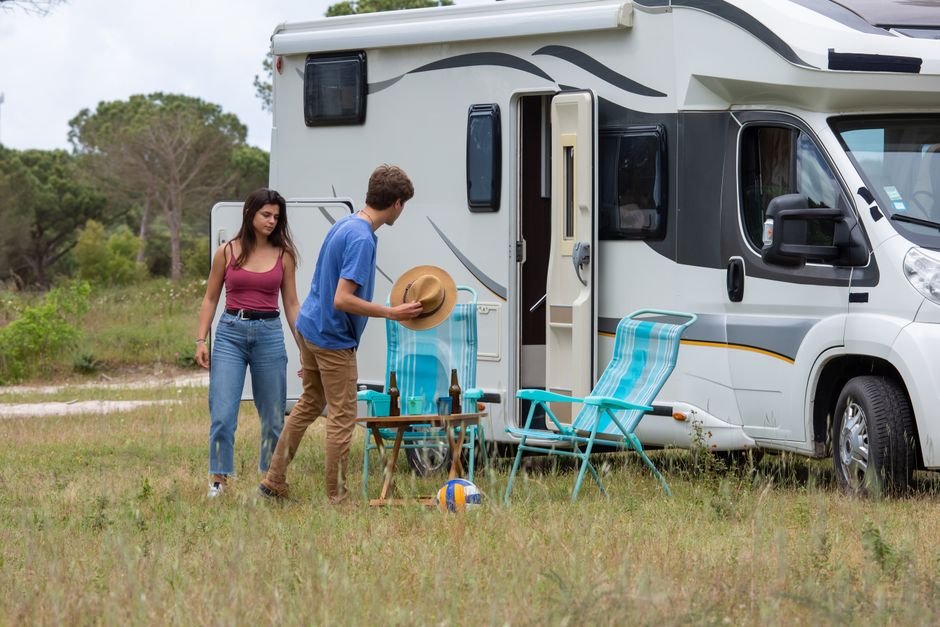
Most articles about RV life with kids show you smiling families at Yellowstone and leave out the part where your seven-year-old has a full meltdown in a Walmart parking lot in Amarillo because she hasn’t had a real bedroom in four months. That gap between the Instagram version and the actual experience is where I’m going to spend this article.
I’ve been full-timing for eight years. My kids joined me for three of those years, ages six through nine for my daughter, eight through eleven for my son. What I know about this life with children in tow comes from 47 states, roughly 140 different campgrounds, two major rig breakdowns with kids in the back seat, one ER visit in rural Montana, and more “are we there yet” questions than any parent should have to field.
Here’s the honest headline: RV life with kids is genuinely good. It’s also genuinely hard in ways that have nothing to do with what you read in most travel blogs.
The Logistics Nobody Warns You About
Space is the first thing everyone talks about, and it’s the wrong thing to fixate on. Kids adapt to small spaces faster than adults do. The real logistical problems are schooling, healthcare continuity, and mail.
Homeschooling or road schooling is effectively mandatory unless you’re willing to stay in one place for entire school semesters. Most families use a mix: an accredited online curriculum like Connections Academy or K12, supplemented with real-world learning (a National Park becomes a science class, a local history museum becomes a history lesson). That works well for some kids and terribly for others. My son thrived on the flexibility. My daughter needed peer structure and struggled without it. Know your kid before you commit.
Healthcare is the thing most guides mention in a single paragraph and move on. Don’t. You need a pediatrician relationship somewhere you can get to regularly, a telehealth service you’ve actually tested (not just downloaded the app for), and an honest conversation with your insurance carrier about how they handle out-of-network ER visits across state lines. We used Teladoc as our first line for everything non-emergency. It worked about 70% of the time. The other 30%, we were driving to urgent cares and paying out-of-pocket, then fighting with insurance for reimbursement. Budget for that fight.
Mail and official address: you need a domicile state. South Dakota, Texas, and Florida are the three states most full-timers use because they have no state income tax and straightforward residency requirements. Whichever you pick, you’ll use a mail forwarding service. The two I’ve personally used are America’s Mailbox (South Dakota) and Escapees Mail Service (Texas). Both work. Escapees has slightly better scanning options. Your kids’ state-issued IDs, school records, and any official documentation all need to be consistent with this address.
Picking the Right Rig
| Rig Model | Type | Price Range (Used) | Best For |
|---|---|---|---|
| Grand Design Reflection 337RLS | Fifth Wheel | $45,000-$85,000 | Full-time families |
| Keystone Montana 3855BR | Fifth Wheel | $45,000-$85,000 | Full-time families |
| Forest River Cedar Creek 388FK | Fifth Wheel | $45,000-$85,000 | Full-time families |
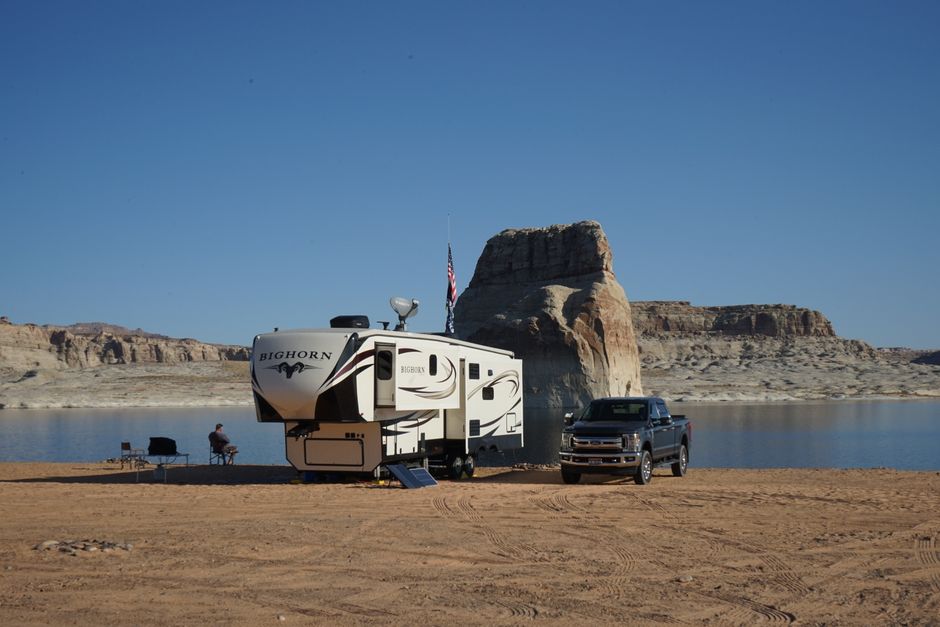
This is where I’ll say something that will annoy some people: for families, a fifth wheel almost always beats a Class A motorhome of equivalent length.
The reason is floor plan. Fifth wheels dedicate the front bedroom to parents, which gives you a real door you can close after the kids go to sleep. That matters more than you think when you’re living in 350 square feet for years. The living area in a fifth wheel also tends to be more functional per square foot than a comparable motorhome layout.
What you need in a family floor plan, regardless of rig type:
- Separate sleeping zones with actual doors, not just curtains
- A dedicated table large enough for school work (slideout with a real dinette, not a convertible bed)
- Outdoor kitchen or at least easy exterior access, because cooking three meals a day in a 10-foot galley with kids underfoot will break you
- Storage in the 100+ cubic feet range (kids have stuff, and that stuff multiplies)
Toy haulers get mentioned a lot for families, and I understand the appeal. They offer a separate “garage” space that becomes a second sleeping area. The problem is that toy hauler floor plans sacrifice kitchen and living space to get that room. Unless you actually have toys to haul (ATVs, bikes, etc.), you’re giving up functional space for a marketing concept. Think carefully before going that direction.
The rigs I’ve seen work best for full-timing families: Grand Design Reflection 337RLS, Keystone Montana 3855BR, Forest River Cedar Creek 388FK. Real-world prices currently run $45,000 to $85,000 used for these models in solid condition. Budget another $3,000 to $5,000 for modifications before you move in.
The Daily Rhythm (Which Changes Everything)
People underestimate how much having a consistent daily routine protects the whole family in this life. Without routine, the freedom of the road becomes chaos within about three weeks.
What worked for us: school from 8am to noon, every day, even travel days when we had to do it in the cab of the truck. Then the afternoon was exploration, campground time, whatever the location offered. Dinner at the rig. One outdoor activity before dark if possible.
Travel days need a hard rule. We never drove more than four hours with the kids on board, and we never drove more than five days in a row. Those aren’t arbitrary numbers, they’re the point at which kids (and frankly adults) start fraying. Long drive days kill morale faster than almost anything else. The families I’ve seen burn out and quit the road life within a year almost always made the same mistake: they tried to see too much too fast. Pick a region, stay in it for three months, learn it properly. The country isn’t going anywhere.
Campground selection matters differently when you have kids. Not every campground is family-friendly in practice, even if it technically allows children. Look for: playgrounds (obviously), other families with kids visible in photos or reviews, proximity to a town with at least a grocery store, and cell signal strong enough for schoolwork. Apps like Campendium and The Dyrt let you filter reviews by family mentions. Use them. Driving 200 miles to discover the campground is effectively a retirement community where you’re genuinely unwelcome with loud children is a bad day.
The Safety and Gear Layer You Actually Need
Skip the gimmicky “family RV checklist” articles and focus on the things that actually matter.
Carbon monoxide detector placement: one near sleeping areas, one near the propane system. The detectors that come installed in most rigs are positioned for code compliance, not actual effectiveness. I replaced both of mine with Kidde KN-COPP-3 units the first week. Not negotiable with kids.
Surge protection at the hookup is the unsexy but important one. A power surge that fries your inverter or your air conditioning system is a $1,500 to $3,000 repair, and it can happen at any campground with aging electrical infrastructure. The Progressive Industries EMS-HW50C is what I run. It’s hardwired, which means nobody can walk off with it. Worth every dollar of its roughly $350 price.
Water quality: you don’t know what’s coming out of that campground spigot. I’ve tested water that looked fine and showed coliform bacteria. With kids, run a dedicated inline filter on drinking water minimum, and a whole-rig sediment filter if your kids are bathing in it daily. The Camco TastePURE is about $20 and replaces every three months. Do it.
One I didn’t expect to care about: leveling. A rig that’s consistently unlevel messes with sleep quality, door operation, and refrigerator function. Camco leveling blocks and a decent level app on your phone take two minutes and matter more than people admit.
What the Kids Actually Get Out of It
Sources
- Kidde KN-COPP-3 units
- Progressive Industries EMS-HW50C
- dedicated inline filter
- Camco leveling blocks
- Kampus Production
This section exists because it’s real, not because the article needs a feel-good moment.
My kids, now teenagers, have a geographic fluency that their friends don’t have. My son can look at a topographic map and read it. My daughter navigated us through a road closure in southern Utah at age eight because she’d been reading the atlas for two years. They’ve both had conversations with strangers, handled unexpected situations, and adapted to discomfort in ways that I attribute directly to this life.
The social piece is the genuine hard part. Full-timing kids miss out on long-term friendships built over years. You can patch this with RV family communities (Fulltime Families is a real organization worth looking into), extended stays in one place, and returning to the same campgrounds seasonally. But you can’t fully replace it. That’s the honest trade.
Photo: Kampus Production via Pexels