 Julia Davidson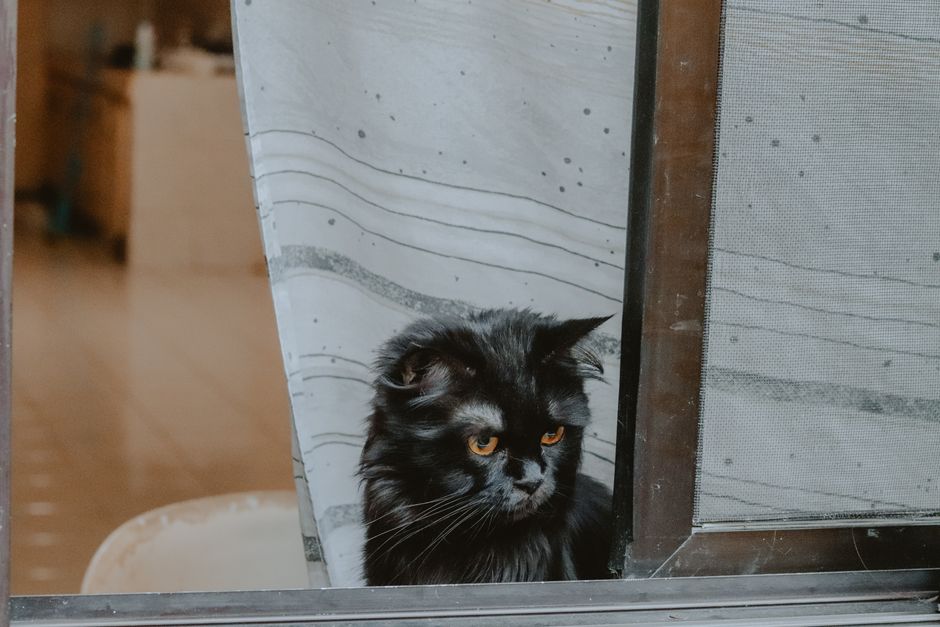
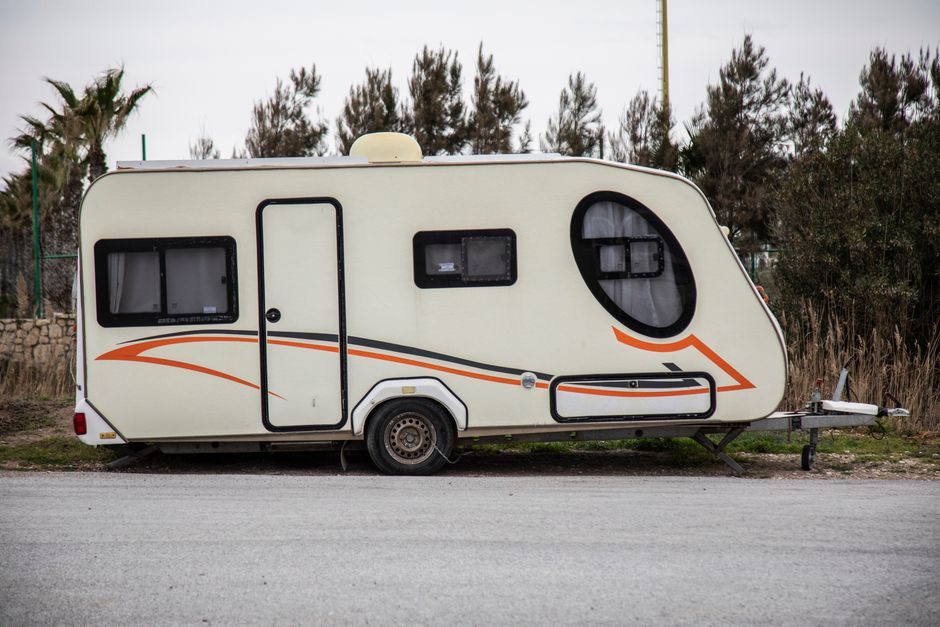
Three cats. One 32-foot fifth wheel. A February windstorm outside Amarillo that knocked out the shore power for six hours. That was the night I found out exactly how my cats felt about generator noise, and the answer was: not well.
I’ve been living in RVs full-time since 2018, and for almost all of that time I’ve shared the space with at least two cats. Right now I have three, a pair of bonded tabbies named Miso and Ramen, and a very opinionated tortoiseshell named Pickles who I picked up from a shelter in Tucson in 2021. I’ve done the research, made the dumb mistakes, spent the money, and talked to probably a hundred other RVers who travel with cats. What I know now is genuinely different from what I thought I knew when I started.
Here’s the number that surprised me most when I dug into it: according to the American Pet Products Association’s 2025-2026 National Pet Owners Survey, roughly 46% of U.S. households own cats, and a growing slice of those owners are full-time or extended travelers. Among the RV-specific communities tracked by the RV Industry Association, cat owners now make up an estimated 28% of the full-time living segment, up from around 19% just five years ago. That’s not a niche. That’s nearly one in three rigs with a cat somewhere inside, probably sitting on the dash.
- Cats adapt to RV life faster than most people expect, usually within 2-4 weeks of consistent routine.
- A 20-gallon fresh water tank is not enough buffer for cats in summer heat; 40+ gallons is the real minimum.
- Escape-proofing screen doors costs under $60 and prevents the single most common disaster in cat-owning RVs.
- Most vets recommend a 4-hour maximum for cats in carriers during transit; plan stops accordingly.
- Litter box placement (not size) is the #1 complaint among RVers traveling with cats, and it has a real fix.
Why Cats Actually Do Well on the Road
Everyone assumes dogs are the natural RV pet and cats are a disaster waiting to happen. In my experience, that’s backwards. Dogs need daily exercise outside the rig, which means leashes, campground rules, muddy paws. Cats need territory, routine, and vertical space. A well-configured RV actually checks all three boxes better than you’d think.
The ASPCA notes that cats are highly adaptable to small spaces as long as they have consistent hiding spots, environmental enrichment, and reliable food and water timing. That matches what I’ve seen. Miso and Ramen were anxious for the first two weeks after I went full-time, then they stopped caring entirely. They have their spots. They know the schedule. Pickles was harder, maybe six weeks before she stopped hiding under the bed every time I started the engine. But she got there.
What most people don’t realize is that the stress isn’t the moving. It’s the transition days, the unfamiliar smells, the new campground sounds at night. Once a cat’s scent is embedded in the rig, the rig is home. That’s their territory, and they’re in it whether it’s parked in Flagstaff or Pensacola.
The Real Costs (Because Nobody Talks About This Honestly)
Cat ownership in an RV costs more than in a house, not dramatically, but consistently. Here’s a real breakdown based on what I’ve actually spent, compared to what a stationary cat owner typically runs.
The vet cost gap is real and it comes from one specific thing: you can’t build a relationship with a single vet when you’re moving. You’re constantly paying new-patient exam fees, which run $55-$85 depending on the clinic, and you don’t have a vet who knows your cat’s history watching for patterns. I’ve started using a combination of a telehealth vet service (I use PetDesk, about $29 a month currently) for minor questions, plus one “home base” vet in Denver I schedule annual checkups with when I pass through.
The litter cost difference is mostly about disposal. In a house, you have a trash bin. On the road, you’re managing waste carefully at dump stations and sometimes paying $3-5 for trash disposal at campgrounds that charge for it. I buy Arm & Hammer Clump & Seal in the big 40-lb boxes from Costco when I’m near one, roughly $28, and I go through about 1.5 of those a month for three cats.
| Expense Category | Monthly (RV, 3 cats) | Monthly (house, 3 cats) | Notes |
|---|---|---|---|
| Premium dry food | $58 | $58 | Same regardless |
| Wet food supplements | $22 | $20 | Minimal difference |
| Litter (Clump & Seal) | $45 | $30 | Disposal costs add up on road |
| Flea/tick prevention | $18 | $12 | More outdoor exposure |
| Telehealth vet subscription | $29 | $0 | Replaces some in-person visits |
| Emergency vet buffer (annualized) | $47 | $35 | Higher on road due to new-patient fees |
| Total (estimated monthly) | $219 | $155 | Per household, not per cat |
The gap is about $64 a month, or roughly $768 a year. Not catastrophic. But if you’re budgeting tight, it’s real.
Setting Up Your Rig for Cats
This is where most new cat-owning RVers get it wrong at first, me included. I spent the first six months thinking the main challenge was space. It’s not. It’s airflow, escape prevention, and litter logistics.
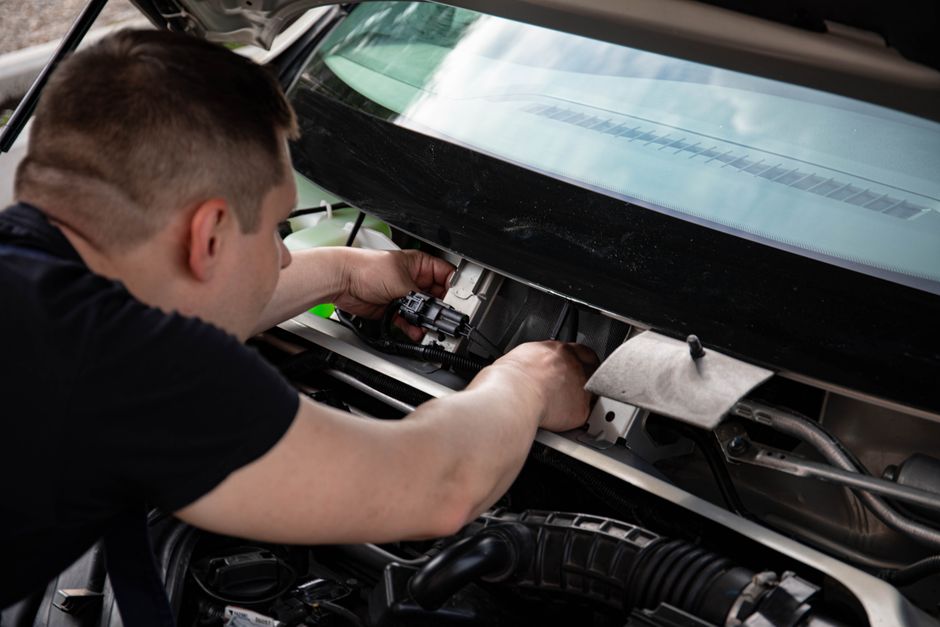
Airflow first. Cats overheat faster than you’d expect, and what kills them is a parked rig with inadequate cooling. The American Veterinary Medical Association’s heat safety guidelines put the danger threshold for cats at sustained interior temps above 80°F. If you’re full-timing in the south or southwest at any point between May and September, your air conditioning reliability is not a convenience item, it’s a life-safety system. I run a Micro-Air EasyStart (around $329 installed) on my main rooftop AC so it can run on a 30-amp connection without tripping breakers at older campgrounds. That single upgrade has let me leave Miso, Ramen, and Pickles safely while I run errands in weather I wouldn’t otherwise risk.
Screen doors are a crisis waiting to happen. The standard screen door on most RVs is not designed to contain a cat. One sniff of a bird outside, and they’re through it. I’ve seen this go badly for people. The fix I use is a Camco RV Screen Door Grille Guard, which runs about $47-$55, reinforced with a simple hook-and-eye latch mounted 18 inches from the bottom. Total cost: under $60. It has never failed me in four years.
Litter boxes: placement beats size. I tested this by accident. I originally put two boxes in the bathroom, which seemed logical, until I realized the bathroom door swings in a way that can trap a cat inside when it’s left slightly ajar. Ramen spent four hours in there one day when I was out. Now I keep one box under the dinette (the space between the seat pedestal and the slide wall, which is exactly 14 inches in most Class A dinette configurations), and one in the wet bath but with a door stop wedged permanently. The cats adapted in about 24 hours. Honestly, I should have thought about this on day one.
A thin Iris USA enclosed litter box fits under most dinette bench seats. Odor control matters even more in 350 square feet than it does in a 2,000-square-foot house. That’s not an opinion, that’s math.
Moving Days: What the Data Says, and What I’ve Learned
Transit stress is the thing new RV cat owners worry about most, and they’re right to. The Cornell Feline Health Center’s research on feline stress indicators shows that car travel is one of the top-ranked stressors for domestic cats, measurable through salivation, vocalization, and cortisol levels. They recommend keeping transport time under four hours per session when possible, with a 30-minute break minimum if you go longer.
In practice, my system looks like this:
Start day → Load cats into large Sherpa Original Deluxe carriers ($89 each) secured to the dinette seat with the seatbelt → Drive no more than 3.5-4 hours before stopping → Let cats out into the rig (which is already their territory) for 20-30 minutes → Continue.
When I drove from Denver to Corpus Christi in a single push, about 13 hours, I did not follow my own protocol. Pickles had loose stools for two days afterward. I’ve never made that mistake again.
For cats who are genuinely too anxious for even short drives, talk to your vet about gabapentin. It’s a mild sedative that’s increasingly popular in feline travel medicine, dosing is typically around 50-100mg given 1.5 hours before travel, and in my experience with Ramen (who was a disaster in the rig for the first three months), it was the bridge that got him over the hump. He doesn’t need it anymore. He just needed about eight experiences of “travel = not dying” to reset his response. Cost is minimal, usually $4-8 per dose from a compounding pharmacy.
Health Maintenance Without a Home Vet
The honest reality of full-time RV life is that you probably won’t maintain a relationship with a single veterinarian. Most RVers I know cobble together a system, and as of mid-2026, telehealth options have gotten significantly better than they were even two years ago.
My current setup: I use Vetster for video consultations ($75-$95 per session, no subscription required) for anything that looks concerning but not emergency-level. I keep a written health log for each cat that I bring to any in-person vet, which speeds up the new-patient intake considerably. I maintain a small medicine kit with basic supplies: saline wound wash, styptic powder, an elizabethan collar in Pickles’ size (she’s a scratcher), and a spare course of Revolution Plus flea/tick prevention.
I also keep photocopies of each cat’s vaccination records in both physical form and in my Google Drive. More campgrounds than you’d think now require proof of current rabies vaccination. I’ve been asked to show it twice in eight years, but the one time I couldn’t find it quickly cost me 25 minutes of searching and a lot of stress.
Sources
- American Pet Products Association (APPA) 2025-2026 National Pet Owners Survey: Annual industry data on pet ownership demographics and spending
- RV Industry Association (RVIA) 2025 Full-Time RVer Profile Report: Demographic breakdown of full-time RV residents including pet ownership
- Cornell Feline Health Center, Travel Stress Research: Peer-reviewed guidance on feline stress indicators during transport
- American Veterinary Medical Association, Heat Safety Guidelines for Companion Animals: Temperature thresholds and risk parameters for cats in confined spaces
- ASPCA Animal Behavior Center, Feline Environmental Enrichment: Research-backed guidance on cat adaptation to novel environments
(This article contains Amazon affiliate links. As an Amazon Associate, the site may earn a small commission on purchases made through these links, at no extra cost to you.)
Photo: Sarah MP via Pexels