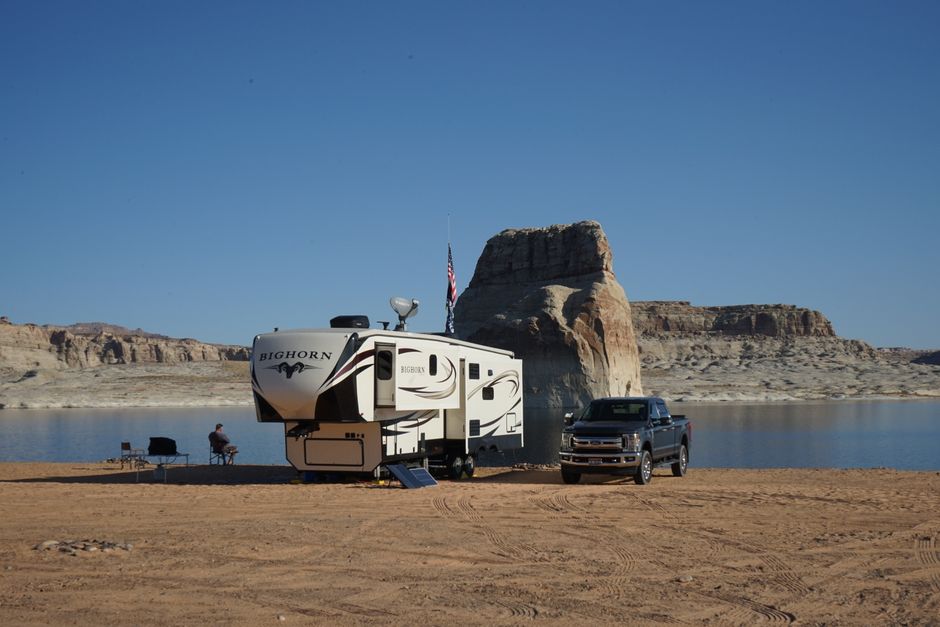
 Julia Davidson
The month I sold my house in suburban Columbus, Ohio, my mortgage payment was $1,847. My first full month on the road cost me $2,340. I remember staring at my bank statement thinking I had made a catastrophic mistake. Eighteen months later, I had that monthly number down to $1,650, and two years after that I was averaging $1,400 a month with a paid-off rig and a legitimate emergency fund. The point isn’t that full-time RV living is automatically cheap. It isn’t. The point is that the budget is learnable, and most people walk into this lifestyle with completely wrong assumptions about where the money actually goes.
What a Realistic Full-Time RV Budget Actually Looks Like
| Category | Budget-Conscious | Middle Ground | Comfort-Focused |
|---|---|---|---|
| Campground/Site Fees | $250-$400 | $500-$700 | $900-$1,400 |
| Fuel | $150-$300 | $300-$500 | $500-$900 |
| Groceries | $300-$500 | $500-$700 | $700-$1,000 |
| RV Insurance | $80-$120 | $120-$200 | $200-$350 |
| Health Insurance | $200-$600 | $400-$800 | $600-$1,200+ |
| Maintenance/Repairs | $100-$200 | $200-$400 | $200-$400 |
| Phone/Internet | $80-$150 | $150-$250 | $200-$350 |
| Entertainment/Dining | $100-$200 | $200-$400 | $400-$700 |
Let me give you real numbers. Not “it depends” hand-waving, but actual categories and ranges based on six years of tracking every dollar.
The biggest variable that most budget guides gloss over is whether your rig is paid off. If you’re financing a $75,000 fifth wheel at 7.5% over 15 years, you’re looking at roughly $695 a month before you’ve moved an inch. That one decision shapes everything downstream.
Here’s a breakdown of what I see as realistic monthly ranges for a solo traveler or couple in a mid-size motorhome or travel trailer, based on my own experience and talking with hundreds of other full-timers:
| Category | Budget-Conscious | Middle Ground | Comfort-Focused |
|---|---|---|---|
| Campground/Site Fees | $250-$400 | $500-$700 | $900-$1,400 |
| Fuel | $150-$300 | $300-$500 | $500-$900 |
| Groceries | $300-$500 | $500-$700 | $700-$1,000 |
| RV Insurance | $80-$120 | $120-$200 | $200-$350 |
| Health Insurance | $200-$600 | $400-$800 | $600-$1,200+ |
| Maintenance/Repairs | $100-$200 | $200-$400 | $200-$400 |
| Phone/Internet | $80-$150 | $150-$250 | $200-$350 |
| Entertainment/Dining | $100-$200 | $200-$400 | $400-$700 |
Add those midpoints up and you’re looking at roughly $2,370 to $4,850 a month, not counting any rig payment or storage units back home. Anyone telling you full-time RVing costs $800 a month is either boondocking every single night, eating ramen, and never fixing anything, or they’re selling you something.
Campground Costs: Your Single Biggest Lever
Site fees will wreck your budget faster than any other line item. A full-hookup site at a KOA near a national park can run $65 to $95 a night. That’s $1,950 to $2,850 a month if you stay at places like that exclusively. I’ve done it. It adds up terrifyingly fast.
The workaround most experienced full-timers use is a blended strategy: mix expensive nights with free or cheap nights to average out your per-night cost. Here’s how that actually works:
Membership Campgrounds. Thousand Trails, Passport America, Harvest Hosts, and Boondockers Welcome reduce nightly costs dramatically. Thousand Trails runs about $600-$700 a year and gives you access to their network of campgrounds for free stays. Over 12 months of heavy use, your site fee cost can drop by $300 to $500 a month.
BLM and National Forest Land. The Bureau of Land Management allows free dispersed camping, often for up to 14 days in one spot. If you’re in the Southwest, you can string together months of nearly free camping. The Sonoran Desert near Quartzsite, Arizona is full-timer central for this reason every winter.
State Parks. Underrated and often stunning. Most states offer annual passes. The America the Beautiful pass costs $80 a year and covers national parks and some federal campgrounds. I’ve gotten $1,200 worth of use out of a single $80 pass.
Track your cost-per-night average, not what you spend at any single campsite. I aim for $25 or under. Some months I hit $18. Some months I blow it completely and hit $40 because I needed a full-hookup site near a city for a week.
Fuel: The Budget Line That Will Surprise You
People obsess over campground costs and completely forget that fuel is often the second-biggest variable. A Class A motorhome getting 8 miles per gallon driven 2,000 miles a month is 250 gallons of diesel or gas. At $3.80 a gallon, that’s $950 just in fuel. One month.
The fix is simple to say and harder to do: slow down and stay longer. The full-timers I know who are genuinely comfortable on modest budgets move every 2 to 4 weeks, not every 3 days. You’re not on vacation. You live there.
If you drive a truck and pull a trailer, your fuel economy in towing mode matters enormously. The difference between a truck getting 12 MPG towing versus 9 MPG towing, over 15,000 miles in a year, is about $1,250. That’s real money.
Track your fuel cost per mile. I use a simple spreadsheet. My 40-foot diesel pusher runs about $0.14 to $0.18 per mile depending on terrain and load. When I’m planning a month, I estimate miles times $0.16 to get my fuel budget. It’s not perfect but it’s close enough to be useful.
Maintenance and the Repair Fund You Will Definitely Need
This is where most new full-timers get absolutely blindsided. The general rule in the RV community is to budget 1% to 2% of your rig’s value per year in maintenance and repairs. On a $60,000 motorhome, that’s $600 to $1,200 a year, or $50 to $100 a month. I think that estimate is optimistic.
In my first three years, I replaced two slide-out motors ($1,400 each), a water pump, a refrigerator cooling unit ($900), had three roof seams resealed ($600 total), and replaced all six tires on schedule ($2,800). That’s roughly $7,000 in three years, or about $195 a month. And I’m a reasonably handy person who does my own oil changes and minor repairs.
Put $200 a month into a dedicated repair savings account. Don’t touch it for anything else. The month your air conditioner dies in July in Texas, you’ll be grateful you have $1,800 sitting there instead of reaching for a credit card.
A few preventive investments that actually work: A surge protector (around $200-$300 for a quality 30 or 50-amp model) can save you a multi-thousand-dollar electrical repair. A water pressure regulator and inline filter protect your plumbing and improve your water quality for about $40. These are cheap insurance. (This site may earn a commission on purchases made through these links.)
The Invisible Costs Nobody Talks About
Health insurance deserves its own article, honestly. If you’re under 65 and not covered by an employer or VA benefits, you’re shopping the individual market. In 2024, a healthy 45-year-old couple can expect to pay $800 to $1,600 a month for a mid-tier ACA plan, depending on their income and which state they use as their domicile. Texas, South Dakota, and Florida are the three states full-timers most commonly use as their legal domicile, and each has different insurance marketplace options and costs.
Mail service is an often-forgotten $15 to $30 a month. Escapees, America’s Mailbox, and Traveling Mailbox all offer mail forwarding and scanning services tailored to full-timers. You need one.
Cell service and internet will run you $150 to $250 a month if you need reliable connectivity. Most full-timers run two carriers for redundancy. I run Verizon and T-Mobile, and I still hit dead zones. If you work remotely, this isn’t a place to cut corners.
If you’re running solar, which I’d strongly recommend, the upfront cost can be $2,000 to $8,000 depending on the system size, but it slashes your generator fuel costs and gives you real independence at free campsites. A battery monitor is an inexpensive addition that tells you exactly how much juice you have left, which is worth every penny when you’re boondocking. A good solar panel kit is the kind of investment that pays back within a year or two of regular boondocking. (This site may earn a commission on purchases made through these links.)
Storage units are a sneaky recurring cost. A lot of people pay $100 to $200 a month storing furniture and boxes they’ll never actually go through. Be ruthless. Sell it, donate it, or give it to family. That $150 a month is $1,800 a year for stuff you don’t use.
How to Build Your Personal Budget Before You Hit the Road
Sources
- surge protector
- water pressure regulator and inline filter
- battery monitor
- solar panel kit
- leveling blocks
Don’t guess. Build a real spending plan before your first month out.
Pick your domicile state first. This affects your vehicle registration cost, income taxes, and health insurance options. Do this research before you quit your lease or sell your house.
Track your current non-housing spending for 60 days. Food, subscriptions, entertainment, medical. That number is closer to your future RV variable spending than you think.
Calculate your rig costs honestly. Loan payment (if any), insurance, and a $200/month repair fund are non-negotiable line items. Add tire replacement costs amortized monthly.
Estimate your travel pace. How many miles a month do you realistically plan to drive? Multiply by $0.15 to $0.20 per mile for fuel depending on your rig.
Plan your campsite mix. Don’t assume you’ll always find free sites. Budget a realistic blended nightly rate. I use $28 a night as my planning number.
Add a 15% buffer. Something will cost more than you expected. It always does. Build that cushion in from the start rather than discovering it mid-month.
Consider leveling blocks and basic gear in your startup costs. The first few months have one-time purchases that inflate your budget. Don’t panic, just plan for it. (This site may earn a commission on purchases made through these links.)
The truth about full-time RV living costs is that the budget isn’t fixed and it isn’t magic. It’s a skill you develop over months of trial and error, of realizing you drove too much in October and overspent on sites in March, and adjusting. I’ve had months that cost me $1,100 and months that cost me $3,400. Most of them land somewhere in the $1,400 to $1,800 range now because I know my habits, my rig, and my priorities. You’ll learn yours. Just go in with honest numbers and realistic expectations, and give yourself at least a year before you decide whether it’s working.
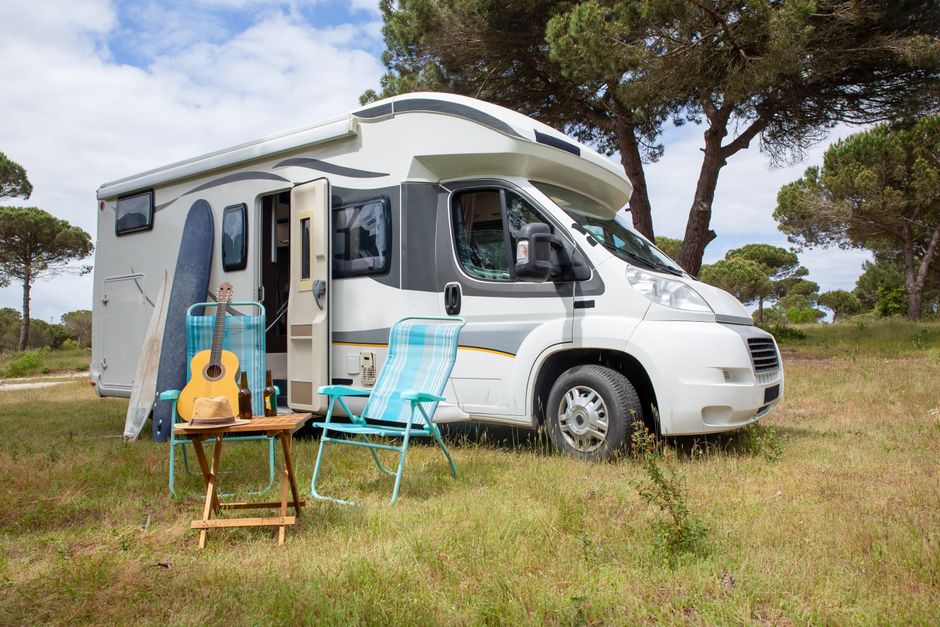
Photo: Melike B via Pexels