 Barbara Mitchell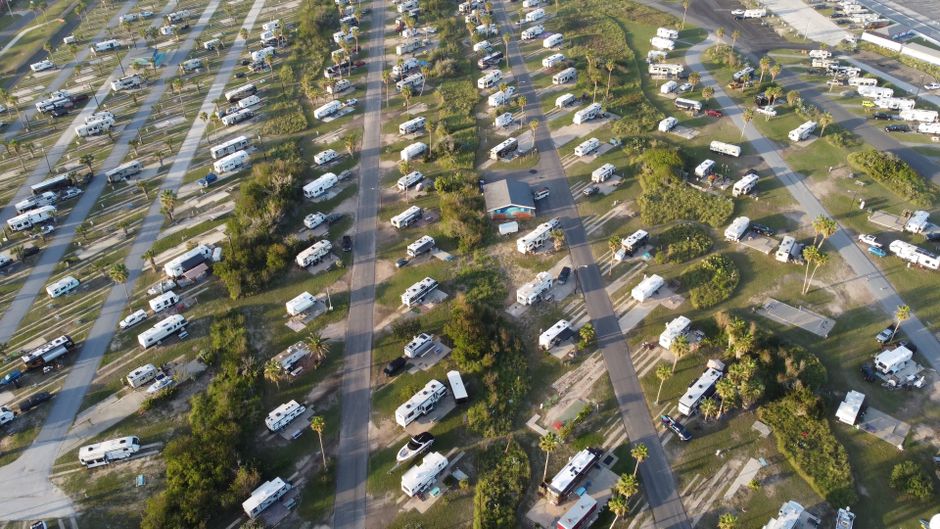
Most people picture RV social life as a bunch of retirees in lawn chairs waving at each other from across a campground. That image isn’t wrong, exactly. But it’s about 20% of the story.
I’ll be honest: before I moved into my rig full-time in 2018, I was terrified of the isolation. I’d read enough Reddit threads about solo travelers eating dinner alone in a Walmart parking lot to convince myself this lifestyle was a lonely one. What actually happened was the opposite. Within six months on the road, I had a tighter social circle than I’d had in years of apartment living in Columbus, Ohio. That surprised me enough that I started paying attention to why, and what makes the difference between RVers who plug into genuine community and those who feel like they’re disappearing.
The social architecture of this life is genuinely unusual. It doesn’t work like neighborhoods or offices. It takes some deliberate effort, a little vulnerability, and knowing where to look.
- RV social life is opt-in: passive campers stay isolated; actively social RVers build surprisingly deep connections.
- Workamping, rallies, and membership campground networks (Thousand Trails, Passport America) are the fastest ways into real community.
- Online groups (Facebook, Escapees forums) are how you meet people before you arrive at a location.
- Snowbird corridors like Quartzsite, AZ and the Texas Hill Country create dense, reliable winter community clusters.
- Loneliness is a real risk in this lifestyle, it's not automatically social just because you're moving.
The Campground Reality Nobody Warns You About
Pull into a big-box campground, your KOA, your Good Sam affiliate with 200 hookup sites packed in tight, and you might interact with exactly zero people in a three-day stay. Sites are close together but the culture is often oddly private. People come and go. Checkout is at 11. Nobody lingers.
What surprised me was that the size of a campground is almost inversely proportional to how social it is. The 14-person dispersed BLM camp outside Moab, Utah is where I ended up sharing a campfire and two bottles of wine with people I’m still texting in 2026. The 350-site resort with a pool and a game room? Polite nods at the dog walk.
The physical layout matters enormously. Loop sites where everyone faces a shared center space breed conversation. Pull-through rows facing traffic don’t. If you’re choosing where to stay and you care about meeting people, look at the campground map before you book, not just the amenity list.
Where Community Actually Happens
This is where the real answer lives, and it’s a few different worlds layered on top of each other.
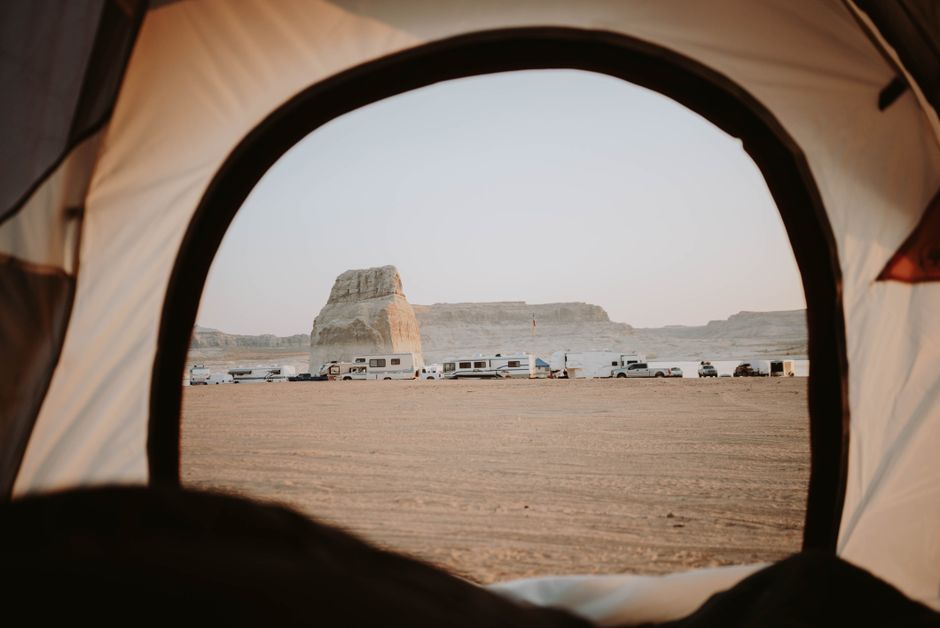
Rallies and gatherings are probably the fastest entry point. Quartzsite, Arizona in January is the most extreme version: somewhere between 500,000 and 1.5 million people (the range is legitimately disputed, but trust me, it’s chaos in the best way) descend on the desert for a few weeks of swap meets, seminars, and campfire hang-outs. The RTR (Rubber Tramp Rendezvous), organized annually near Quartzsite, specifically centers solo travelers and van lifers on tight budgets. I went in 2022 and watched a woman who’d been on the road for three weeks walk away with three dinner invitations and a mechanic who fixed her alternator for the cost of parts.
Brand-specific rallies are different in character. Airstream owners’ rallies and Roadtrek gatherings tend to skew toward people who’ve been doing this 10-plus years and have opinions about everything. Those can be incredible for learning. National FMCA (Family Motor Coach Association) rallies are massive and feel a little like a trade show, honestly.
Membership networks create community across geography in a way that still amazes me. The Escapees RV Club, based in Livingston, Texas, runs SKP co-ops and parks where members can stay long-term and get genuinely embedded in a local community. Current membership runs about $39 a year (as of 2026), and the forums and regional chapters are active. I’ve met more lasting friends through Escapees connections than any other single source.
Workamping is underrated as a social tool even if you don’t need the income. You show up, you’re immediately embedded with a crew, you share meals and work and complaints. Amazon CamperForce puts hundreds of workers together each fall for peak season fulfillment work. KOA, state parks, ski resorts, all run workamping programs. The social intensity is real. So is the exhaustion, I’ll warn you.
The Digital Layer Is Not Optional
You’re probably thinking: “I’m trying to get away from staring at screens.” I get it. But the online community infrastructure for RVers is the best I’ve encountered for any lifestyle or interest group, full stop.
The Escapees forums have been running since the early internet days and have tens of thousands of posts about specific campgrounds, specific mechanical problems, and specific regions. The level of detail is sometimes unreal, I once found a thread where someone described exactly which sites at a particular New Mexico BLM area had cell signal from Verizon versus AT&T, with compass bearings.
Facebook groups have basically colonized the practical day-to-day conversation. “RVillage,” a dedicated social platform for RVers, lets you see who else is camped nearby and send messages before you even arrive. It’s not perfect, the app is a little clunky, but the concept is useful. I’ve used it to line up a happy hour meetup at a state park in Montana with four other people I’d never met in person.
What actually works, in my experience:
- Post in a regional Facebook group (“Heading to the Texas Hill Country in March, anyone else?”) about two weeks before you arrive.
- Join the Escapees forums and post a location update when you settle somewhere for a week or more.
- Follow a handful of RV travelers on Instagram whose rigs and lifestyles look similar to yours, DMs turn into real conversations more often than you’d expect.
The Honestly Hard Part
Loneliness is a documented problem in this community, and the conversation about it has gotten more open in the last few years. A 2023 survey by the Escapees organization (not a published peer-reviewed study, but it polled roughly 4,200 members) found that about 31% of full-timers listed social connection as a “significant challenge,” with solo travelers reporting that number closer to 47%.
I made this mistake myself in my first year: I thought proximity would create connection. I camped near people and expected something to happen. Nothing did. The people who thrive socially are the ones who initiate. Knock on the door. Offer to help if someone looks stuck. Ask the person at the dump station (yes, really) where they’ve come from. The conversations that start there go places.
The research here is genuinely mixed on whether RV living improves or strains wellbeing long-term. What seems clear is that the outcome tracks heavily with whether someone has an active social strategy or not, not with the lifestyle itself.
What Different Community Paths Actually Cost You
Some of these social pathways cost real money. Others cost time. Worth laying out:
| Community Path | Annual Cost (est.) | Time Commitment | Best For |
|---|---|---|---|
| Escapees Club membership | ~$39/year | Low; self-directed | Solo travelers, full-timers |
| FMCA membership | ~$85/year | Low to medium | Class A/B motorhome owners |
| Quartzsite / RTR (BLM, free camping) | $0 + fuel | 1-3 weeks, once a year | Budget travelers, van lifers |
| Workamping (paid positions) | $0 (you earn) | 20-40 hrs/week | Those wanting deep immersion |
| KOA/Thousand Trails membership | $600-$900/year | Flexible | Families, weekend warriors |
| Private RV rally (brand-specific) | $150-$400 per event | Long weekends | Brand loyalists, enthusiasts |
(Costs current as of July 2026; specific programs vary.)
Sources
- Escapees RV Club (2023): Internal member survey on full-timer wellbeing and social connection challenges, n=4,211
- FMCA (Family Motor Coach Association): Membership data and rally calendar, fmca.com
- Workamper News: Annual workamping job listings and employer database, workampernews.com
- Quartzsite, AZ Chamber of Commerce: Attendance estimates and event documentation for annual winter gatherings
- RVillage platform user documentation and campground proximity features, rvillage.com
Photo: Viktoria B. via Pexels