 Sandra Park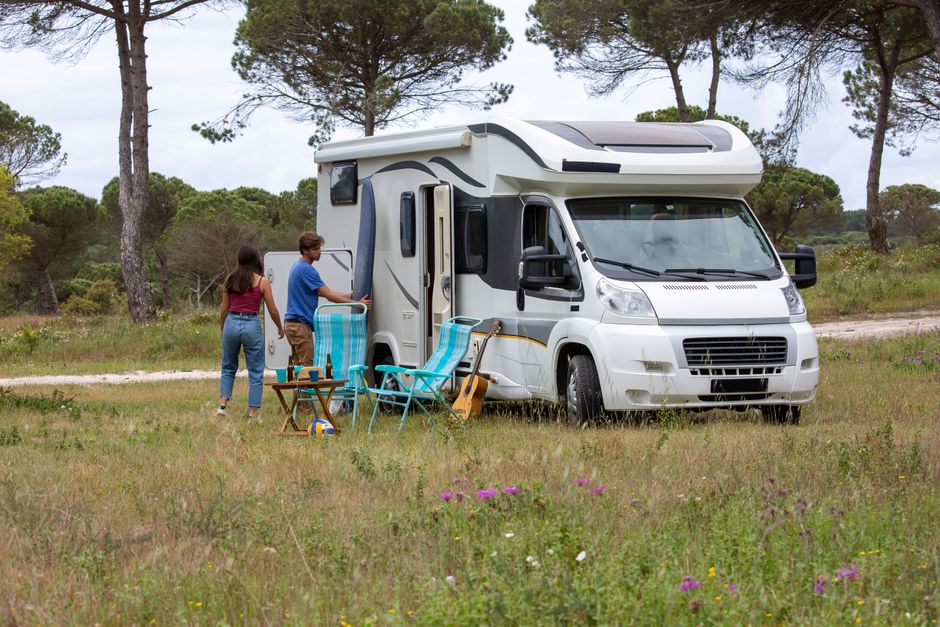
I watched a couple at a dealership in Phoenix sign papers on a 32-foot Class A motorhome in about 45 minutes flat. They were giddy. They hadn’t checked the roof, hadn’t run the generator, hadn’t filled the fresh water tank to test for leaks. Three weeks later I crossed paths with them at a campground in New Mexico, and that rig was already sitting broken at a mobile RV repair shop with a blown-out slide room seal and a dead inverter. The repair bill was north of $4,000. The honeymoon was over before the end of the first month.
Buying an RV is nothing like buying a car. The complexity is closer to buying a house, except this house has an engine, a roof that flexes at highway speed, plumbing that can delaminate your walls from the inside out, and a resale market that punishes naivety hard and fast. Whether you’re looking at a used travel trailer on Facebook Marketplace or a brand-new Class C at a megadealer, you need a real checklist before you hand over a single dollar.
Know What You’re Actually Buying Before You Go Shopping
This sounds obvious. It isn’t. Most first-time buyers walk into the process with a vibe rather than a specification, and dealers are very skilled at redirecting vibes toward whatever’s on their lot.
Start by answering four concrete questions before you look at a single unit:
What vehicle will tow or drive it? If you’re buying a towable, your tow vehicle dictates your universe. A half-ton truck typically maxes out around 8,000 to 11,000 lbs towing capacity depending on the configuration. A lot of fifth wheels exceed that. Don’t assume. Pull up your truck’s exact VIN on the manufacturer’s tow guide, find the actual rated capacity, then subtract 20% as a real-world safety buffer. Tongue weight matters too, not just total weight.
How many people are sleeping in it, regularly? The floor plan has to work for your actual life. A couple can live happily in a 24-foot travel trailer. A family of four needs dedicated sleeping zones, not a dinette that “converts” to a bed that nobody wants to sleep in after day three.
Where are you going? Boondocking in Utah’s canyon country requires solar, large holding tanks, and ideally a four-season package. Full hookup RV parks near the interstate require almost nothing special. These are different rigs.
What’s your real budget, all-in? The purchase price is maybe 60-70% of the first-year cost for most buyers. Add insurance (plan $1,200 to $3,000 annually depending on rig size and coverage), registration (which can be shocking in states like California or Colorado), campground costs, fuel if it’s a motorhome, and an emergency repair fund. I keep a minimum of $5,000 earmarked for repairs at all times, and I’ve needed it.
The Pre-Purchase Inspection: What to Check, Room by Room
This is where most buyers fail. Here’s a methodical walkthrough you can actually use:
Exterior First
- Roof: Get up there. Seriously. Look for soft spots, cracks in the sealant around vents and seams, any bubbling or discoloration. Roof damage is the single most expensive thing to miss on a used RV. Bring a rubber mallet and tap the sidewalls too. Hollow sounds where there shouldn’t be hollow sounds indicate delamination.
- Slideout seals: Run the slides in and out. Watch the seals as they move. Look for tears, compressed spots, or places where the seal doesn’t make full contact.
- Underbelly: If the rig has an enclosed underbelly, poke it. Soft spots can mean water intrusion from the bottom.
- Hitch components (towables): Check the coupler, safety chains, breakaway cable, and the condition of the wiring harness plug.
Interior Systems
- Water system: Fill the fresh water tank to at least half capacity. Run every faucet. Flush the toilet multiple times. Check under every sink and around the toilet base for any moisture or soft flooring.
- Electrical: Plug into shore power if possible. Run the air conditioner for a full 15 minutes. Check every outlet with a simple outlet tester (a $10 tool worth every cent). Turn on the microwave, the TV, and the AC simultaneously to stress-test the system.
- Propane: Light every burner on the stove. Light the oven. Turn on the water heater in propane mode and wait for the pilot to ignite. Check the regulator for cracks or corrosion.
- Generator (if equipped): Run it under load, not just at idle. An air conditioner is a good load. Listen for rough running or excessive smoke.
- Brakes (towables with electric brakes): Connect to the tow vehicle and have someone confirm the brake controller is activating the trailer brakes.
Structural and Hidden
Check every cabinet hinge and latch. Cheap hardware fails constantly. Open the wet bay and look at the water heater for rust around the base. Look at the ceiling in every room. Water stains are red flags even if they look old and dry. Smell matters. Musty odors in a closed-up RV usually mean mold somewhere.
For used RVs especially, I’d strongly recommend hiring a professional RV inspector through NRVIA (National Recreational Vehicle Inspectors Association). Expect to pay $300 to $600 for a thorough inspection. It’s cheap compared to what you might miss.
New vs. Used: A Straight Comparison
| Factor | New RV | Used RV (3-7 years old) |
|---|---|---|
| Price | Full retail, often 20-30% negotiable | 30-50% below original MSRP common |
| Warranty | Manufacturer warranty (1-2 years typically) | Usually none, or limited dealer warranty |
| Known history | Unknown until you drive it | Ideally obtainable from seller |
| Depreciation risk | Steep in first 2-3 years | Already absorbed by previous owner |
| Hidden problems | Possible factory defects | Possible deferred maintenance |
| Customization | You choose options | You take what’s there |
| Factor | New RV | Used RV (3-7 years old) |
|---|---|---|
| Price | Full retail, often 20-30% negotiable | 30-50% below original MSRP common |
| Warranty | Manufacturer warranty (1-2 years typically) | Usually none, or limited dealer warranty |
| Known history | Unknown until you drive it | Ideally obtainable from seller |
| Depreciation risk | Steep in first 2-3 years | Already absorbed by previous owner |
| Hidden problems | Possible factory defects | Possible deferred maintenance |
| Customization | You choose options | You take what’s there |
My honest take after 6 years full-timing: I’d almost always buy a used unit that’s 3 to 5 years old with a documented service record over a new one. The first owner eats the depreciation and discovers the factory defects. You get the rig after the worst surprises are already sorted, at a price that makes more sense.
The Gear That Should Be in Any RV Before You Move It
Even before you drive off the lot, there are a handful of items that aren’t optional. Not comfort items. Safety items.
A surge protector for shore power is non-negotiable. Campground pedestals can deliver low voltage, high voltage, or mis-wired power that will fry your converter, your appliances, and your air conditioner. A Progressive Industries EMS-PT30C or EMS-PT50C (depending on whether you have a 30-amp or 50-amp rig) monitors incoming power and cuts the connection if something’s wrong. Check current pricing on Amazon – it’ll run $200 to $350 but could easily save you $3,000 in electronics.
Leveling blocks matter the moment you pull into a site that isn’t flat, which is most sites. Camco makes a set of stackable plastic blocks that handle most situations. Grab a set before you leave the driveway.
A water filter for your fresh water connection. Campground water quality varies wildly. A simple inline filter like a Camco TastePURE cuts sediment and chlorine and protects your water lines. Find one here. If you’re planning on doing any boondocking or extended dry camping, you’ll want a more serious filtration setup inside the rig as well.
If you’re adding solar or planning to, a battery monitor like the Victron SmartShunt or the Renogy 500A monitor is essential for knowing your actual state of charge rather than guessing. Battery monitors on Amazon. Buying solar panels blind without monitoring your consumption is a very common and very expensive mistake.
Negotiating the Deal and Avoiding Dealer Traps
Sources
- Check current pricing on Amazon
- Grab a set before you leave the driveway
- Find one here
- Battery monitors on Amazon
- Kampus Production
Dealers mark up RVs aggressively. MSRP is not a real number; it’s a starting point for a conversation.
For new units, figure out the dealer’s invoice price if you can, either through NADA guides or by calling multiple dealers for competing quotes. Offer 15-20% below MSRP to start and work up slowly. If they won’t budge past 10% off MSRP, walk out. There is always another dealer.
For used units, pull the NADA value for the specific year, make, model, and length. Adjust for condition and mileage if it’s a motorhome. Low miles on a motorhome with poor maintenance records is worse than higher miles with documented oil changes and generator service.
Watch for these specific finance office moves:
- Dealer-added accessories: Fabric protection, paint sealant, tire and wheel coverage added to the purchase price without your explicit consent. These appear as line items. Strike them.
- Extended warranties: RV extended warranties can be valuable if you’re buying used and plan to keep the rig long-term. But read the contract. Understand the deductible, the exclusion list, and which repair facilities are authorized. Never buy one in the heat of the signing moment. Ask them to email it to you so you can read it at home.
- Financing through the dealer: Always come with pre-approval from your own bank or credit union. Dealer financing is a profit center. Use your pre-approval as leverage.
Go slow. The right unit for your situation is out there, and the used market is large enough that you don’t have to settle or rush. The couple I mentioned in Phoenix? They eventually sorted out their rig and they’re still out here rolling. But they’ll tell you themselves: an extra week of homework and $500 for a professional inspection would have saved them the worst month of their RV lives. Don’t skip the checklist.
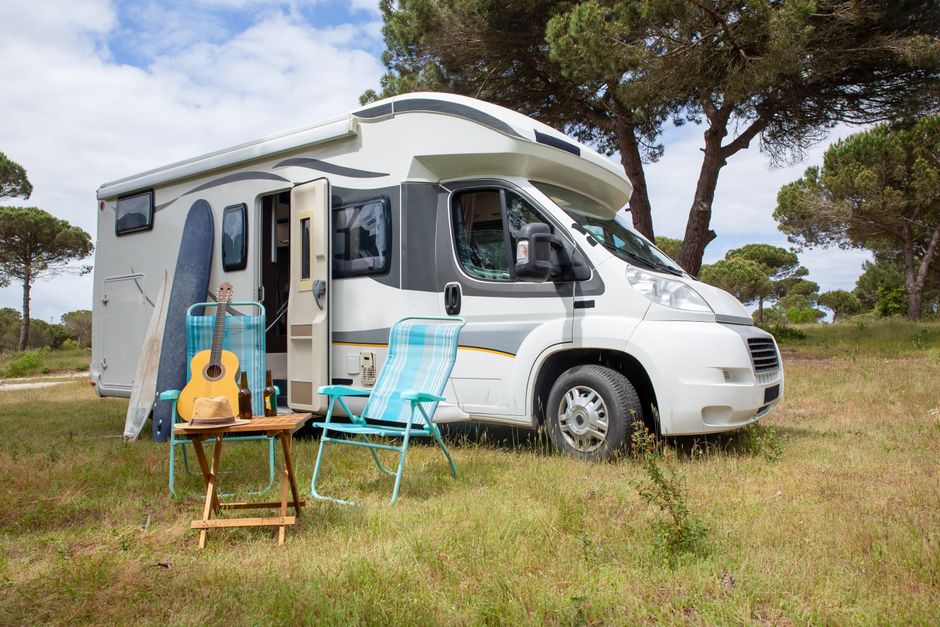
Photo: Kampus Production via Pexels