 Julia Davidson
Most people treating their black tank are solving the wrong problem. They’re focused on odor, dumping products in after every flush, buying expensive enzyme treatments, when the real enemy is something most tank guides don’t even mention: the pyramid plug.
I’ll be honest, I didn’t understand any of this when I started living full-time in my 2017 Keystone Cougar. I did what the manufacturer’s pamphlet said. Toss in a treatment tablet after each dump. Keep the tank valve closed until it’s full. Everything will be fine. What followed, about three months in, was a situation bad enough that I had to crawl under my rig in August in southern Arizona and deal with it. I am not going into more detail than that.
Eight years later, I have opinions about black tank treatment that some full-timers will push back on. Good. Let’s get into it.
The pyramid plug problem nobody talks about enough
Here’s what happens when you run your black tank wrong. You leave the valve cracked a little (or even fully open while hooked up at a campground), the liquid drains out, and the solids pile up into a hardened cone shape that eventually becomes basically cement. That’s a pyramid plug. It does not respond well to enzyme treatments. It does not respond well to anything, really, except a lot of water and sometimes a tank wand.
The fix isn’t a treatment product. It’s water management. Your black tank needs to be wet, consistently. The standard rule of thumb is at least three gallons of water in the tank before you even start using it after a dump. A lot of sources say two gallons. I say three to four, and more is better. Cheap fresh water is cheaper than a service call.
The other thing: keep that valve closed until the tank is at least two-thirds full, ideally fuller, before you dump. The flush action from a mostly-full tank actually clears solids far better than a slow drain from a tank you’ve been running with the valve open all week. I know full hookup sites tempt you to just leave it open. Resist that. The gray tank, fine, leave that one open if you want. The black tank, never.
What treatment products actually do (and what they don’t)
| Treatment Type | How It Works | Best Use Case | Cost Per Dump |
|---|---|---|---|
| Enzyme-based (Happy Campers, Walex Porta-Pak) | Biological agents break down waste and tissue | Tanks with adequate water, moderate temperatures, dumping every 3+ days | $0.50-$1.00 |
| Chemical (Campa-Chem, formaldehyde-based) | Kills odor by killing tank contents | Odor control only | $0.50-$1.50 |
| Dawn dish soap + Calgon water softener | Lubricates valve/sensors, prevents sticking | Daily maintenance with proper water levels | $0.30 |
| Enzyme deep clean (annual) | Extended soak with mechanical agitation | Annual tank refresh and sensor cleaning | $2.00-$3.00 |
The market for black tank treatments is genuinely crowded and the claims range from accurate to nonsense. Here’s how I think about the product categories.
Enzyme-based treatments like Happy Campers Organic RV Holding Tank Treatment or Walex Porta-Pak work by introducing biological agents that break down waste and tissue over time. They work best when the tank has adequate water, isn’t too hot (extreme heat kills the bacteria), and has time to do its thing. If you’re dumping every two days, you’re not giving enzymes enough time to matter much. These products are not a substitute for proper water levels.
Chemical treatments, the blue stuff like Campa-Chem or similar formaldehyde-adjacent products, kill odor by killing everything in the tank. They’re effective at the one job (odor control), but they’re not legal in every state, they’re hard on some septic systems at dump stations, and they don’t help at all with breakdown or plugging. I stopped using them around year two.
What surprised me was how well simple, cheap treatments performed once I got my water management right. Straight Dawn dish soap (a couple tablespoons) and a cup of water softener like Calgon are a combination a lot of full-timers swear by, and it genuinely works. The soap lubricates the valve and sensors, the water softener keeps things from sticking to the tank walls, and total cost per dump is maybe 30 cents. Seriously.
My current setup: I pour in a few tablespoons of Dawn, a half-cup of Calgon, and fill with three or four gallons of water right after every dump, before we start using the toilet again. I use Happy Campers maybe once a month, especially in warmer weather. That’s it.
Sensor problems are a tank treatment problem
If your sensors are reading full when the tank is empty, or bouncing around randomly, nine times out of ten it’s coating buildup on the sensor probes. This is a treatment and water management failure that built up over time.
The remediation process that has actually worked for me (tried this after a reader recommended it, then confirmed it with two other full-timers): fill the tank completely full with water, add a half-cup of Dawn and a cup of Calgon, then drive. Seriously, drive around for thirty minutes. The sloshing is the point. It physically scrubs the probes. Drain, repeat if needed. I’ve cleared stuck sensors with this method that I thought were permanently damaged.
Camco’s basic tank sensor cleaning solution exists and some people like it, but I’ve had equal results with the Dawn/Calgon combo. (The site may earn a commission on purchases.)
The deep clean you should do at least once a year
Even with solid daily practices, tanks benefit from a periodic deeper flush. I do this every fall when I’m getting ready to settle somewhere for a few months.
Close all valves. Fill the tank with water until it reads full. Add a full 8-ounce bottle of Happy Campers or a similar enzyme product, plus the Dawn/Calgon mix. Let it sit overnight, twelve to sixteen hours minimum. Then dump slowly. Follow with two or three full-tank flush cycles using just water.
If you want to be more aggressive, a tank rinse wand helps a lot. The Valterra T1020-1 Swivel Stick runs about $25 and attaches to your toilet water connection to let you spray the interior walls directly. Worth owning. I leave it connected to my toilet’s hand sprayer supply line during the cleaning cycle.
The alternative is a built-in tank flush port, which some rigs have and many don’t. If yours has one, use it. Hook up a hose while the dump valve is open and let it run until the water comes out clear. This takes longer than people think, usually 10 to 15 minutes.
Tissue, and why it matters more than most people realize
Standard household toilet paper is one of the more common causes of tank problems, and this is an area where the research is somewhat mixed. Some RVers have used Charmin for years without issues. Others have had nightmare situations they trace directly back to thick TP.
My view: single-ply RV-specific tissue isn’t a scam, but you don’t necessarily need it if you’re doing everything else right. The real test is the water glass dissolve test: drop two or three sheets in a glass of water, shake it, and see how quickly it breaks apart. Scott 1000 passes this test easily, costs less than most RV tissue, and is what I’ve used for years.
Where I’d push back on conventional wisdom: the obsessive focus on tissue type matters a lot less when your water levels are where they should be. Dry tanks will cause problems with any tissue. Wet tanks handle a lot.
A few things I wish someone had told me in year one
Sources
- Camco’s basic tank sensor cleaning solution
- Valterra T1020-1 Swivel Stick
- Thetford Aqua-Foam Toilet Treatment
- Ana Benet
- is somewhat mixed
Don’t use bleach in your black tank. I know it sounds like a good cleaner. It damages the seals, degrades sensors faster, and kills the biological activity you want if you’re using enzyme treatments.
Toilet bowl cleaners with bleach? Same problem. If you need to clean the bowl, use a product specifically rated as RV-safe. Thetford Aqua-Foam Toilet Treatment is the standard here, or plain white vinegar.
Also, if you’re in a humid, warm climate, odor rises through the toilet itself when the tank is sitting stagnant. This isn’t a treatment failure, it’s a venting issue. Make sure your roof vent cap is clear and functioning. Some people add a 360 Siphon vent cap (about $30 on Amazon) and report real improvement. I have one on my current rig and it made a noticeable difference during hot Texas summers.
The reality is that black tank management is 80% water and discipline, and maybe 20% product choice. Get the basics right and you will almost never have a problem. Skip them and no product on the market will bail you out.
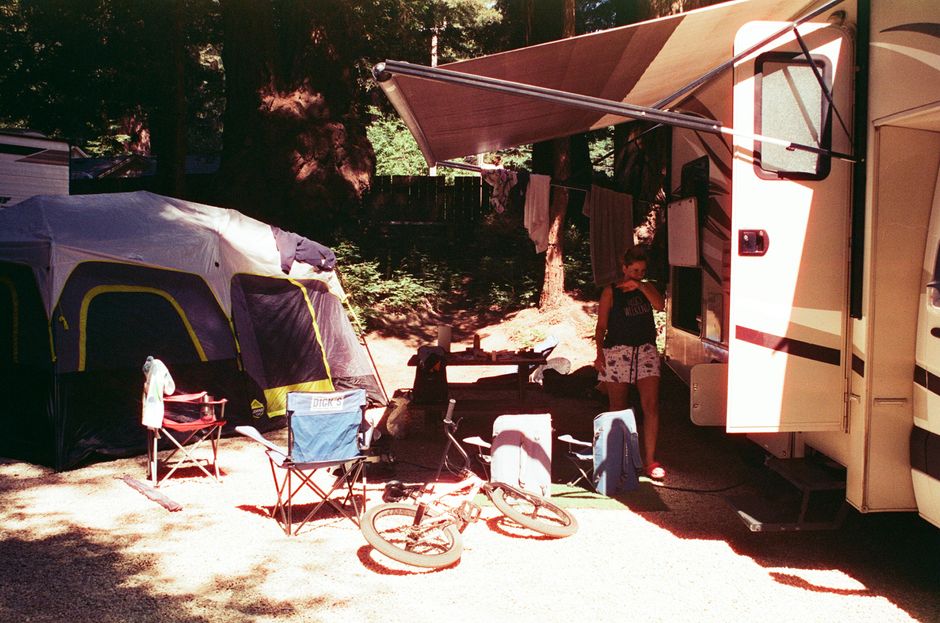
Photo: Ana Benet via Pexels