 Greg Hoffman
A brand-new Class A motorhome rolled out of a dealership in Phoenix last spring. Sticker price: $187,000. By the time the buyer drove it 400 miles to their first campsite in Sedona, three things had already stopped working: the slide-out motor was grinding, the bathroom exhaust fan was dead, and a cabinet door had popped off its track. The dealer fixed it all under warranty, sure. But that buyer spent their first week of “freedom” on the phone with a service department instead of hiking red rocks. I’ve heard this story, or some version of it, more times than I can count.
This isn’t an argument against buying new. Sometimes new is the right call. But the new-versus-used decision deserves a lot more honesty than the average RV sales floor is going to give you.
What You’re Actually Paying For When You Buy New
Let’s talk depreciation first. It’s the financial lynchpin here.
A new RV loses roughly 20 to 25 percent of its value the moment you sign the papers. By the end of year one, you’re typically looking at a 30 percent drop. That means a $100,000 motorhome is worth somewhere around $70,000 after twelve months, assuming you haven’t put a scratch on it. RVs depreciate faster than almost any other major purchase, including most boats and certainly most cars.
So when you buy new, you’re paying a significant premium for factory warranty coverage, the knowledge that no one has abused it before you, and the psychological comfort of being the first one to sleep in it. Those things have real value. But you need to know what they cost.
The factory warranty is genuinely useful for those first-year gremlins. Most new RVs come with a one-year bumper-to-bumper warranty, with coach components sometimes covered for two years and the chassis (on motorhomes) often covered for three years or more. Warranty work can add up fast. A single slide-out repair, outside of warranty, runs $800 to $2,500 depending on the mechanism. A new roof membrane replacement is $3,000 to $7,000 or more. If you’re buying new and those repairs hit in year one, warranty coverage pays for itself quickly.
Here’s the part dealers won’t emphasize: new RVs come with bugs. The RV manufacturing industry doesn’t have the same quality control standards as the automotive industry. Assembly lines move fast. Appliances and electrical systems are sourced from multiple suppliers and integrated with varying degrees of care. I’ve talked to full-timers who bought brand-new coaches and spent the better part of their first six months getting warranty items sorted. That’s time, and sometimes a lot of driving out of your way to find an authorized service center.
The Real Case for Buying Used
When I bought my first rig, a 2009 Keystone Cougar fifth wheel, it was 2019 and the unit was ten years old. I paid $18,500. The previous owners had taken decent care of it, there were some minor cosmetic issues, and the tires needed replacement. But the bones were solid, and critically, most of the early failure points had already happened and been fixed.
That’s the concept experienced RVers call “buying past the problems.” New RVs have systems that fail in the first year or two: slide seals dry out, fan motors die, LP regulators act up, water heaters develop igniter issues. If you buy a rig that’s three to five years old and has been properly maintained, a lot of those early failures are already in the rearview mirror.
Used also means you can get significantly more rig for your money. A five-year-old Class A diesel pusher that retailed new for $250,000 might be available for $110,000 to $130,000 today. That’s a real number, not a hypothetical. You’re buying a nicer unit than you could otherwise afford.
The risks are real, though. Roof damage and water intrusion are the biggest killers of used RVs. A roof that’s been leaking slowly for two seasons can mean rotted sidewalls, damaged subfloor, and mold, and you might not see any of it without a professional inspection. Delamination (when the fiberglass sidewall separates from the underlying structure) is another one to watch for. Run your hand along the exterior sides and look for bubbles or soft spots.
Before you buy any used RV, spend $300 to $600 on an independent RV inspection from a certified inspector. Find one through NRVIA (National RV Inspectors Association). This is non-negotiable. I’ve seen people skip this step and regret it bitterly six months later when they discover a slow roof leak that’s been quietly wicking into the walls for years.
A Side-by-Side Comparison
| Factor | New RV | Used RV (3-7 years old) |
|---|---|---|
| Purchase price | Full retail | 30-60% less than original MSRP |
| Depreciation hit | You absorb it | Previous owner absorbed it |
| Warranty coverage | Full factory warranty | None, or very limited |
| Known condition | Pristine (mostly) | Requires thorough inspection |
| Hidden problems | Less likely, but not impossible | Real risk without inspection |
| Financing rates | Often 5.99-7.99% (dealer financing) | Can be higher (7-11%) |
| Customization | Factory order options available | You get what’s there |
| Setup time | May need to add accessories | Often comes with extras |
| Insuring | Standard rates | Similar, may be slightly lower |
| Peace of mind | High (short term) | High (after inspection clears it) |
Here’s a practical breakdown of the major factors, honest and without spin:
| Factor | New RV | Used RV (3-7 years old) |
|---|---|---|
| Purchase price | Full retail | 30-60% less than original MSRP |
| Depreciation hit | You absorb it | Previous owner absorbed it |
| Warranty coverage | Full factory warranty | None, or very limited |
| Known condition | Pristine (mostly) | Requires thorough inspection |
| Hidden problems | Less likely, but not impossible | Real risk without inspection |
| Financing rates | Often 5.99-7.99% (dealer financing) | Can be higher (7-11%) |
| Customization | Factory order options available | You get what’s there |
| Setup time | May need to add accessories | Often comes with extras |
| Insuring | Standard rates | Similar, may be slightly lower |
| Peace of mind | High (short term) | High (after inspection clears it) |
One thing people often overlook: used RVs frequently come loaded with extras the previous owner added. Solar panels, upgraded mattresses, nicer outdoor kitchens, aftermarket backup cameras. I’ve bought used units that came with $4,000 worth of add-ons already installed. That’s a genuine bonus.
How to Buy a Used RV Without Getting Burned: A Step-by-Step Process
If you’re leaning used, here’s how to approach it without making an expensive mistake.
Step 1: Set a hard budget. Include the purchase price, estimated repair budget (10 to 15 percent of purchase price for a unit over five years old is reasonable), insurance, registration, and any immediate must-have upgrades like tires or a surge protector.
Step 2: Identify the right type of rig for your actual use case. If you’re full-timing, livability matters more than towability. If you’re weekend camping, you might not need the space you think you do. Be brutally honest with yourself about how often you’ll actually use it.
Step 3: Search NADA Guides and RV Trader. Get a sense of the real market value for the specific make, model, year, and floorplan you want. Don’t rely on a seller’s asking price as a benchmark.
Step 4: When you find a candidate, ask for all service records. A seller who has nothing to show you has likely done nothing. That’s not automatically a dealbreaker, but it raises the stakes on the inspection.
Step 5: Hire a certified inspector before you commit any money. Check NRVIA.org for certified inspectors in the area where the RV is located. A good inspector will check the roof, all slides, all appliances, the electrical system (both 12V DC and 120V AC), plumbing, LP system, and structural integrity.
Step 6: Negotiate based on inspection findings. If the inspector finds $2,000 in needed repairs, ask for $2,000 off the price, or have the seller fix the issues before closing. Walk away if they won’t budge and the issues are significant.
Step 7: Add essential safety and usability gear. A surge protector is mandatory if you’re plugging into campground power, where voltage spikes and low-power conditions can fry your inverter or air conditioner. A water filter protects your fresh water system and makes campground water palatable. Leveling blocks are cheap and you’ll use them constantly. If the rig doesn’t already have solar and you plan to boondock, a basic 200-watt kit with a battery monitor is worth adding before your first trip.
(This site may earn a commission on qualifying purchases.)
Financing and Total Cost of Ownership
Sources
People focus on the monthly payment. That’s the mistake.
RV loans carry higher interest rates than mortgage loans and often longer terms, sometimes 15 to 20 years on expensive units. A $150,000 motorhome at 8 percent over 15 years runs you about $1,430 per month, and you’ll pay roughly $107,000 in interest over the life of the loan. That’s not a horror story if you’re living in the thing full-time (since you’re replacing rent), but it’s a fact you should stare at before you sign.
Used RV financing can be trickier. Some lenders won’t finance rigs older than 10 to 15 years, or they’ll require a larger down payment. Credit unions often beat dealer financing. It’s worth shopping around before you ever set foot on a dealership lot.
Don’t forget the ongoing costs: campground fees or memberships, fuel, propane, insurance (figure $1,500 to $3,000 per year for a mid-range motorhome), maintenance (budget 2 to 3 percent of the rig’s value annually), and eventually, tires. A set of six tires on a Class A is $2,000 to $4,000 installed. That bill comes every five to seven years whether you want it to or not.
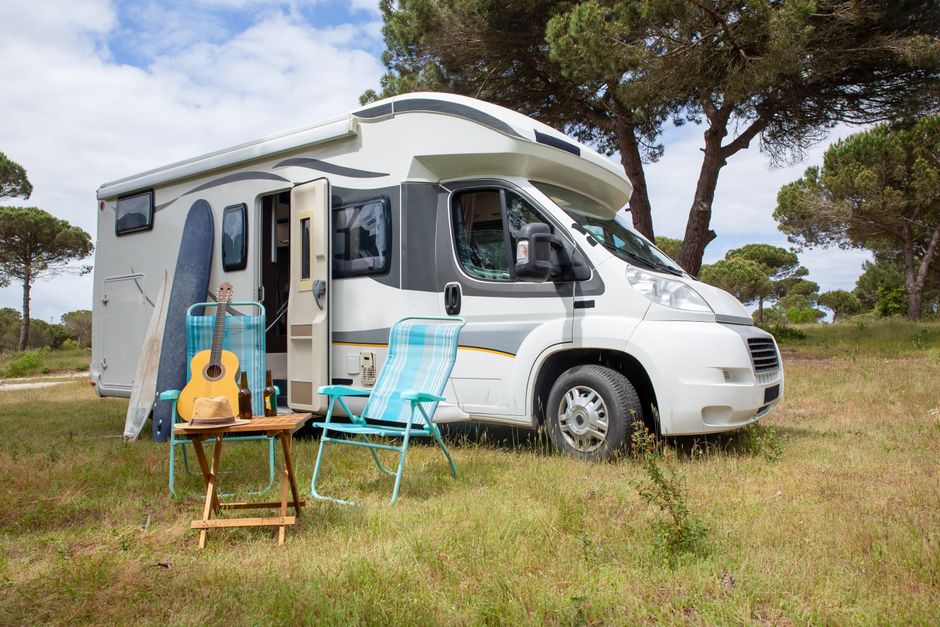
Photo: Anton Massalov via Pexels