 Tony Reeves
You’re standing in a dealership lot on a Saturday morning, coffee going cold in your hand, staring at two very different machines. The salesperson is hovering. Your partner is already climbing into a Class A motorhome the size of a city bus. And you have absolutely no idea which direction to walk. I’ve been there. Six years and 90,000 miles later, I can tell you that this decision shapes almost every single day of your life on the road, and most people get it wrong because they fall in love with floor plans instead of thinking about how they actually live.
What You’re Really Choosing Between
Let’s strip the romance out of this for a second.
A motorhome is a vehicle and a home built into one unit. You buy one thing. You drive one thing. When you arrive at camp, you walk back to your kitchen without unhooking anything. Class A, B, and C are the three categories, ranging from those massive diesel pushers you see parked at casino lots to the compact camper van conversions.
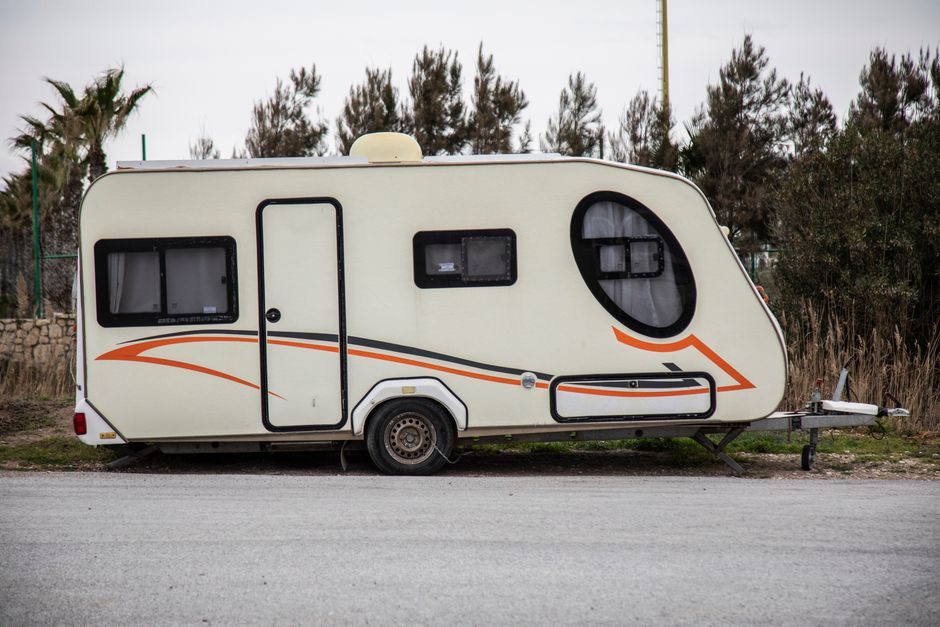
A travel trailer is towed behind a separate truck or SUV. When you unhook it at camp, your tow vehicle becomes a normal car again. You can drive to the grocery store, haul your kayaks to the put-in, or go explore a town without breaking down your entire campsite. The trailer stays put.
These are fundamentally different relationships with your rig, and neither one is objectively better. They solve different problems for different people.
The Real Cost Comparison (Not What the Sticker Says)
| Aspect | Motorhome | Travel Trailer |
|---|---|---|
| Purchase Price (Entry-Level) | $80,000-$100,000+ (Class C); $200,000-$500,000+ (Diesel) | $25,000-$45,000 |
| Additional Tow Vehicle Cost | None (included) | $40,000-$60,000 |
| Fuel Economy | 7-14 mpg | 12-16 mpg (with capable tow vehicle) |
| Engine/Drivetrain | Specialized chassis; fewer mechanics | Travel trailer has no drivetrain; tow vehicle is standard |
| Day-to-Day Flexibility | Limited (must drive entire rig or tow auxiliary vehicle) | High (unhook and use tow vehicle normally) |
| Interior Feel | More residential; integrated flow | Functional; separate from tow vehicle |
| Setup Complexity at Camp | Moderate (power, water, sewer connections) | Higher (unhitch, stabilize all four corners, then connections) |
| Mechanical Failure Risk | Single engine and transmission to fail | Minimal drivetrain issues; primarily wheel bearings or brake controller |
Everyone focuses on purchase price and misses the lifetime math.
A decent entry-level travel trailer, something like a 24-foot Keystone Passport or a Grand Design Reflection, runs $25,000 to $45,000 new. A comparable motorhome, say a Class C on a Ford E-450 chassis, starts around $80,000 and climbs fast. Class A gas rigs open around $100,000. Diesel pushers regularly hit $200,000 to $500,000.
But purchase price is just the beginning.
With a motorhome, you have one engine, one transmission, and one set of chassis systems to maintain. You’re also on a specialized chassis that fewer mechanics can touch. When my 2005 Coachmen broke down outside Tucson on a 109-degree day, I waited four days for a part because no local shop stocked components for a Workhorse chassis. A travel trailer doesn’t have a drivetrain to fail. The worst mechanical scenario with a trailer is usually a wheel bearing or brake controller issue.
On the flip side, travel trailer owners need a capable tow vehicle. If you don’t already own a heavy-duty truck, add $40,000 to $60,000 to your budget. And that truck has its own maintenance costs: transmission flushes, upgraded brakes, extra tire wear from hauling weight constantly.
Insurance runs differently too. Motorhomes are typically insured as recreational vehicles with full-timer options available. Trailer insurance is often cheaper per unit, but you’re insuring two vehicles instead of one.
Fuel is where motorhome owners get a rude wake-up call. A Class A gas coach might average 7 to 10 miles per gallon. A Class C might do 10 to 14. Towing a 28-foot trailer with a Ram 2500 diesel? You’ll likely see 12 to 16 mpg, which actually beats most motorhomes on long hauls. That’s the counterintuitive part nobody mentions.
Driving and Day-to-Day Livability
Here’s something nobody tells you at the dealership: driving a 40-foot motorhome is genuinely hard at first.
You’re piloting a vehicle that’s 13 feet tall, possibly 8.5 feet wide, and has a turning radius that requires advance planning at every fuel stop, restaurant, and national park entrance. Low bridges, tight campground loops, propane filling stations with canopies. All of it becomes obstacles you have to think about constantly.
Towing a trailer has its own learning curve. Backing into a campsite with a trailer attached is a skill that takes real practice. You will jackknife in public at least once. Your mirrors need to be set perfectly, and you need to understand trailer sway before you experience it at 70 mph on an interstate.
That said, day-to-day livability favors the trailer setup for most people. Once you’ve parked and leveled your trailer (a good set of leveling blocks like Camco’s Fasten leveling system makes this much faster), you unhook and suddenly you have a normal vehicle again. Want to drive 45 minutes into town for dinner? You just drive. Motorhome owners either stay close to camp, drive the whole rig, or tow a small car behind them, which adds complexity and cost.
Motorhome interiors, however, tend to feel more residential. The floor plan flows better. The cab area integrates with the living space. In bad weather, you walk from your bedroom to your driving seat without going outside. That matters more than you’d expect after a few weeks of winter camping.
The Setup, Leveling, and Connection Process
This is where a lot of new RVers underestimate the daily grind.
Arriving at camp in a motorhome:
- Pull into your site, align your position front to back
- Check your level readings (side-to-side and front-to-back)
- Deploy auto-leveling jacks if equipped, or manually position leveling blocks
- Connect shore power using a 30 or 50-amp surge protector (non-negotiable, campground power is notoriously dirty)
- Connect water with a filtered water hose or inline filter
- Set up sewer connection if full hookups are available
- Slide out your slide rooms if applicable
- Done. Walk to your kitchen.
Arriving at camp with a travel trailer:
- Back into your site (this is the hard part, especially solo)
- Unhook from the hitch: disconnect trailer brakes, power cord, safety chains, and weight distribution bars if equipped
- Lower your tongue jack to stabilize the front
- Deploy stabilizer jacks on all four corners
- Check your level, adjust with blocks as needed
- Connect shore power, water, and sewer
- Set up slides if applicable
- Now drive your tow vehicle wherever you want
The motorhome setup is faster and simpler once you’re practiced. But you’re not getting your “car” back until you’re ready to leave.
Solar, Boondocking, and Off-Grid Capability
Six years of full-timing taught me that your power system matters more than your floor plan.
Both motorhomes and travel trailers can be built out for serious off-grid use. But the platforms work differently.
Motorhomes, especially Class A and C units, often have chassis alternators that can charge house batteries while driving. Many also have generator bays already built in. But they’re also power-hungry. Larger roof AC units, more lighting, bigger water heaters, all of it draws more amperage.
Travel trailers tend to have simpler 12-volt systems and more roof space for solar panels relative to interior square footage. A well-equipped trailer with 400 to 600 watts of solar and a solid lithium battery bank can handle weeks of boondocking without drama.
Get a battery monitor installed before you leave the dealership, regardless of which rig you choose. Watching your state of charge in real time changes how you use power and protects your battery investment. I use a Victron BMV-712 and check it constantly.
The best boondocking rigs I’ve seen in six years of campfire conversations have usually been well-equipped trailers or van conversions. Motorhomes can do it, but the fuel burn to reposition when the weather turns makes them less flexible.
Resale Value and Long-Term Depreciation
Sources
- Camco’s Fasten leveling system
- 30 or 50-amp surge protector
- filtered water hose
- solar panels
- battery monitor
Neither RVs nor travel trailers are investments. Let’s be honest about that upfront.
RVs depreciate hard. A new motorhome can lose 20 to 30 percent of its value in the first two years. Travel trailers aren’t much better, though their lower starting price means the raw dollar loss is smaller.
What holds value better is brand reputation and mechanical simplicity. A used Airstream Bambi from 2015 holds its value remarkably well because of brand demand and build quality. A diesel pusher from a manufacturer that went bankrupt (several have in the last decade) can be nearly worthless because parts and service become nearly impossible to source.
Buying used, specifically two to three years old with one previous owner, is almost always the smarter play. Let someone else absorb the steepest depreciation curve.
After six years, I’m still in a travel trailer setup, a 2021 Lance 2465 pulled by a Ram 2500. I’ve looked at motorhomes many times and almost pulled the trigger twice. What keeps me coming back to the trailer life is simple: I like having my truck available without dismantling camp. But I have friends doing 50,000 miles a year in Class A Tiffins who wouldn’t trade for anything. The right answer lives in the details of your actual life, how often you move, whether you travel solo or with a partner, how much mechanical risk you can stomach, and how you want to spend your mornings. Figure that out first, then go find the rig that fits it.
Photo: Viktoria B. via Pexels