 Julia Davidson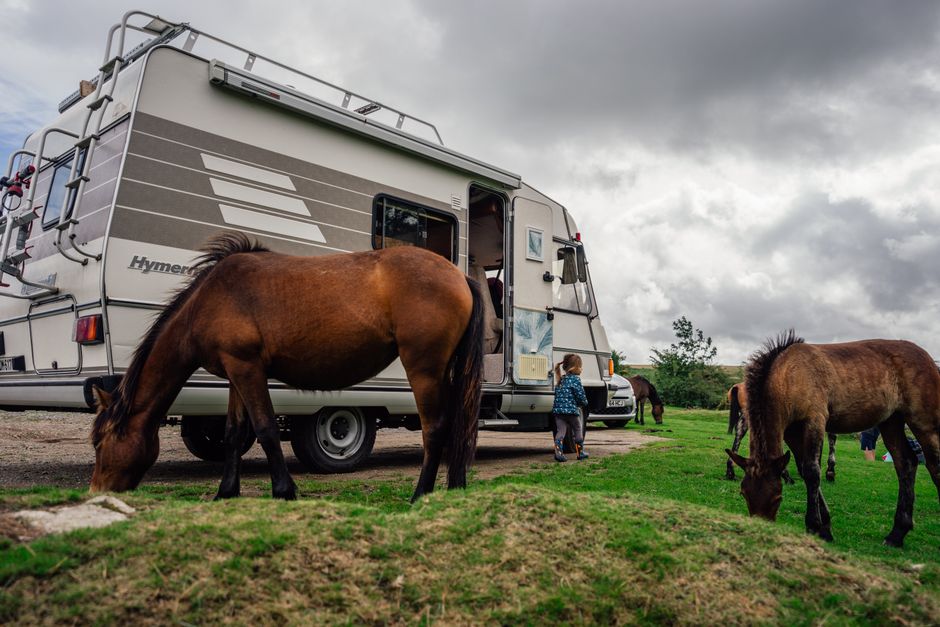
Most advice about starting full-time RV living begins with the wrong question. Everyone asks “which RV should I buy?” when the thing that will actually determine whether you last six months or six years is whether you’ve thought through the non-glamorous stuff: mail, health insurance, your domicile state, where your money is coming from, and what happens when the water pump dies at 9pm on a Saturday in Amarillo.
I made plenty of those early mistakes myself. Let me spare you some of them.
Before You Buy Anything, Figure Out the Money
The number most people quote is around $1,500 to $2,500 per month for a solo full-timer, or $2,000 to $3,500 for a couple, covering campground fees, fuel, food, and basic maintenance. Those numbers are real, but they assume you’re not paying off an expensive rig and that nothing breaks. Neither assumption holds in year one.
Budget separately for a maintenance fund. I put $300/month into a dedicated account for rig repairs and never touch it for anything else. In some months it sits there accumulating. In other months I blow through $900 in a single visit to a mobile RV tech. The $300/month average has held up over eight years.
Campground costs are all over the place. State and national forest campgrounds run $12 to $22/night. Private RV parks with full hookups in popular spots (Sedona, coastal Maine, Myrtle Beach in summer) can hit $70 to $90/night. If you plan to stay in those places regularly, your budget’s going to take a hit. Get a $30/year America the Beautiful pass and learn Freecampsites.net and iOverlander before you spend a dollar on paid camping.
Remote work, a pension or Social Security, investment income, or a business you can run from a laptop, these are the real prerequisites. “I’ll figure out the income part later” is how people end up back in apartments by month four. Sort this before you give notice.
Choosing Your Rig: A Practical Framework, Not a Dream Sheet
| RV Type | Price Range (Used) | Fuel Economy | Best For | Learning Curve |
|---|---|---|---|---|
| Class B / Camper Van | $40,000-$75,000 | Higher | Singles or couples, easy parking | Low |
| Class C Motorhome | $35,000-$65,000 | Moderate | Small families, standard amenities | Low to Moderate |
| Travel Trailer / 5th Wheel | $50,000+ (5th wheel); truck $35,000-$60,000 | Varies | Families, stationary stays | Moderate to High |
| Class A Diesel Pusher | $180,000-$400,000 | $1.25-$1.50/mile | Luxury full-timers | High |
Here’s my honest take: most first-time full-timers buy too much RV.
A 40-foot Class A diesel pusher looks incredible on YouTube. It also costs $180,000 to $400,000 new, burns $1.25 to $1.50/mile in diesel, won’t fit in a huge percentage of state park sites, and requires a real learning curve to drive. I’m not saying don’t get one. I’m saying don’t start with one.
The categories worth considering for a beginner, ranked by how forgiving they are to learn on:
Class B / Camper Vans. Lowest cost of entry, easiest to drive, you can park anywhere a car parks. Limited living space, but if you’re single or two people who actually like each other in tight quarters, a used high-roof Transit or Sprinter conversion in the $40,000 to $75,000 range is a legitimate starting point. Repairs happen at any Ford or Mercedes dealer instead of a specialty RV shop. That matters at 7pm on a Sunday.
Class C Motorhomes. Built on a truck or van chassis, which means the drivetrain issues get handled at a regular mechanic. A used 24 to 28-foot Class C from a reputable brand (Winnebago, Coachmen) in the $35,000 to $65,000 range gives you enough room without being unwieldy. I’d prioritize one from 2015 or newer to avoid older slide-room mechanism headaches.
Travel Trailers / Fifth Wheels. You unhitch and have a separate vehicle to drive around. You’re also managing two vehicles, which isn’t free. A quality 5th wheel with residential amenities costs serious money (Keystone Montana or Grand Design Reflection start around $50,000 used), and you’ll need a capable truck to pull it, which adds another $35,000 to $60,000 if you don’t already have one. Not the cheapest option once you add it all up.
Whatever you buy, get it inspected by a certified RV inspector before you hand over money. Find one at nrvia.org. This costs around $400 to $600 and has saved multiple readers I know from buying someone else’s water damage nightmare.
The Paperwork Nobody Warns You About
RV LIVING FOR BEGINNERS - The RV Basics You Should Know! · HappilyEverHanks on YouTube
Pick a domicile state before you sell or vacate your house. This is your legal home state for taxes, vehicle registration, and voting. South Dakota, Texas, and Florida are the three most popular among full-timers, all for similar reasons: no state income tax, relatively easy to establish residency without actually living there, and vehicle registration processes that don’t make your brain hurt.
South Dakota’s probably the most common choice. You can establish residency in a single day by staying one night at a motel, visiting the DMV in person, and getting a South Dakota driver’s license. Companies like America’s Mailbox in Box Elder, SD ($179/year) will handle your mail forwarding and serve as your permanent address. I’ve used this system for years. It works.
Mail forwarding is non-negotiable. You need a real street address (not a PO box) for your driver’s license, vehicle registration, and most banking. Escapees RV Club offers mail forwarding and a domicile package out of Livingston, Texas, and their service is solid. Their basic mail forwarding plan runs about $100/year plus postage.
Health insurance is the one that keeps people stuck. If you’re under 65 and don’t have coverage through a remote employer or a spouse’s plan, you’re looking at ACA marketplace plans. Get a plan with a national network, not an HMO tied to a specific region. Many full-timers use Sedera or Liberty HealthShare as a cost-sharing alternative, though those aren’t insurance and come with real limitations. The research here is genuinely mixed, and this is worth talking to a broker about.
Setting Up the Rig to Actually Live In It
The difference between a comfortable full-timer and a miserable one often comes down to a few hundred dollars in practical gear, not the rig itself.
Power and connectivity matter more than almost anything. At minimum, get a 30 or 50-amp surge protector before you plug into any campground pedestal. The Progressive Industries EMS-PT30C (around $170) or their 50-amp equivalent has protected me from bad shore power more times than I can count. Campground power quality is genuinely awful at many older parks.
If you want any independence from campground hookups, look at solar. A basic 200-watt rooftop panel setup with a 100Ah lithium battery (Battle Born or Renogy are both solid) will run LED lights, charge devices, run a fan, and keep a 12V refrigerator going. That’s around $800 to $1,200 in components if you DIY. A battery monitor like the Victron BMV-712 (~$120) tells you exactly what’s going into and out of your batteries, which is the only way to stop guessing about your power state.
For water, always run a dedicated RV inline water filter before water enters your tank. The Camco TastePURE is $20 and does the job. Don’t skip this at older campgrounds.
Leveling blocks sound boring until you’ve spent a night trying to sleep at a 4-degree tilt. A set of Camco’s yellow stackable chocks runs about $30. Put them in your exterior bay and never go without them.
Cell boosters and hotspots deserve a whole article. Short version: a WeBoost Drive Sleek or the RV 65 model ($180 to $500) helps in fringe areas, but it can’t create signal where there’s literally none. A dual-carrier hotspot setup (one Verizon, one T-Mobile) covers far more geography than any booster.
The First 90 Days: What to Expect
Sources
- dedicated RV inline water filter
- Leveling blocks
- Clément Proust
- here is genuinely mixed
The first month is usually a mix of exhilarating and overwhelming. You’ll discover things about your rig that the previous owner or dealer didn’t mention. The refrigerator might not hold temp when it’s 95 degrees out. The slideout might have a slow leak you missed during inspection. Plan to spend your first few weeks parked somewhere stable with hookups, near a city with RV parts availability, rather than immediately chasing remote destinations.
Year one is when most expensive mistakes happen, so staying near repair resources matters. I spent my first three months in the Phoenix area specifically because there were four RV repair shops within 20 miles and parts availability was good. Not glamorous. Practical.
The loneliness issue is real and underreported. If you’re coming from a tight social network, the first few months of constant movement can feel isolating. Apps like Meetup, communities like the Xscapers RV group (part of Escapees, aimed at working-age full-timers), and campgrounds that host rallies help. Slow down enough to actually meet people. The full-timers who thrive long-term build community on the road; the ones who don’t eventually burn out.
The first year is hard in ways you won’t fully predict, and worth it in ways that are also hard to predict. Spend less on the rig than your gut says, more on reliability gear than you think you need, and build the logistics infrastructure (domicile, mail, insurance) before you leave. The scenic drives are great. Everything surrounding them is what actually determines whether this life sticks.
Photo: Clément Proust via Pexels