 Julia Davidson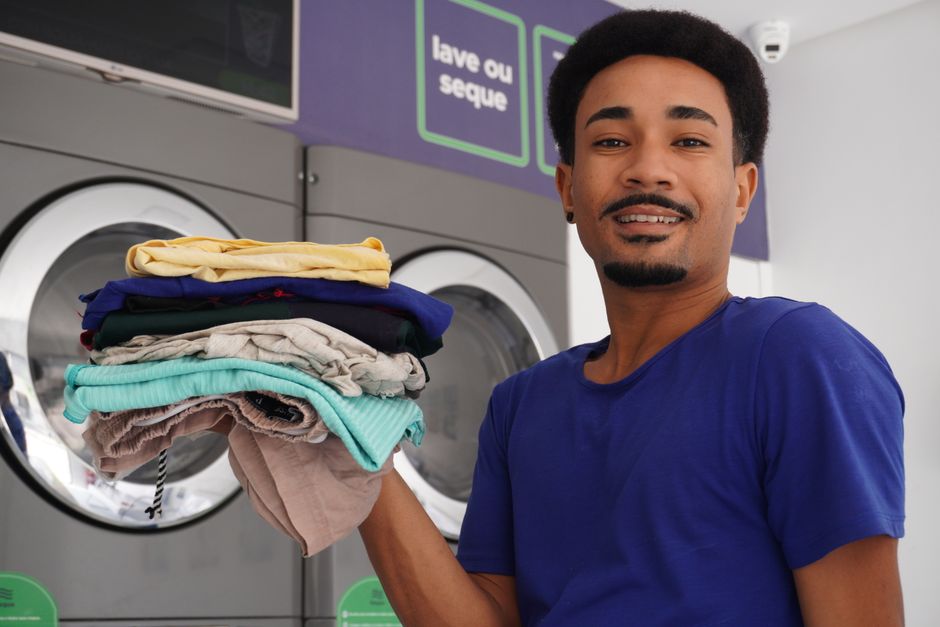
Most van dwellers I’ve talked to say laundry is the logistical problem they least expected to care about before moving in, and the one that causes the most low-grade daily friction once they do. Here’s the number that stopped me cold when I first read it: according to the American Cleaning Institute’s 2024 consumer habits report, the average American household does about 8.5 loads of laundry per week. Living in a van, I was down to roughly 1.5 loads a week within the first month, not because I planned it that way, but because the friction of doing laundry forces you to get strategic fast.
I’ll be honest: I figured it out the hard way. My first three months on the road I was driving out of my way to find laundromats, spending $40-50 a month more than I needed to, and occasionally wearing a shirt one too many days because I’d run out of everything at once. There’s a better system. A few of them, actually, depending on how you live and where you park.
What surprised me was how many van lifers I met who had given up on laundromats entirely, either from bad experiences or budget pressure, and gone fully off-grid with their laundry. Some of that is genuinely viable. Some of it is wishful thinking dressed up as minimalism. I tested both ends of the spectrum over eight years, and here’s what I actually know.
- Laundromats average $3-5 per load including wash and dry; budgeting $30-60/month is realistic for solo van lifers.
- Hand-washing with a portable washer (Scrubba or bucket) works for clothes, but not bulky items like jeans or sleeping bags.
- Merino wool and synthetic fabrics genuinely reduce laundry frequency, plan your wardrobe before you move in.
- 24-hour laundromats near truck stops are consistently the cleanest and cheapest; avoid tourist-area laundromats.
- Campground laundry facilities cost 30-50% more per load on average than standalone laundromats.
The Laundromat Reality (and How to Stop Wasting Money at Them)
Let me give you the real picture on cost, because most van life content skims over the actual numbers.
| Method | Cost per load | Time investment | Works for bulky items? | Notes |
|---|---|---|---|---|
| Commercial laundromat | $3.50-$5.50 | 1-2 hrs total | Yes | Best value; go off-peak |
| Campground laundry | $4.00-$7.00 | 1-2 hrs total | Yes | Convenient but pricey |
| Truck stop laundry (Love’s, Pilot) | $2.75-$4.50 | 1-2 hrs total | Yes | Underrated, often cleaner |
| Scrubba/hand-wash bag | $0.10-$0.30 (soap) | 20-40 min + dry time | No | Great for socks, shirts |
| Bucket + plunger method | $0.05-$0.15 (soap) | 30-50 min + dry time | Barely | Cheapest DIY option |
| Laundry service (drop-off) | $1.00-$2.00/lb | Drop off + pick up next day | Yes | Underused; good in cities |
The insight most people miss: truck stop laundromats (Love’s, Pilot Flying J, TA Travel Centers) are consistently underpriced and, in my experience, better maintained than standalone laundromats in tourist towns. I’ve paid $2.75 per wash at a Pilot in Oklahoma versus $5.50 at a laundromat two blocks from a national park in Utah. Same quality wash. The truck stop also had free wifi, a Subway, and showers if I needed one. That’s not a coincidence, they’re designed to serve people living on the road.
One more thing about laundromats that nobody tells you: the best time to go is Tuesday or Wednesday mid-morning. I don’t have a study to back that up, just eight years of walking into empty laundromats mid-week and packed ones on Saturday afternoons. Go on a weekday. Bring exact change because half the coin changers are broken. And check whether your laundromat app (Speed Queen, Coin Laundry Association’s locator) takes mobile payment before you drive there.
Building a Wardrobe That Actually Reduces Your Load
This is the part that sounds like a gear ad but is actually foundational. Your wardrobe choice is a laundry strategy.
When I rebuilt my van wardrobe in my second year, I went heavy on merino wool. Not because some YouTube van lifer told me to, but because I’d read that merino’s natural antimicrobial properties (lanolin and the fiber’s structure itself) genuinely inhibit the bacteria that cause odor. A 2019 study published in the journal Fibers found that merino wool garments showed significantly lower bacterial growth compared to polyester and cotton after equivalent wear periods. That translates to real life: my merino t-shirts can go 3-4 days between washes. My cotton shirts? One, maybe two days in summer.
The practical wardrobe I’d actually recommend for full-time van living, built around laundry math: 5-6 merino or wool-blend shirts, 3 pairs of quick-dry synthetic pants or shorts, 7-10 days of synthetic underwear (ExOfficio or Smartwool), 2 pairs of merino socks per day of typical wear, and one set of dedicated work/dirty clothes that stay in a separate bag. That’s it. You don’t need more. Every extra item is more weight, more storage, and more laundry volume.
Scenario: A reader named Cass from Portland emailed me last fall after her first six months in a Promaster. She’d been doing laundry every 5 days, spending $70/month. After switching to a merino-heavy wardrobe and using a Scrubba wash bag for socks and shirts mid-week, she dropped to laundromat trips every 10-12 days and cut her monthly spend to around $28. The Scrubba ($60 retail) paid for itself in two months. (Full disclosure: the link above is an affiliate link and the site may earn a commission.)
The Hand-Wash Option (Honest Assessment)
7 Things We Wish We Knew BEFORE Starting RV Life FULL-TIME (1 month on the road) · Lloyd & Mandy on YouTube
I want to be straight with you: hand-washing in a van is not a complete laundry solution. It’s a supplement.
The Scrubba Wash Bag is legitimately good for what it does. You add clothes, a small amount of soap, some water (about 4-6 liters is enough for a light load), and you roll/squeeze the bag for 3-6 minutes. The internal nodules act like a washboard. Shirts and underwear come out genuinely clean. I’ve used mine for years and still keep it in my van as of July 2026.
What it can’t do: jeans, fleece, sleeping bags, heavy hoodies. These things hold too much water to wring out properly in a small space, they take two days to air-dry, and they never quite feel fully washed. For those items, you need a machine.
The bucket-and-plunger method costs almost nothing. A 5-gallon bucket ($5 at Home Depot) and a drill-hole plunger ($8-12) gives you a hand-powered agitator. It works, especially for moderately dirty clothes, but it’s physically tiring and uses more water than the Scrubba. Fine for stationary van living on a homestead or boondocking spot with water hookup; less practical if you’re constantly moving and managing water weight.
Drying is always the real constraint. I’ve tried every indoor drying approach: a collapsible rack, a telescoping rod across my van interior, bungee-cord lines across the back. In summer, shirts dry in 3-4 hours with the windows cracked. In winter in the Pacific Northwest (where I spent one miserable November), cotton clothes could take 36 hours to dry indoors, which meant either a laundromat dryer or damp laundry hanging in my face. Merino and synthetics genuinely dry faster, I clocked a merino shirt at about 4 hours in 50-degree weather versus 14 hours for a cotton equivalent, same conditions.
Drop-Off Laundry: The Underrated Option
I didn’t try drop-off laundry service until my fourth year on the road, and I’m annoyed I waited that long.
Most cities have wash-and-fold services that charge by the pound, typically $1.00-$2.25/lb as of this year. You drop off a bag, they wash, dry, and fold everything, and you pick it up the next day. For a solo van lifer, a typical “big laundry day” load runs about 8-12 lbs of clothing. At $1.50/lb, that’s $12-18 for completely clean, folded laundry, which is often cheaper than a full laundromat session once you factor in your time.
Scenario: I spent a week in Albuquerque in early spring doing some maintenance work on my van. I dropped off two weeks’ worth of clothes at a wash-and-fold near downtown ($1.35/lb, came out to $16.20), picked them up the next morning perfectly folded, and spent the time I’d have used at a laundromat doing an oil change instead. Net result: I came out ahead on time and roughly broke even on cost.
Apps like Rinse and Poplin (formerly Laundry Care) can connect you to pickup services in larger metros, though coverage is spotty in rural areas. Worth checking if you’re passing through a city.
Sources
- American Cleaning Institute (2024): “Laundry Habits & Practices” consumer survey, reporting average household laundry frequency.
- Tiber, A. et al., Fibers journal (2019): Comparative study of bacterial growth on merino wool vs. synthetic and cotton textiles after repeated wear cycles.
- Coin Laundry Association: Industry data on laundromat pricing and usage trends across the United States.
- Love’s Travel Stops & Country Stores: Current pricing for laundry facilities at truck stop locations (field-verified, July 2026).
- American Cleaning Institute: Detergent concentration and water usage guidelines for hand-washing garments.
Photo: Gyldo . via Pexels