 Barbara Mitchell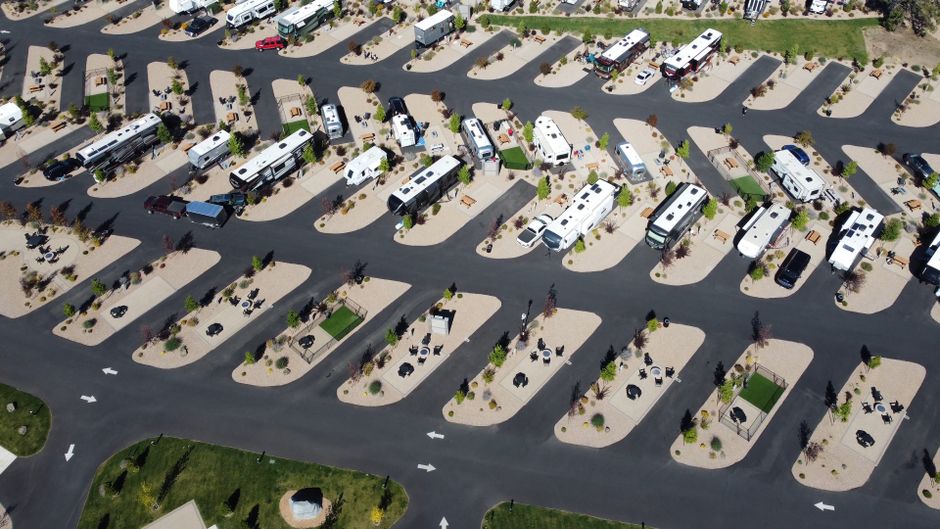
My first month on the road, I spent $6,800. My best month ever cost $1,340. Both were real, both were full-time RV life, and neither number tells the whole story. If you’ve been Googling “how much does RV life cost” and getting answers that range from $1,500 to $5,000 a month with no real explanation of why, you’re not crazy for being confused. The range is that wide because the variables are enormous, and most people writing about this have a vested interest in making it sound either thrillingly affordable or comfortably manageable.
I’ll just tell you what I actually know after six years and 90,000 miles.
The Big Fixed Costs: What You Owe Before You Turn the Key
Every month, certain costs exist whether you’re parked or driving, whether you had a great month or your furnace died in January. These are your baseline, and getting honest about them is where most budget planning goes wrong.
RV payment or depreciation. If you financed your rig, that monthly payment is real money. A $60,000 Class C at 7% interest over 15 years runs about $540 a month just in interest and principal. A $120,000 Class A? You could be paying $900 to $1,100 a month. If you bought with cash, you don’t have a payment but you have depreciation. That’s not abstract. If your rig is worth $20,000 less after three years, that’s $555 a month in lost wealth you’ll feel when you sell.
Insurance. Full-time RV insurance isn’t the same as regular auto insurance, and regular auto policies often won’t cover you if you’re living in the vehicle full time. Good full-time coverage from companies like National General or Progressive runs $150 to $350 a month depending on rig type, your driving record, and coverage limits. Don’t skip it or fudge the details. A single accident wipes out years of “savings” from the lifestyle.
Health insurance. This one silences people fast. If you’re under 65 and not covered by an employer or a spouse’s plan, you’re buying your own. Marketplace plans for a healthy 45-year-old can run $400 to $700 a month depending on the state you use as your domicile. Many full-timers use South Dakota, Texas, or Florida for domicile because of favorable insurance markets. This is real money and non-negotiable if you don’t want to go bankrupt from a medical issue.
Before you even eat, fuel, or park anywhere, your fixed monthly floor might be $1,200 to $2,000 for a single person or $1,800 to $3,000 for a couple. That’s just existing.
Campground and Parking Costs: Your Biggest Variable
This is where the lifestyle can be cheap or shockingly expensive, and where the most meaningful choices live.
A full hookup site at a private campground like KOA in a popular area runs $50 to $80 per night. Do that every night and you’re at $1,500 to $2,400 a month just in site fees. That’s more than rent in a lot of American cities.
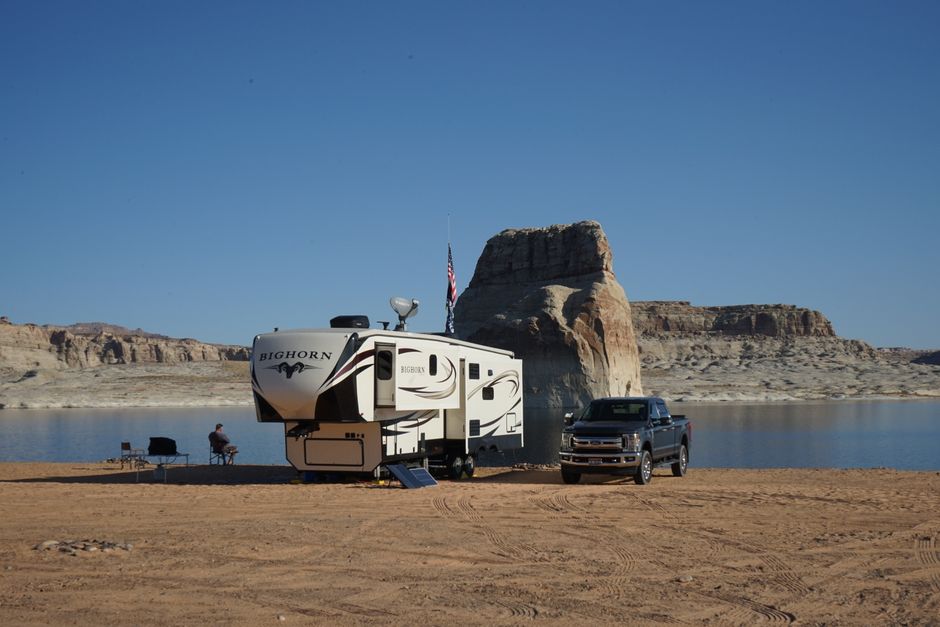
On the other end, serious boondockers who rely on Bureau of Land Management (BLM) land, National Forest dispersed camping, and Walmart/Cracker Barrel overnights can camp for free or near-free. I spent one 47-day stretch in Arizona and Utah where my total campground cost was $0. BLM land around Quartzsite, Moab, and Escalante is staggeringly beautiful and genuinely free for up to 14 days per location.
The realistic middle is a hybrid approach. Many full-timers combine free or cheap BLM/dispersed camping when they can, Harvest Hosts membership ($99/year) for overnights at wineries and farms, Thousand Trails or Passport America memberships for discounted private parks, and the occasional splurge on a full-hookup site when they need laundry, water refill, or a proper power connection.
Budget this line item honestly at somewhere between $200 and $900 a month depending on your mix. The lower end requires solar capability and water independence. Which brings us to equipment.
Fuel, Maintenance, and the Repairs You Didn’t Budget For
7 Things We Wish We Knew BEFORE Starting RV Life FULL-TIME (1 month on the road) · Lloyd & Mandy on YouTube
| Cost Category | Monthly Range | Notes |
|---|---|---|
| RV Payment/Depreciation | $540-$1,100 | Class C: ~$540/mo; Class A: $900-$1,100/mo |
| Insurance (Full-Time RV) | $150-$350 | Varies by rig type and coverage limits |
| Health Insurance | $400-$700 | Marketplace plan for single 45-year-old |
| Campground/Parking | $200-$900 | Free BLM to $50-$80/night private sites |
| Fuel (Class A Diesel) | $525-$750 | At $3.50/gal, ~1,500 miles/month |
| Maintenance & Repairs | $65-$135 | Industry rule: 1-2% of RV value annually |
| Fixed Baseline (Before Fuel/Food) | $1,200-$3,000 | Single person to couple |
Fuel is simple math until it isn’t. A Class A diesel motorhome gets 7 to 10 miles per gallon. A gas Class C gets 10 to 14. A truck-towed fifth wheel depends on the truck, but figure 10 to 12 mpg towing. At $3.50 per gallon diesel (prices fluctuate wildly, especially in California where I’ve paid $6.40), driving 1,500 miles in a month in a diesel Class A costs $525 to $750. If you’re a slow mover who picks a spot for a month, fuel costs almost nothing. If you’re chasing weather or covering long distances, it adds up fast.
Maintenance is where people get humbled. An RV is a house on wheels, and both the house part and the wheel part break. I’ve had a refrigerator compressor fail ($1,200 repair), a slide room motor seize up ($800), a tire blowout that damaged a wheel well ($600 out of pocket after insurance), an inverter die in the middle of nowhere ($450), and a water pump fail twice ($130 each time, I started buying spares).
The industry rule of thumb is to budget 1% to 2% of the RV’s value per year in maintenance and repairs. On an $80,000 motorhome that’s $800 to $1,600 per year, or $65 to $135 a month. From my experience, that’s optimistic in the early years before you’ve found and fixed all the hidden problems in a used rig.
An extended warranty can help, but read the fine print. Many exclude “wear items” which can mean almost anything when an adjuster is trying to deny a claim.
A surge protector is non-negotiable before plugging into shore power at any campground. Dirty power from aging pedestals fries inverters, air conditioners, and refrigerators. A quality unit like the Progressive Industries EMS-HW50C hardwired model runs about $350 but has saved rigs worth far more. (This site may earn a commission on purchases through affiliate links.)
Solar, Batteries, and Going Off-Grid: Upfront Costs vs. Long-Term Savings
If you want to boondock seriously and reduce campground costs, you need power independence. This is a real upfront investment with real long-term payoff.
A starter solar setup: 400 watts of rooftop panels plus two 100Ah lithium batteries plus a proper MPPT charge controller and wiring runs $1,500 to $2,500 installed. A serious off-grid setup with 800 watts of solar and 400Ah of lithium (like Battle Born or Renogy batteries) can run $4,000 to $6,000.
That sounds like a lot until you realize it can reduce campground spending by $400 to $600 a month. A $4,000 solar system pays for itself in 7 to 10 months if you actually use it. I added 600 watts of solar and 400Ah of lithium in year two. It changed everything about how we traveled.
A battery monitor like the Victron BMV-712 ($85 to $100) tells you exactly what’s going into and coming out of your battery bank. Without one, you’re guessing, and guessing wrong kills batteries early.
For water, a quality inline filter like the Camco TastePURE ($20) protects your tank from campground water that varies from perfectly fine to genuinely questionable. A Renogy leveling kit or Lynx leveling blocks ($30 to $60) are small costs that protect your refrigerator operation and make daily life just better.
Food, Communication, and Everything Else
Groceries and eating out. Two people living in an RV spend about the same on food as two people in a house, unless you’re disciplined. Small kitchens make batch cooking annoying. Being near restaurants when you’re tired after a long driving day is a temptation. Budget $600 to $1,000 a month for food for two people being reasonably careful.
Cell phone and internet. Full-timers rely on cell data more than anything. A dedicated mobile hotspot plan with Verizon, AT&T, or T-Mobile runs $60 to $150 a month. Many people run two carriers for redundancy. Starlink’s RV-mode plan is $150 a month but works almost everywhere, including in canyons and forests where cell signals vanish. Total connectivity budget: $150 to $300 a month.
Subscriptions and misc. Gym membership (Planet Fitness at $25/month gives you showers nationwide), streaming services, mail forwarding services like Escapees or America’s Mailbox ($15 to $30/month), pet expenses if you have animals. These add $100 to $200 a month without much drama.
A Realistic Monthly Budget Breakdown
Here’s what actual full-time RV life costs across three different lifestyle tiers:
| Expense | Budget Traveler | Mid-Range | Comfort Seeker |
|---|---|---|---|
| RV payment/depreciation | $0 (paid off) | $500 | $900 |
| Insurance (RV) | $150 | $200 | $300 |
| Health insurance | $400 | $550 | $700 |
| Campground/parking | $150 | $450 | $900 |
| Fuel | $150 | $350 | $600 |
| Maintenance/repairs | $100 | $150 | $200 |
| Food | $500 | $750 | $1,100 |
| Cell/internet | $150 | $200 | $300 |
| Misc/personal | $100 | $200 | $350 |
| Monthly Total | $1,700 | $3,350 | $5,350 |
The budget traveler has a paid-off older rig, uses BLM land heavily, cooks almost everything, and moves slowly. The comfort seeker has a newer financed motorhome, stays at full-hookup resorts regularly, and eats out frequently. Both are living full-time on the road. Neither number is wrong. They’re just different choices.
Six years in, my average monthly spend across all of 2023 was $2,780 for one person. That includes everything: rig costs, insurance, food, fuel, the $1,800 slide repair in May. Some months I’m under $2,000. Some months I’m over $4,000. The honest truth is that RV life costs what you make it cost, within real constraints, and the best thing you can do before you start is build a budget around your actual numbers, not someone else’s highlight reel.
Photo: Viktoria B. via Pexels
Sources
- Progressive Industries EMS-HW50C
- battery monitor like the Victron BMV-712
- Camco TastePURE
- Renogy leveling kit
- Viktoria B.
Disclosure: As an Amazon Associate, we earn a small commission from qualifying purchases at no extra cost to you. We only recommend products that genuinely support the topics covered in this article.
- Renogy 200W Solar Starter Kit + 30A Charge Controller (~$169), Complete beginner solar kit, 200W monocrystalline panel, charge controller, and mounting hardware included.
- Renogy 2×100W Monocrystalline Solar Panels (~$99), Expandable 200W panel set from the most trusted DIY solar brand, used widely in off-grid and home backup systems.