 Sandra Park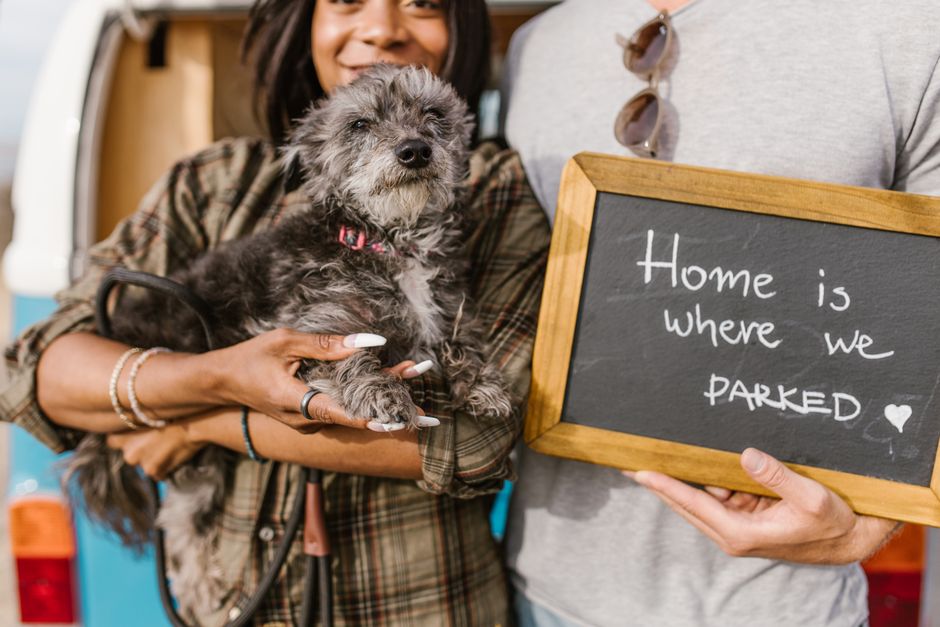
My dog Biscuit has logged more miles than most people’s cars. Somewhere north of 60,000 miles across 34 states, all from a custom platform bed wedged into the passenger-side corner of my 32-foot fifth wheel. When I started full-timing with her in 2018, I figured the hardest part would be tracking down pet-friendly campgrounds. I was completely wrong about that.
The hardest part is everything you don’t anticipate. The vet situation. The anxiety spikes when you’re parked somewhere new every few nights. The campground neighbors giving you the look when your dog barks at 6am. The summer heat that turns your rig into an oven the second you leave to run errands. None of the “RV life with pets” content I found back then was honest about any of it, so here’s my attempt to actually fix that.
Here's how the main campground categories stack up for [full-time RVers with dogs](/rv-life-with-dogs/), based on factors that actually matter beyond just 'pets allowed.'
| Campground Type | Typical Dog Space | Leash Flexibility | Neighbor Density | Hookups | Avg. Nightly Cost | Best For |
|---|---|---|---|---|---|---|
| Corps of Engineers | Large natural sites, often waterfront | Moderate (6-ft standard but room to roam) | Low to moderate | Varies (many electric-only or dry) | $20-$35 | Active dogs needing space; budget-conscious |
| State Parks | Good natural terrain, trails common | Strict 6-ft enforcement typical | Moderate | Varies widely by state | $25-$45 | Hiking dogs; scenic longer stays |
| KOA | Consistent but compact sites | Strict; often fenced dog parks | High | Full hookups standard | $45-$75 | Amenity needs; predictable experience |
| Thousand Trails | Highly variable by location | Moderate | Moderate to high | Full hookups typical | Membership-based ($500-$600/yr + fees) | Long-term stays; membership value |
| Harvest Hosts | Usually open land (farms, wineries) | Often flexible; property-dependent | Very low | None (dry camping only) | Membership only ($99-$179/yr) | Social dogs; one-night variety stops |
| Boondocking (BLM/Forest) | Unlimited open space | Typically no restrictions | None to very low | None | Free | Off-leash needs; self-sufficient rigs |
General information for comparison, confirm specifics for your situation.
Finding Campgrounds That Actually Work For Dogs
“Pet-friendly” is basically marketing language for “we allow dogs.” It tells you nothing about whether there’s actual grass, whether the leash rule means a strict 6-foot enforcement, whether the dog park is a fenced mud pit, or whether a dozen yappy dogs are parked within earshot of your site.
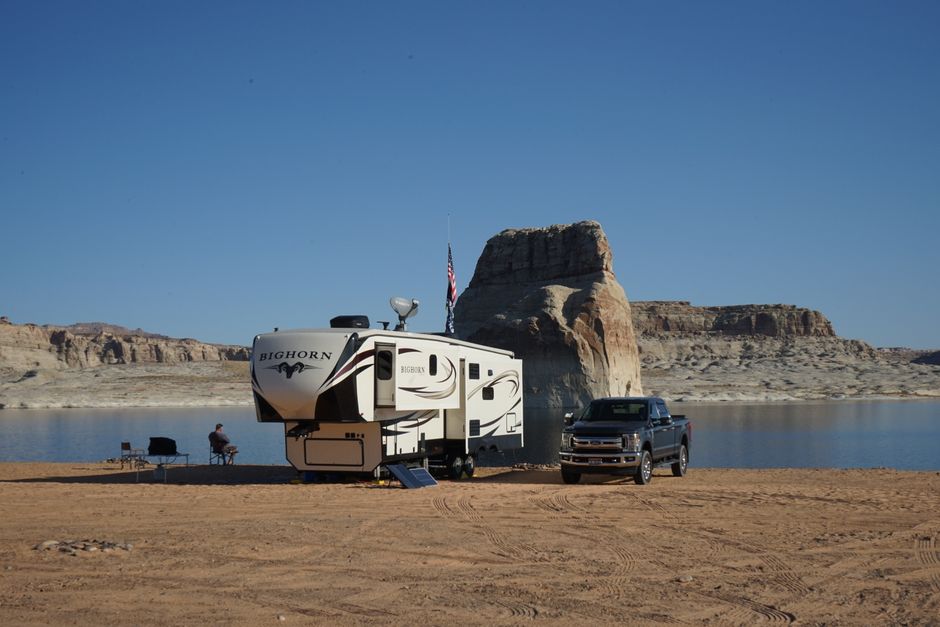
What I’ve learned to actually look for: KOAs are reliably dog-tolerant but hit-or-miss on space. State parks almost always have better natural terrain and room to breathe, though hookups vary. Thousand Trails properties have been unpredictable, some have fantastic dog walks, others are wall-to-wall gravel pads. Corps of Engineers campgrounds are genuinely underrated. Lots of space, actual ground (not asphalt), usually water nearby, and genuinely cheap rates.
Before I book anywhere now, I search Campendium and filter for reviews mentioning pets. Real campers write things like “tiny sites packed together” or “gorgeous nature trails, dogs loved it” and that tells me infinitely more than any website description.
Harvest Hosts membership includes breweries, wineries, farms, and golf courses. A surprising number of them are stellar for dogs. I’ve parked on working farms where Biscuit had an actual field to run in. Worth it if you’re not dependent on hookups.
Breed restrictions are real and worth researching early. Private campgrounds and almost every resort-style RV park has a breed ban list (Pit Bull, Rottweiler, Doberman, the usual suspects). I’ve never had Biscuit flagged, but I know full-timers with mixed breeds who’ve been turned away at the office. Have breed documentation if yours is ambiguous at all.
Managing Vet Care On The Road
This is the one keeping me up at night more than any mechanical failure.
There’s no perfect system here. What I’ve built over eight years is a patchwork that mostly works. I have a home base vet in Denver I try to see twice a year when I loop through Colorado. She knows Biscuit’s full history, maintains her records, and calls prescriptions into pharmacies wherever I happen to be. That relationship took years to build and it’s worth organizing your travel around it.
For everything else I use VetFinder and Banfield’s location search. Banfield is inside every Petsmart, which means they’re everywhere, and their Optimum Wellness Plan (currently $35-55/month depending on tier) covers annual exams and core vaccinations at any location. I’ve used it in seven different states. The care quality varies honestly, but for routine stuff it’s been solid.
Telehealth surprised me with how useful it actually is for non-emergency situations. Dutch and Pawp have both helped me get Biscuit’s anxiety medication prescribed without hunting down a vet in an unfamiliar city at 8pm on Saturday.
Keep printed and digital copies of your dog’s vaccine records, especially rabies. Some states ask. Some campgrounds and boarding facilities won’t budge without proof. I maintain a folder in Google Drive and a laminated card in my glovebox.
Heat, Safety, and the Very Real Problem of Leaving Your Dog in the Rig
7 Things We Wish We Knew BEFORE Starting RV Life FULL-TIME (1 month on the road) · Lloyd & Mandy on YouTube
Summer 2022, parked outside Moab in mid-July, I made the mistake of running to town for 45 minutes with Biscuit inside and my generator running the AC. The generator quit while I was in line at City Market. I got back to find a 95-degree interior and one very distressed dog who turned out fine, but it scared me badly.
Never again.
My current setup includes a dual-zone mini-split (installed by a mobile RV tech) running off shore power. When I’m hooked up, I trust it more than a generator. When I can’t be on hookups, Biscuit comes with me. Full stop. There are temperature monitoring devices that ping your phone if the rig temp spikes. I use a Temp Stick (about $40, connects to wifi). It’s not judgment replacement, but it’s protection.
Hot pavement is something I underestimated for years. Asphalt in a desert campground in July hits 150 degrees. Biscuit has Ruffwear Grip Trex boots (around $65 per set) that she tolerates better than expected. I test pavement with the back of my hand for seven seconds. If I can’t hold it, she gets boots.
Small Space Living and Your Dog’s Sanity (And Yours)
Dogs adapt to small spaces better than people do. What they don’t adapt to is boredom and inconsistent routine.
I keep Biscuit’s feeding times, walk times, and sleep spot locked in no matter where we park. The rig moves. Her schedule doesn’t. That single thing, more than any product or training trick, has kept her calm across eight years and dozens of new places.
I’ve invested in her physical setup though. Her platform bed is built from 2-inch memory foam I sliced from a Sweetnight queen mattress, covered in waterproof fabric. There’s a non-slip mat in front. Her food and water bowls live in a pull-out drawer cabinet I built (poorly, then rebuilt less poorly) so they don’t slide during drives.
A quality dog crate that folds flat is essential even if your dog isn’t a crate dog full-time. My 36" Midwest iCrate handles those moments when I need to kennel Biscuit safely during hitching, unhitching, or when traffic anxiety spikes. It folds flat under my bed when not needed.
Mental stimulation is non-negotiable. Biscuit needs at least 45 minutes of actual movement daily (not just yard sniffing, but trail time or a real walk). On rough weather days she gets a Kong stuffed with frozen peanut butter and I pull out a snuffle mat. Bored dogs in tight spaces become anxious dogs, and anxious dogs make neighbors miserable.
Separation anxiety showed up around year two, probably because we were together 24/7 and she panicked if I wasn’t within 10 feet. A telehealth vet prescribed low-dose Trazodone for high-stress situations (driving through cities, staying somewhere loud). The research on canine anxiety medication is actually solid now. It’s not sedation, it’s edge-removal. Worth discussing with your vet if your dog shows signs.
Gear Worth Having (And Stuff That’s Overpriced Hype)
Sources
- temperature monitoring devices
- quality dog crate
- Flexi retractable leash
- Ruffwear Bivy Bowl
- filtered water solution
Quick take on this since there’s endless garbage marketed at dog-owning RVers.
Worth the money: a good retractable hose with spray nozzle for muddy paws before they track inside (I use a Flexi retractable leash for campground walks, though a standard 6-footer is better for hiking), a hands-free leash for trails so both arms stay free on rocky terrain, the Temp Stick I mentioned, and a proper first aid kit designed for dogs. The Kurgo kit runs about $25 and has saved me from panicking over minor trail injuries repeatedly.
Not worth it in my view: the fancy “dog rooms” some people build into rigs with separate ventilation. Biscuit doesn’t need a room, she needs my presence. The $200+ “travel water systems” are also unnecessary. I use a Ruffwear Bivy Bowl that collapses and clips to a bag. Five dollars’ worth of function at $16.
One thing people skip that they shouldn’t: a filtered water solution for the rig. Campground water quality swings wildly and I give Biscuit the same filtered water I drink. GI upset in a dog while traveling is miserable for everyone involved.
The thing I want people to take away isn’t whether full-timing with a dog is easy or hard. It’s that the challenges are specific and manageable once you understand what they actually are. Heat logistics, vet continuity, anxiety management, finding sites with real space: those are the actual variables. Figure them out before you leave, stay flexible after, and you’ll have a travel companion that makes the whole thing better in ways that are hard to explain to people who haven’t done it.
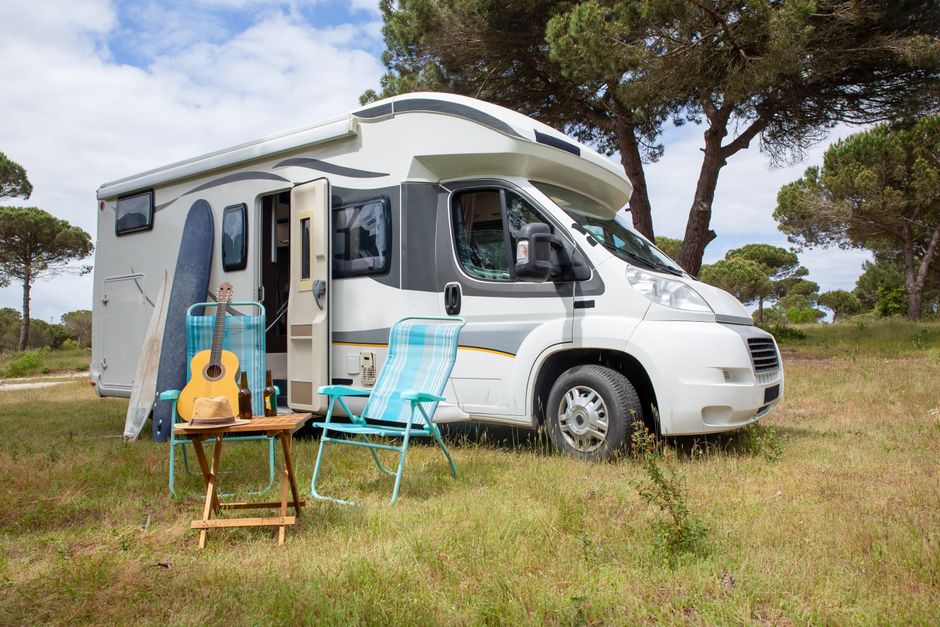
Photo: RDNE Stock project via Pexels