 Greg Hoffman
You’re standing on a dealer lot, coffee going cold in your hand, staring at two rigs that look roughly the same size but cost anywhere from $5,000 to $30,000 apart in price. The salesperson is throwing around words like “pin weight” and “gooseneck adapter” and you’re nodding like you understand. You don’t. Six years ago I was exactly there, and I picked wrong the first time. Here’s what I wish someone had told me before I signed anything.
What Actually Separates These Two Rigs
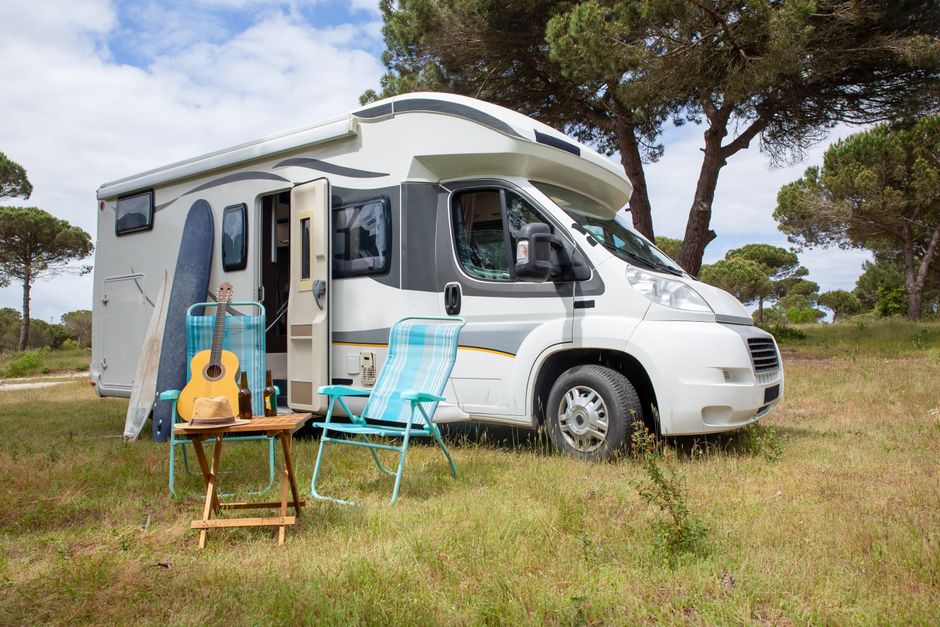
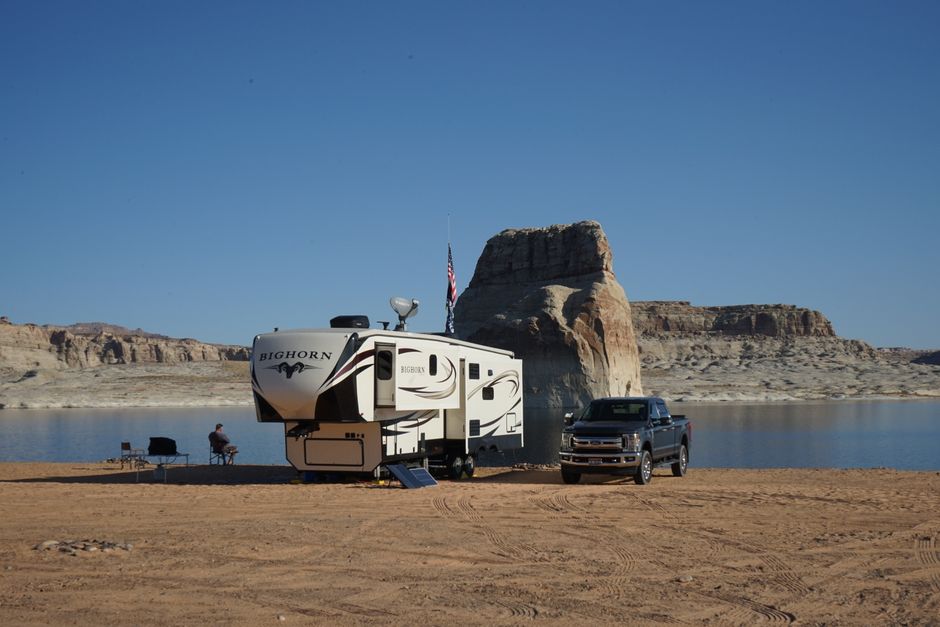
A travel trailer hitches to a ball mount on the back of your tow vehicle. A fifth wheel uses a kingpin that locks into a specialized hitch sitting in the bed of a pickup truck. That one engineering difference changes everything else: cost, towing stability, floor plan options, what truck you need.
Travel trailers are more common. They work with SUVs and half-ton trucks, depending on weight. Fifth wheels require a pickup, full stop. You can’t tow a fifth wheel with an 8,900 lb Tundra if the rig weighs 14,000 lbs loaded. Physics doesn’t negotiate.
Fifth wheels also give you that signature bi-level floor plan. The bedroom sits over the hitch area, which raises the ceiling in your main living space and often adds square footage. Travel trailers are single-level. Neither is objectively better, but they feel completely different to live in.
The Real Cost Breakdown
Real numbers matter because vague ranges don’t help you budget.
An entry-level travel trailer from Keystone Hideout or Coachmen Apex runs $20,000 to $35,000 new. A mid-range fifth wheel like a Grand Design Reflection or Montana starts around $45,000 and climbs past $80,000 without much effort. Used prices shift this, but the ratio stays roughly the same.
Then there’s the hitch hardware. A quality weight-distribution hitch with sway control for a travel trailer runs $400 to $900 installed. A fifth wheel hitch from Reese or B&W costs $900 to $1,800 installed, and you lose significant bed space in your truck permanently (or you pay extra for a sliding model if you have a short-bed pickup).
Here’s where it gets expensive: the tow vehicle itself. Many families already own a half-ton truck or large SUV that can tow 7,000 to 9,000 lbs. Go fifth wheel and you almost always need a three-quarter ton or one-ton truck. That’s diesel in most cases. That’s $55,000 to $90,000 if you’re buying new. Finance that alongside a $60,000 fifth wheel and you’re suddenly looking at a $140,000 commitment before you’ve bought your first box of RV toilet paper.
I’m not saying fifth wheels aren’t worth it. I’m saying go in with open eyes.
Towing Experience and Stability
How to Set Up a Travel Trailer Correctly ➕ Downloadable RV Setup Checklist for Beginners · RV Tips & Travels on YouTube
Here’s where fifth wheels earn their premium for a lot of people. The pin weight, the downward force the trailer puts on your hitch, sits inside the truck bed, forward of the rear axle. That geometry makes fifth wheels significantly more stable. They don’t fishtail the way a travel trailer can in a crosswind or when a semi passes you at 75 mph.
Travel trailer sway is real. It’s scared plenty of new towers out of their minds. A proper weight-distribution hitch and sway control bar help enormously. An electronic brake controller paired with trailer sway control in your tow vehicle makes a difference too. But even with all that, a 40-foot travel trailer on a windy Wyoming highway feels different from a fifth wheel in the same conditions. The fifth wheel just tracks more confidently.
Plenty of people tow heavy travel trailers without incident their entire RV lives. The key is staying within your tow vehicle’s actual ratings, not the “with options” stretch numbers dealers like to quote. Look at the Gross Combined Weight Rating (GCWR) for your specific truck configuration, and don’t let a salesperson wave that away.
Before you buy anything, find your tow vehicle’s Tow Vehicle Buyers Guide on the manufacturer’s website. Ram, Ford, and Chevy all publish detailed towing guides by cab configuration, engine, axle ratio, and trim. It’s a free PDF download and takes 20 minutes to read. Do it.
Floor Plans, Livability, and Full-Time Living
| Factor | Travel Trailer | Fifth Wheel |
|---|---|---|
| Tow vehicle required | SUV, half-ton, or larger | Three-quarter ton or one-ton pickup |
| Average new cost | $20K to $55K | $45K to $100K+ |
| Hitch complexity | Moderate | High (bed mount, short-bed adapter possibly needed) |
| Stability while towing | Good with proper hitch setup | Excellent |
| Floor plan variety | Very wide range | Wide range, typically better separation |
| Ease of hitching up | 15 to 30 minutes for beginners | 5 to 15 minutes once experienced |
| Solo hitching | Challenging without cameras/guides | Easier with practice |
| Usable truck bed space | Full bed available | Significantly reduced |
| Full-time livability | Good to very good | Very good to excellent |
Weekend camping? This matters less. Living in the rig full-time? It matters a lot.
Fifth wheels win on usable space in most floor plans. That raised bedroom creates real separation from the living area, which matters enormously if you’re working from the road, have kids, or simply want privacy at 7 a.m. when your partner is still sleeping. The main living area often gets a higher ceiling, making the space feel less claustrophobic.
Travel trailers have closed the gap with clever layouts. Bunkhouse designs, rear kitchen models, front-bedroom floorplans from Lance and Airstream work remarkably well for couples or solo travelers. Airstream’s 28-foot Interstate-style trailers aren’t cheap, but the build quality and livability are genuinely different from a typical fiberglass-and-staple-gun unit.
Here’s a comparison that might help you think through your situation:
| Factor | Travel Trailer | Fifth Wheel |
|---|---|---|
| Tow vehicle required | SUV, half-ton, or larger | Three-quarter ton or one-ton pickup |
| Average new cost | $20K to $55K | $45K to $100K+ |
| Hitch complexity | Moderate | High (bed mount, short-bed adapter possibly needed) |
| Stability while towing | Good with proper hitch setup | Excellent |
| Floor plan variety | Very wide range | Wide range, typically better separation |
| Ease of hitching up | 15 to 30 minutes for beginners | 5 to 15 minutes once experienced |
| Solo hitching | Challenging without cameras/guides | Easier with practice |
| Usable truck bed space | Full bed available | Significantly reduced |
| Full-time livability | Good to very good | Very good to excellent |
One thing this table can’t show: how hitching feels after 200 repetitions. I’ve talked to full-timers who started with travel trailers and switched to fifth wheels just for the faster hookup, especially when you’re moving every two or three days.
Setup, Maintenance, and What Nobody Warns You About
Both rigs need leveling, slideout maintenance, seal inspections, and the usual RV upkeep. But there are differences worth knowing.
Fifth wheels are heavier. That sounds obvious, but it means roof work and exterior maintenance take more effort. You’re climbing higher to inspect seams. Slide seals on a 38-foot fifth wheel with four slides cost more to replace than those on a 24-foot travel trailer with one.
Leveling is easier on a fifth wheel when the manufacturer includes an auto-leveling system, which many do at the mid-range price point. Plenty of $35,000 travel trailers still come with a stack of Camco leveling blocks and the expectation that you’ll figure it out yourself. (Affiliate link: RV Life & Van Living may earn a commission on purchases.)
Electrical protection matters on both. I always recommend a surge protector like the Progressive Industries EMS models for either rig. A power pedestal can spike or drop voltage and ruin your air conditioner, refrigerator, or converter without warning. It’s a $300 investment that has saved equipment worth thousands more. You can find solid options on Amazon here. (Affiliate link.)
Water quality is another one. Both types benefit from an inline RV water filter at the hookup point. (Affiliate link.) Municipal water supplies vary wildly across regions, and the taste and sediment from some campground spigots will make you wish you’d spent the $30 on a filter.
If you’re going solar, which I’d recommend evaluating for any serious RV use, fifth wheels typically have more roof real estate and better battery compartment space for a larger lithium bank. That’s not a reason to choose one over the other, but it’s worth knowing if off-grid capability matters to you.
How to Actually Decide
Sources
Stop looking at floor plans online and answer these three questions honestly.
What do you already own or plan to buy as a tow vehicle? If you drive a Ford Expedition or a half-ton Ram 1500, you’re probably in travel trailer territory unless you’re budgeting for a new truck. If you already have a diesel F-250 or Ram 2500, a fifth wheel becomes financially reasonable.
How long will you use it at a stretch? Weekend trips and two-week vacations work beautifully in a well-chosen travel trailer. Full-timing for months or years, especially with another person, makes the space separation and stability of a fifth wheel more valuable over time.
What’s your honest budget, all in? Add the rig, the hitch hardware, any tow vehicle upgrade, a surge protector, a water filter, leveling equipment, a battery monitor if you’re going solar, (affiliate link) insurance, and a realistic breakdown fund of at least 10% of the rig’s purchase price for year one. That total number is your real cost. It’s almost always higher than the sticker on the lot.
Nobody tells you before you buy that the first rig is often the learning rig. You figure out what you actually need after six months of living in something that’s almost right. If there’s any way to rent both a fifth wheel and a travel trailer for a few days each before committing, do it. A $400 rental can save you a $15,000 mistake. Take notes. Notice what annoys you at 6 a.m. That’s the stuff that matters.
Photo: Ellie Burgin via Pexels