 Julia Davidson
If you’ve spent three nights wedged between two diesel pushers at a packed campground, paying $65 a night to hear someone else’s generator at 10 PM, you already know why dispersed camping exists. Free land. Wide open. Nobody telling you to quiet down by 9.
But if you’ve never done it before, you’re probably asking the reasonable questions: Where exactly do I park? Is this actually legal? What happens if something goes wrong 40 miles from town? Dispersed camping is one of the best parts of full-time RV life. It’s also one of the easiest ways to get into real trouble unprepared. I want to be honest about both.
What Dispersed Camping Actually Means (and Where You Can Do It)
| Land Type | Stay Limit | Distance from Water | Permit Required | Coverage |
|---|---|---|---|---|
| BLM Land | 14 days, then move 25+ miles | Not typically specified | No | ~245 million acres, mostly western U.S. |
| National Forests | Similar to BLM | 100-200 feet from lakes/streams | No | ~193 million acres across the country |
| State Trust Land | Varies by state | Varies by state | Yes (Arizona ~$15-$20/year) | Varies; some states prohibit public access |
| National Parks | Generally prohibited | N/A | N/A | N/A |
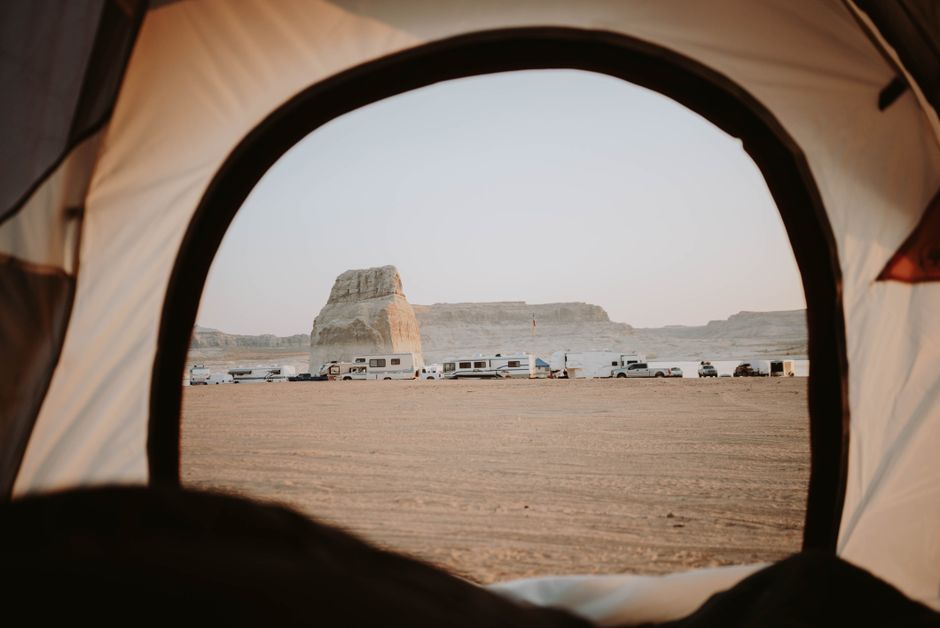
Dispersed camping is camping outside a designated campground on public land, usually managed by the Bureau of Land Management (BLM) or the U.S. Forest Service (USFS). No hookups. No sites. No hosts. You find a flat spot, set up, and you’re on your own.
The first thing people get wrong: not all public land allows it. National Parks almost never do. State parks vary wildly. But BLM land covers roughly 245 million acres mostly in the western U.S., and National Forests add another 193 million acres across the country. Both allow dispersed camping on most of their land with minimal restrictions.
Here’s what I tell newcomers: download the FreeRoam app or onX Offroad before you lose cell range. These show land ownership overlaid on satellite maps. You can see at a glance whether you’re looking at BLM, Forest Service, state, tribal, or private land. I’ve used both for years. They’ve kept me from accidentally camping where I shouldn’t more than once.
A few land types worth knowing:
BLM land is the most permissive. Most areas allow a 14-day stay limit before you must move at least 25 miles. After that, you can find another BLM spot.
National Forests follow similar rules but often have specific zones that restrict camping. Some require you to stay a certain distance from water sources, usually 100 to 200 feet from lakes and streams.
State Trust Land is tricky. Arizona requires an annual permit (around $15 to $20) to camp on state trust land. Other states don’t allow public access at all. Always check before assuming anything.
How to Find a Legit Spot Before You Go
You don’t just drive until something looks good and pull over. Sometimes you do, but you’ll end up with a flat tire on a washed-out road or parked on private land if you wing it completely.
The research phase matters. Here’s how I do it:
Start with the land management agency’s website. BLM field offices publish motor vehicle use maps (MVUMs) for free. These show which roads are open to which vehicle types. If your road isn’t on the MVUM, you shouldn’t be driving it.
Cross-reference with satellite imagery. Google Earth is still one of the best tools here. Zoom into a pull-off and see whether there’s an established fire ring, how flat the ground is, whether the access road looks passable for your rig. I’ve turned around on plenty of roads that looked fine on a map but were clearly rutted out in the satellite view.
Call the local field office if you’re unsure. BLM and Forest Service rangers are generally helpful. They’ll tell you straight if a road works for a 30-foot trailer or if the area has current closures.
Use Campendium and iOverlander apps for user-submitted reviews. Real people describe access road conditions, cell signal, and weather. These age, so check dates, but they’re invaluable.
Check recent fire and flood closures. The western U.S. has had significant wildfire-related closures in recent years. A spot open last summer might be closed now. The USFS InciWeb site tracks active incidents.
What Your Rig Needs to Handle Dispersed Camping
BOONDOCKING 101: Newbie guide to FREE CAMPING · Home A Roam on YouTube
Dispersed camping in a Class A diesel pushing 40 feet and 30,000 pounds is a different conversation than dispersed camping in a Sprinter van. Not impossible for a big rig, but you need to be honest about clearance, turning radius, and your tolerance for backing up on a dirt road.
For most full-timers, here’s what matters:
Water. You’re off-grid. A 40-gallon fresh tank for one person with conservative habits might get 3 to 4 days. A couple using water normally might get 2. Know your tank size and your actual usage, not optimistic usage.
Power. Shore power is gone. Without solar or a generator, you’re living on house batteries, which in stock RVs means 1 to 2 days before things start failing. I run a 400-watt solar setup with a 200Ah lithium battery bank and can stay out indefinitely in sunny weather. A battery monitor is not optional. You need to see your actual state of charge, not just a vague indicator light. (Note: this site may earn a commission on purchases.)
Leveling. Most dispersed sites aren’t level. Bring quality leveling blocks. I’ve used Lynx Levelers for years and they’re the kind of thing you buy once. (This site may earn a commission on purchases.)
Waste. Your black and gray tanks will fill. Know your capacity. Solo I can stretch 5 to 7 days before needing a dump station. Plan your route around one when you break camp.
Surge protection. A quality surge protector matters once you’ve seen what a bad campground pedestal does to an RV’s electrical system. (This site may earn a commission on purchases.)
Drinking water filtration. Some dispersed campers carry a portable water filter or treatment tablets for emergencies. I use a gravity-fed water filter in my bay and drink confidently from campgrounds and water stations. (This site may earn a commission on purchases.)
Leave No Trace: The Rules That Keep Public Land Open
Some areas get closed to dispersed camping. Almost always because people treated them badly. Human waste on the ground. Fire rings in inappropriate places. Trash everywhere. The closures hurt everyone, and they’re preventable.
The seven Leave No Trace principles are the baseline for RV campers:
| Principle | What It Actually Means |
|---|---|
| Plan ahead and prepare | Know regulations before you arrive, not after you’re parked |
| Travel and camp on durable surfaces | Stay on existing pull-offs and established tracks |
| Dispose of waste properly | Pack out all trash, use WAG bags if no dump is nearby |
| Leave what you find | Don’t cut vegetation, don’t move rocks to “improve” the site |
| Minimize campfire impacts | Use existing rings only, no fires in fire-restricted areas |
| Respect wildlife | Store food securely, don’t feed anything |
| Be considerate of others | Give other campers space, especially on quieter roads |
One rule specific to motorized camping: don’t drive off existing tracks to make your own spot. Even desert soil has a biological crust that takes decades to recover from a single tire track.
Safety and Emergency Prep When You’re Truly Off-Grid
Sources
This is the section I wish someone had walked me through seriously in my first year. Being 40 miles from cell signal with a blown tire or a propane leak is different from being 40 miles from signal in a well-stocked, capable camp.
Here’s what my off-grid safety kit includes after 8 years of refining it:
Communication. I carry a Garmin inReach Mini. It costs around $350 plus a $15/month subscription, but it works anywhere on the planet via satellite. You can send SOS messages and two-way texts. This isn’t a luxury for solo campers. It’s insurance.
Medical. A Wilderness First Aid course changed how I think about injuries in remote areas. At minimum, carry a trauma kit beyond band-aids: Israeli bandages, a tourniquet, QuikClot gauze, and a splint. Pre-assembled kits run around $50 to $80 on Amazon.
Vehicle recovery. For van and truck camper folks, a traction board set like MAXTRAX and a high-lift jack are worth their weight. For larger rigs, know your limits and don’t push roads that look marginal.
Copies of your paperwork. Having your MVUMs downloaded offline and your land agency maps saved is genuinely useful if you’re questioned by law enforcement or a ranger.
Weather awareness. Flash flooding is the most underestimated risk in canyon country. If you’re parked in a wash and it rains 30 miles upstream, you may have no warning. Camp above the flood line and know where you’re parked relative to drainages.
Dispersed camping is how full-time RV life stops feeling like just another way to pay for a parking space. The learning curve is real. The preparation takes effort. Yes, you’ll occasionally end up on a road you have no business being on. But the reward, a sunrise over red rock with no neighbors, no generators, no fees, is worth every bit of it. Go slow the first few times. Bring more water than you think you need. Download those offline maps before you lose signal.
Photo: Getty Images