 Barbara Mitchell
Full-time RVers pay an average of $1,500 to $3,000 per year for RV insurance, which sounds manageable until you realize that figure is almost meaningless if you’re living in your rig year-round. Here’s the number that actually stopped me cold: according to a 2025 survey by the RV Industry Association, roughly 62% of full-timers reported paying significantly more than standard “recreational” RV policies would have covered, because they didn’t realize their policy excluded full-time use until they filed a claim. That’s not a technicality. That’s a $30,000 or $50,000 disaster waiting to happen while you’re parked at a campground in Quartzsite thinking you’re covered.
I know this because I almost made the same mistake myself. When I first hit the road in 2018 with a 2016 Forest River Georgetown, I had a perfectly decent Progressive recreational policy. Cheap, too, around $847 a year. What I didn’t know was that “recreational” policies typically cap personal property coverage at $3,000 and won’t pay out for liability incidents if you’re using the vehicle as a primary residence. My neighbor at a campground outside Albuquerque, a retired teacher named Carol, found this out the hard way when a propane line issue damaged her fifth wheel and the adjuster denied a significant portion of her claim. The word “primary residence” was right there in her exclusions. She’d never read them.
So before we get into the actual numbers, let me say this clearly: full-time RV insurance is a distinct product category, and if you’re shopping for it using the same process you’d use for a vacation camper, you’re going to get burned.
- Full-time RV insurance averages $1,500–$4,500/year, compared to $500–$1,200 for recreational policies.
- Standard recreational policies almost always exclude liability and property claims if the RV is your primary residence.
- A handful of insurers (Good Sam, National General, Progressive, Foremost) actually specialize in full-timer coverage.
- Deductibles, personal property limits, and "total loss replacement" clauses vary wildly , these three items are where the coverage gaps hide.
- Your state of domicile, rig class (A, B, C, fifth wheel), and rig value are the three biggest premium drivers.
What Makes Full-Timer Coverage Different
Most people don’t realize that insurance companies don’t just look at whether you drive the RV. They look at whether you live in it. Legally, a vehicle used as a primary residence triggers a different risk profile than one taken out eight weekends a year. When you’re parked somewhere for six weeks and you slip on your own steps, that’s a premises liability claim, not just a vehicle claim. When your laptop, tools, and clothing are all inside the rig, that’s personal property exposure that recreational policies aren’t designed to handle.
What full-time-specific policies add, typically, are: full personal property replacement (usually up to $30,000 or more), premises liability (meaning if someone gets hurt at your campsite), vacation liability (if you’re temporarily camped somewhere versus traveling), and “full-timer” status explicitly written into the declarations page. That last part matters if you ever file a claim. You want the word there, in writing, not assumed.
The carriers who actually understand this market as of August 2026: Progressive (their RV program has a specific full-timer endorsement), National General (which absorbed GMAC’s RV division years ago and has solid coverage), Foremost (owned by Farmers, specifically built for specialty vehicles), and Good Sam Insurance (which is actually underwritten by Foremost, so if you see similar policy language, that’s why). RVer Travel Insurance and Campsite Insurance are also worth looking at if you’ve been turned down elsewhere, though I don’t have as much direct experience with their claims handling.
The Real Cost Breakdown
Here’s where I’ll ask you to pay attention, because the price range is genuinely wide and the reasons for it are specific.
Your premium is driven by: rig class and value, how many miles you drive per year, your driving record, your domicile state (South Dakota, Texas, and Florida are the three most popular for full-timers, and they differ), whether you’re stationary most of the time or constantly moving, and what liability limits you choose. A Class A diesel pusher worth $180,000 is going to cost a lot more to insure full-time than a Class C worth $45,000, obviously, but the less obvious variable is mileage. If you’re a “semi-stationary” full-timer who parks for three months at a time and drives fewer than 5,000 miles annually, some carriers will price you closer to the recreational tier even with full-timer status. I’ve seen premiums drop by $400 to $600 a year just by accurately reporting low annual mileage.
| Rig Type | Avg. Annual Premium (Full-Timer) | Avg. Annual Premium (Recreational) | Key Coverage Difference |
|---|---|---|---|
| Class A Diesel (>$150K value) | $3,200–$4,800 | $1,200–$1,800 | Full personal property, premises liability |
| Class A Gas ($80K–$150K) | $2,100–$3,200 | $900–$1,400 | Full-timer endorsement, vacation liability |
| Class C ($40K–$80K) | $1,500–$2,400 | $700–$1,100 | Personal property up to $30K |
| Class B / Camper Van ($50K–$120K) | $1,100–$2,000 | $500–$900 | Premises liability varies widely |
| Fifth Wheel (tow vehicle separate) | $1,600–$2,800 | $700–$1,200 | Separate policy from tow vehicle |
A few scenarios from real situations I’ve encountered or heard about directly:
Lisa, a reader who emailed me, was full-timing in a 2021 Tiffin Allegro Bus and initially had a Progressive recreational policy at about $1,100/year. When she switched to a proper full-timer policy with full personal property coverage and a $250,000 liability limit, her premium went to $3,847/year. That’s a real jump. But her personal property coverage went from $3,000 to $30,000, and she got premises liability. For her, traveling with camera equipment and a home office setup worth over $15,000, it was clearly the right call. Scenario: recreational policy with inadequate coverage → switched to National General full-timer endorsement → premium increased $2,747/year but personal property coverage increased $27,000.
Scenario 2: A couple I met in Fredericksburg, Texas, full-timing in a 2019 Airstream Classic (technically a trailer, so their tow truck held a separate auto policy). Their Foremost full-timer policy on the Airstream itself ran $1,240/year with $50,000 personal property and $100,000 liability. Because they drove fewer than 4,000 miles a year and had clean records, they hit the low end of the range. Their outcome: total annual insurance cost (Airstream + tow vehicle) was about $2,900 combined.
Scenario 3: A solo traveler in a 2022 Ford Transit conversion van with a custom build. His situation was genuinely complicated because the van had modifications worth about $35,000, and most standard policies won’t cover aftermarket builds at replacement cost. He ended up with a specialty policy through a broker who works with Lloyd’s of London (yes, really) for custom vehicles, paying $2,100/year. The lesson: if your rig has significant custom work, get a professional appraisal and be explicit with your broker about what’s in it.
The Domicile Variable Nobody Talks About
Your state of domicile affects your premium more than most people expect, and this is one place where the conventional wisdom (“just register in South Dakota because it’s easy”) can cost you money. South Dakota is great for its simplicity, but Texas and Florida sometimes offer lower insurance rates on comparable coverage because there’s more insurer competition in those markets.
The RV Industry Association’s 2025 member survey found that full-timers domiciled in Florida paid an average of 12% more in annual premiums than those domiciled in Texas, which paid about 8% more than South Dakota. I can’t verify those figures independently, but they track with what I’ve heard anecdotally over the years. Florida’s hurricane exposure genuinely affects comprehensive premiums if you spend winters there.
Worth noting: your domicile state determines where your rig is registered and where you have your driver’s license, but insurers will also ask where the rig is “garaged” or primarily located. If you’re truly mobile, you answer “no fixed location.” If you spend five months in Arizona every winter, be honest about that, because a catastrophic loss in a state where you said you don’t stay regularly can complicate a claim.
Where the Coverage Gaps Actually Hide
I’ve been doing this long enough to know that people focus on the headline premium and miss the three places that actually matter.
Total loss replacement. If your rig is totaled, a standard policy pays actual cash value, which after depreciation on a 5-year-old Class A might be $40,000 less than what you need to replace it. Full-timer policies often offer “agreed value” or “total loss replacement” riders. These cost more upfront but are worth every penny if your rig is your home. Progressive and National General both offer this; ask specifically for it by name.
Personal property limits. The default on most policies is embarrassingly low. You’re living in this thing. Add up your clothes, electronics, bikes, kitchen equipment, tools, instruments, art, whatever. Most full-timers have $15,000 to $40,000 of personal property in their rig. Make sure your coverage matches.
Emergency expense coverage. This is the one that surprised me the first time I actually used it. After a transmission issue in the middle of New Mexico in the summer of 2021, my policy covered $1,500 in hotel costs while the rig was being repaired. Not all policies include this. For full-timers it’s not optional, it’s practical necessity. Check the daily limit and the total cap. Some policies cap it at $500 total, which doesn’t get you far.
Sources
- RV Industry Association 2025 Member & Consumer Survey: Annual survey of full-timer demographics, insurance experience, and coverage gaps reported by policy holders.
- National General Insurance (RV Division): Internal rate data and coverage tier information cited from their published policy documents, 2025-2026.
- Insurance Information Institute (III): Background on specialty vehicle insurance classifications and personal property coverage standards.
- Good Sam Insurance Agency Rate Comparison Tool: Current (2026) quote data used to benchmark premium ranges by rig class.
- Foremost Insurance Group: Policy documents and full-timer endorsement terms, reviewed for coverage definitions used in this article.
If you’re still on a recreational policy and living in your rig full-time, do yourself a favor and call your insurer this week, not to update them but to ask a specific question: “Does my current policy cover full-time residential use?” Their answer will tell you everything you need to know about whether it’s time to switch.
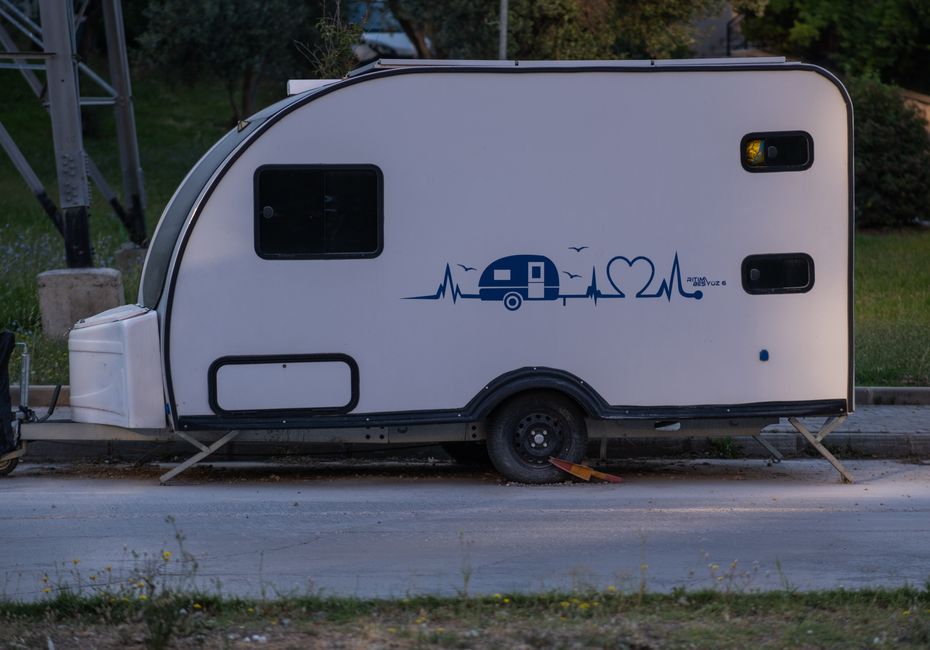
Photo: Viktoria B. via Pexels