 Sandra Park
You probably already have one of these apps open in another tab. Maybe you’re parked somewhere with spotty signal, trying to figure out where you’re sleeping tomorrow night, and someone in a Facebook group told you to “just use Campendium” while someone else swore by Freecampsites. Now you’re wondering which one to actually trust.
Here’s what I tell people who ask me this: use both, but understand what each one is actually good at, because they are not the same tool doing the same job. I’ve been full-timing since 2018 and I’ve used both platforms in real conditions, not just poked around them on a laptop at a coffee shop. There’s a meaningful difference between what these apps do well, and picking the wrong one for the wrong situation has cost me a wasted drive or two.
The short version is that Campendium skews toward reviews and context, while Freecampsites skews toward sheer volume and coordinates. Both are free at the basic level. Neither is perfect.
- Campendium offers richer reviews and filter options; Freecampsites has more raw listings, especially dispersed BLM spots.
- Both platforms are free to use; Campendium Pro costs $29.99/year and unlocks offline maps and advanced filters.
- Freecampsites pulls listings from multiple sources and currently shows over 60,000 sites across North America.
- For trip planning at home, Campendium wins. For finding a spot tonight in the desert, Freecampsites often has the edge.
- Neither replaces a current Motor Vehicle Use Map from the Forest Service for true dispersed camping navigation.
What Each Platform Actually Is
Campendium started as a review site, and that DNA is still visible in how it’s structured. Each listing has a comments section that can get genuinely detailed: cell signal by carrier (Verizon vs. AT&T vs. T-Mobile, sometimes with actual bar counts), whether the site flooded after rain, what the hosts are like, whether the dump station is functional. The community that uses Campendium tends to skew toward full-timers and long-term travelers, which means the reviews often address the stuff that matters to us specifically. Not “beautiful views!” but “we had 5 bars of Verizon in site 14 but nothing in site 22.”
Freecampsites.net is a different beast. It aggregates listings from a lot of sources, including user submissions, and the result is a database that’s enormous but uneven in quality. You’ll find spots on Freecampsites that aren’t on Campendium at all, particularly for primitive dispersed camping on BLM land in the Southwest. The tradeoff is that some listings are sparse: a pin on a map, maybe one review from 2019, no signal info, no recent updates. You’re trusting your gut and the coordinates.
Both platforms run on user-contributed data, which means they’re only as good as their communities. That’s not a flaw so much as a reality to plan around.
The Filter Problem (And Why It Matters More Than You Think)
I used to underestimate filters. Then I spent a winter with a 34-foot Class A and learned the hard way that “free campsite” means nothing if the road in is a quarter mile of loose sand that’ll swallow your rear wheels. Campendium lets you filter by rig length, hookups, road conditions, whether pets are allowed, cell signal quality, and a handful of other useful categories. Freecampsites has filters too, but they’re blunter. You can filter by type (BLM, national forest, state, etc.) and a few amenities, but the granularity isn’t there.
Here’s the real-world difference: if you’re 40 feet long with slides out, Campendium’s length filter will save you from at least some bad decisions. Freecampsites will give you more spots to look at, but you’ll be doing more of the vetting yourself.
One thing that only becomes obvious after you’ve used both for a while: Campendium’s reviews tend to be more recent. The platform seems to have a more active user base that returns to update listings. Freecampsites has a lot of older reviews that were accurate in 2021 but may not reflect a site that’s since been gated, regraded, or temporarily closed.
Head-to-Head: What the Numbers Look Like
As of July 2026, here’s how the two platforms compare on the specs that actually affect your day-to-day:
| Feature | Campendium | Freecampsites |
|---|---|---|
| Total listings (North America) | ~30,000+ | ~60,000+ |
| Paid tier | Pro: $29.99/year | None |
| Offline maps | Yes (Pro only) | Yes (app, free) |
| Cell signal info by carrier | Yes (detailed) | Rarely |
| Review recency / activity | Higher | More variable |
| BLM dispersed site coverage | Good | Excellent |
| Rig-length filter | Yes | No |
| iOS / Android app | Both | Both |
| Trip planning / route tools | Yes (Pro) | Basic |
| Photo quality & quantity | Higher average | Lower average |
The listing count difference is real and matters. If you camp a lot on BLM land in Nevada, Utah, or the Arizona strip, you will find spots on Freecampsites that simply aren’t in Campendium’s database. That gap has narrowed over the past couple of years as Campendium has grown, but it’s not gone.
Who Should Pay for Campendium Pro?
Honestly, the $29.99/year is easy to justify if you’re full-timing or even doing 60+ nights a year on the road. The offline maps alone are worth it. I’ve been in enough dead zones where having saved maps meant the difference between finding camp before dark and doing a white-knuckle turnaround on a dirt road at dusk. The trip-planning tools are decent for sketching out a rough route with overnight options flagged along the way.
If you’re doing a couple of trips a year and mostly sticking to established campgrounds, you probably don’t need Pro. The free version of Campendium covers a lot of ground.
Freecampsites’ app is free with no tiered features, which is genuinely refreshing. Their business model relies on donations and minimal ads. It works.
How I Actually Use Them Together
My workflow, for what it’s worth: trip planning at home is mostly Campendium. I’ll look at a route, check reviews on potential overnight stops, filter by rig length and signal needs, and make a shortlist. I save the ones I’m serious about.
Then I’ve got Freecampsites open on my phone as a backup layer, especially when I’m in the desert Southwest. The scenario goes like this: I’m planning to overnight at a spot I found on Campendium, I get there, and there’s a fire closure or the site’s packed with a hunting camp. I open Freecampsites, zoom into the surrounding area, and look for dispersed options within five miles. That’s where its density pays off. The pin might be sparse on details, but I can cross-reference with the satellite layer and make a judgment call.
Worked example: In March 2025, I was working my way through southern Utah and planned a two-night stop near the Escalante area using a Campendium-vetted BLM spot. Got there to find it still snow-covered and inaccessible. Freecampsites showed me three alternative pins within eight miles. Two were junk (old listings, no road access visible on satellite), but the third put me on a beautiful bench with a clear approach. Total detour: about 40 minutes. Without Freecampsites, I’d have been driving to the nearest RV park.
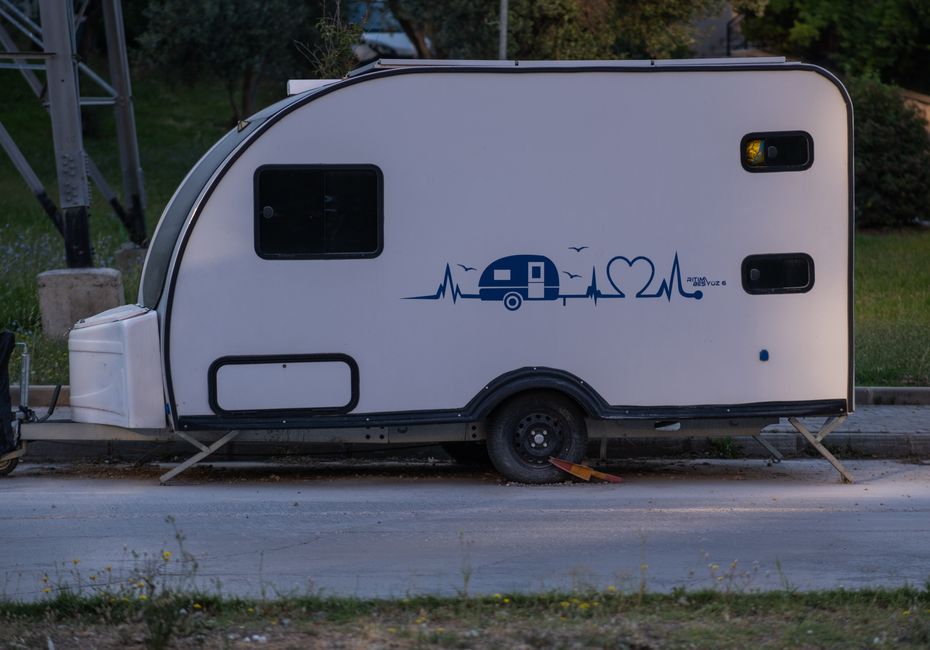
Second example: A reader named Marcus from Tucson emailed me earlier this year asking why he kept finding “better” spots on Freecampsites that Campendium didn’t show. His situation: full-timing in a Jeep-pulled teardrop, so road quality was basically irrelevant to him. For a small trailer person, the volume advantage of Freecampsites is proportionally bigger, because you can access spots that a 30-footer can’t touch. His rig opened up the long tail of Freecampsites’ database in a way mine can’t. So his answer was different from mine.
Sources
- Campendium: Platform stats, feature documentation, and subscription pricing current as of July 2026.
- Freecampsites.net: Listing totals and feature set, verified July 2026.
- BLM Recreation: Official BLM dispersed camping guidelines and Motor Vehicle Use Map resources.
- USFS Motor Vehicle Use Maps: Forest Service official maps for motorized access on National Forest lands.
- The Dyrt: Competing platform often mentioned in comparisons; useful benchmark for understanding how review-based models vary.
Photo: Kampus Production via Pexels