 Julia Davidson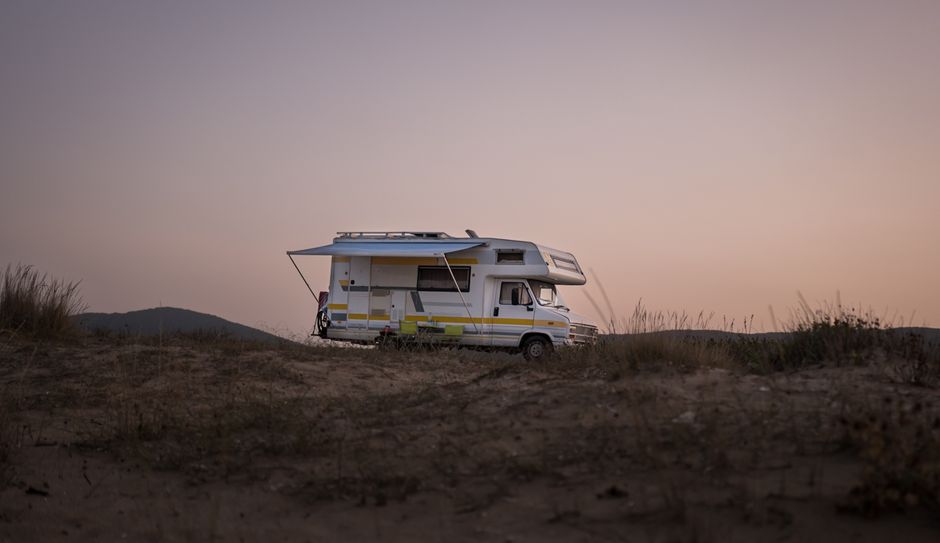
Most full-timers I know spent more time researching their first RV than they did picking their domicile state. That’s backwards. The RV is just a depreciating asset. Your domicile state is going to follow you everywhere, show up on your insurance premiums, your vehicle registration renewals, your tax returns, and your health insurance options, for as long as you’re on the road. Get it wrong and you’ll feel it in your wallet for years.
I made exactly this mistake myself. When I went full-time in early 2018, I kept my California domicile out of inertia and spent the better part of two years paying California income tax on freelance work, California vehicle registration fees, and California health insurance premiums that assumed I lived within 90 miles of a network provider. By the time I finally made the switch to South Dakota, I was spending an estimated $4,200 more per year than I needed to. That number still makes me wince.
What most people don’t realize is that the “big three” domicile states for RVers aren’t interchangeable. Texas, South Dakota, and Florida each have genuinely different strengths and genuine drawbacks that will matter differently depending on whether you’re retired, self-employed, working remotely for a company, or running a business. Let me walk you through what I’ve actually found over eight years on the road.
- South Dakota, Texas, and Florida are the top three domicile states for full-time RVers; all three have no state income tax.
- South Dakota requires the shortest in-person visit (as little as one overnight) to establish domicile.
- Texas vehicle registration costs vary by county and weight class but typically run $150-$225/year for a Class A.
- Florida's no-fault insurance requirements can significantly raise auto insurance premiums compared to SD or TX.
- Mail forwarding services in each state (like America's Mailbox in SD or Escapees in TX) handle the paperwork for roughly $200-$300/year.
Why Domicile Matters More Than You Think
Your domicile isn’t just where you register your RV. It determines your state income tax liability, which state’s DMV rules apply to your vehicle, where you vote, where you serve jury duty, and critically, which state’s insurance regulations govern your health and auto coverage. Some states are trying harder than others to claim you as a resident even if you’re only there a few weeks a year, so the domicile you choose needs to be legally defensible.
The IRS and state revenue departments do occasionally audit full-timers who claim domicile in a no-income-tax state while appearing to spend significant time in a high-tax one. I’m not trying to scare you. I’m telling you that “domicile” requires actual intent, actual documentation (a real mailing address, a state ID or driver’s license, vehicle registration, voter registration), and ideally a genuine connection to that state. All three of the main RVer domicile states make that connection easy to establish and maintain.
The Big Three: A Real Comparison
Here’s where I’ll cut straight to the comparison you came for, because the details matter and they change often enough that you want current numbers. As of July 2026, this is how the three states stack up on the metrics that actually affect your daily life.
| Factor | South Dakota | Texas | Florida |
|---|---|---|---|
| State income tax | None | None | None |
| Vehicle registration (Class A, est.) | $135-$175/yr | $150-$225/yr | $225-$400/yr |
| Initial visit required | 1 overnight | 1-2 days (county specific) | 1 day |
| Driver’s license renewal | By mail or online | In person every 8 yrs | Online options available |
| Voter registration | Yes, easily | Yes, easily | Yes, easily |
| Health insurance ACA marketplace | Moderate options | Good options | Good options |
| Liability insurance climate | Favorable | Moderate | High (no-fault state) |
| Mail forwarding services | America’s Mailbox, DakotaPost | Escapees (Livingston TX), My Dakota Address | Traveling Mailbox (multi-state) |
| Annual mail service cost (est.) | $175-$250 | $180-$295 | $150-$300 |
A few things jump out of that table that don’t get discussed enough. Florida’s no-fault insurance requirement is a real gotcha. When I’ve talked to full-timers who’ve switched from South Dakota to Florida, the first thing they mention is that their auto insurance jumped noticeably, often $300-$500 per year, because Florida’s PIP (Personal Injury Protection) requirement and its higher fraud-related rate environment push premiums up. That’s not a reason to automatically rule out Florida, but it’s a number to factor in.
South Dakota: The One I’d Recommend to Most People
I’ll commit to an opinion here: for most full-timers, especially those who are self-employed, remote workers, or freelancers, South Dakota is the strongest choice. The reasons are practical, not sentimental.
The domicile establishment process is the most streamlined of any state I know of. You can fly or drive to Sioux Falls, spend one night at a campground or motel, visit the DMV, get your driver’s license and vehicle registration handled in a single day, and leave. America’s Mailbox in Box Elder, South Dakota (right outside Rapid City) and My Dakota Address will accept your mail, scan it, forward it, and provide you a real street address, not a P.O. Box, which matters for your license paperwork. The fee runs around $195-$240 per year depending on the service level you pick.
What I didn’t expect the first time I went through the South Dakota process was how quick the DMV line actually moves. It’s not like a California DMV. You show up, take a number, and you’re typically done in under an hour. The clerk will ask you to confirm your mailing address is a physical street address, not a P.O. Box, so have that ready. They’ve clearly processed a lot of RVers and aren’t confused by the situation.
South Dakota also has no vehicle inspection requirement. For anyone running an older rig, that matters.
The one weakness: South Dakota’s ACA marketplace health insurance options are thinner than Texas or Florida, especially if you’re under 65 and not yet on Medicare. I don’t have good numbers on exactly how much thinner, because plan availability shifts annually, but I’ve heard from multiple readers who found the premium-to-coverage ratio frustrating when compared to TX or FL options. If health insurance is your primary concern, check the marketplace before you commit.
Texas: The Escapees Ecosystem
Texas has one significant thing South Dakota doesn’t: Escapees RV Club is headquartered in Livingston, Texas, and they’ve been handling RVer domicile establishment there for decades. If you’re already an Escapees member (and if you’re full-timing and not a member yet, join, it costs $69 a year and the resources are worth triple that), the domicile setup process through Livingston is well-documented and well-supported.
The scenario that makes Texas particularly attractive: retired full-timer with a good pension or investment income, decent health needs, and already an Escapees member. No state income tax on that pension, strong ACA options, and the Escapees community in Livingston is genuinely useful for everything from mail to technical RV questions.
Texas vehicle registration is a little more complicated than South Dakota’s. Registration costs depend on county and vehicle weight class, and some Texas counties have emissions inspection requirements. Polk County (where Livingston sits) does not require emissions inspection, which is why Escapees uses that address. Scenario: a reader named Marcus, who drives a 2017 Tiffin Allegro Bus, told me his Polk County registration runs him $187/year. He set up his domicile through Escapees in a single two-day trip from his previous Arizona domicile.
Texas also makes driver’s license renewal a bit more involved than South Dakota over the long term. Texas requires in-person renewal every eight years, where South Dakota allows renewals by mail. That matters when you’re traveling full-time and trying to minimize mandatory return trips.
Florida: Best for Specific Situations
Florida is genuinely good for one particular group: RVers who spend significant time in Florida anyway, especially snowbirds or people with family there. The domicile establishment isn’t hard, the no-income-tax benefit is real, and if you’re already physically in the state a couple months a year, it makes legal sense to have your domicile match your reality.
The auto insurance premium issue is real and worth budgeting for. Florida’s PIP requirement and the overall insurance cost climate there mean you’ll likely pay more for comparable coverage than you would in South Dakota. I’ve seen estimates ranging from $200 to $600 more annually depending on your rig size and driving record, though those figures are self-reported from forums and I’d treat them as directional, not precise.
Florida’s DMV is also, in my experience and in stories I’ve heard, more variable in terms of how easy the domicile process goes. Unlike South Dakota, where the DMV seems accustomed to this, some Florida DMV offices have required additional documentation or seemed unfamiliar with the full-timer situation. Bring everything: mail forwarding service confirmation, campground receipt showing a Florida overnight stay, and your existing vehicle title.
Making the Switch: What the Process Actually Looks Like
If you’re currently domiciled somewhere that doesn’t make sense (like I was with California), here’s what the transition actually requires. I’ll walk through the South Dakota version since that’s the one I’ve done.
Step one: set up a mail forwarding address before you go. Contact America’s Mailbox or My Dakota Address, sign up, pay the annual fee, and get your physical street address. You’ll need this address for the DMV paperwork.
Step two: plan your Sioux Falls or Rapid City trip. One overnight is technically sufficient. Book a campground or motel and keep the receipt, because that’s your proof of South Dakota residency.
Step three: visit the DMV with your current license, your vehicle title, proof of insurance (which you’ll need to update to reflect your new SD address before the visit), and your mail forwarding address. If your vehicle is financed, the lender will need to update the lienholder address too, and that takes a few weeks, so start that conversation early.
Step four: update your voter registration. South Dakota has simple online options for this.
Step five: notify your health insurance provider, your bank, your accountant, and any state tax authorities where you previously held residency.
The whole process took me about three days including travel, and the SD DMV part was about 45 minutes. The California residency termination paperwork was honestly the most annoying part.
Sources
- South Dakota Department of Revenue: Official vehicle registration fee schedules and driver’s license renewal requirements.
- Escapees RV Club (2026): Member resources on Texas domicile establishment through Livingston, TX. Available at escapees.com.
- Florida Department of Highway Safety and Motor Vehicles: Florida registration costs, PIP requirements, and domicile documentation guidance.
- Workamper News & RVillage community forums: Member-reported annual cost data for registration and mail services across SD, TX, and FL, aggregated 2025-2026.
- IRS Publication 555 / state residency audit guidelines: Documentation standards for establishing legal domicile in a state different from a taxpayer’s prior residence.
One last thing worth saying: there’s no single right answer here, and I’d be skeptical of anyone who tells you otherwise without knowing your specific income situation, health needs, and travel patterns. The three states I’ve covered here are genuinely the best options for most full-timers, but “most” isn’t “all.” If you’re a W-2 employee with a company that only has operations in one high-tax state, talk to a tax attorney before assuming a domicile switch solves everything. Get the advice dialed in before you make the drive to Sioux Falls.
(This article contains affiliate links. The site may earn a small commission if you purchase through them, at no extra cost to you.)
Photo: Simeon Stoilov via Pexels