 Greg Hoffman
The day we signed the title on our 38-foot fifth wheel, I was convinced we’d made the perfect choice. Eighteen months later, we sold it at a $14,000 loss and bought something completely different. If someone had told me the truth about full-time RV selection before we started, I would have saved that money, avoided a blown tire on I-40 outside Amarillo, and skipped approximately 200 arguments about slide-room maintenance. So let me be that person for you.
What “Full-Time Living” Actually Demands From an RV
This is where most people go wrong. They shop for an RV like they’re buying a vacation toy, not a primary residence that will be driven on rough roads, parked in extreme heat, occupied 24 hours a day, and expected to handle electrical loads that a weekend camper never sees.
A rig that works beautifully for two-week summer trips will quietly fall apart under full-time conditions. Slide room seals dry out faster. Water lines stress more. Holding tanks fill up in two days instead of two weeks. Appliances that are rated for “occasional use” become daily appliances. I’ve watched people buy gorgeous Class A coaches with stunning residential kitchens, only to discover that the cabinetry is stapled together with material that swells and warps after six months of humidity changes.
Before you look at a single floor plan, answer three questions honestly:
- How many people are living in this rig permanently?
- Do you work remotely and need a dedicated workspace?
- Are you staying put in RV parks, or moving frequently (boondocking, work camping, state parks)?
Your answers to those three questions should eliminate at least half the options on any dealer lot.
The Main RV Types for Full-Timers: A Honest Breakdown
Class A Motorhome (Gas or Diesel)
These are the big bus-style rigs. Diesel pushers, which are Class A coaches with the engine in the rear, typically start around $100,000 used and go up from there. They offer the most residential feel: full-size refrigerators, washer/dryer combos, king beds, living room space that doesn’t feel like a penalty box.
The catch is real, though. You’re looking at fuel economy of 7-10 mpg if you’re lucky, expensive repairs when something fails (and something always fails), and a learning curve on driving that takes most people about 3,000 miles to feel comfortable. Towing a car behind a Class A adds cost, complexity, and another thing to maintain.
Fifth Wheels
After our experience, I’ll be direct: fifth wheels are probably the best value for couples or small families who want residential space. You get the most square footage per dollar, the bedroom over the hitch pin gives you actual separation from the living area, and modern fifth wheels can be genuinely comfortable. The trade-off is that you need a capable truck to pull one, which means owning two vehicles and managing the fuel costs of a half-ton or three-quarter-ton diesel.
A used 2018-2020 Keystone Montana or Grand Design Reflection will run you $35,000 to $55,000 in decent condition. Grand Design in particular has a reputation for building quality that holds up better than average under full-time use, though no RV manufacturer is going to win awards for construction standards compared to a stick-built home.
Class C Motorhomes
The cab-over style rigs built on a van or truck chassis. More maneuverable than a Class A, easier to drive, often more affordable. But that cab-over sleeping area collects every bit of heat when it’s 95 degrees outside, and the floor plans can feel cramped for full-timing after a few months.
For solo travelers or couples who prioritize drivability and want something under $60,000, a used Class C from Coachmen or Winnebago is worth serious consideration.
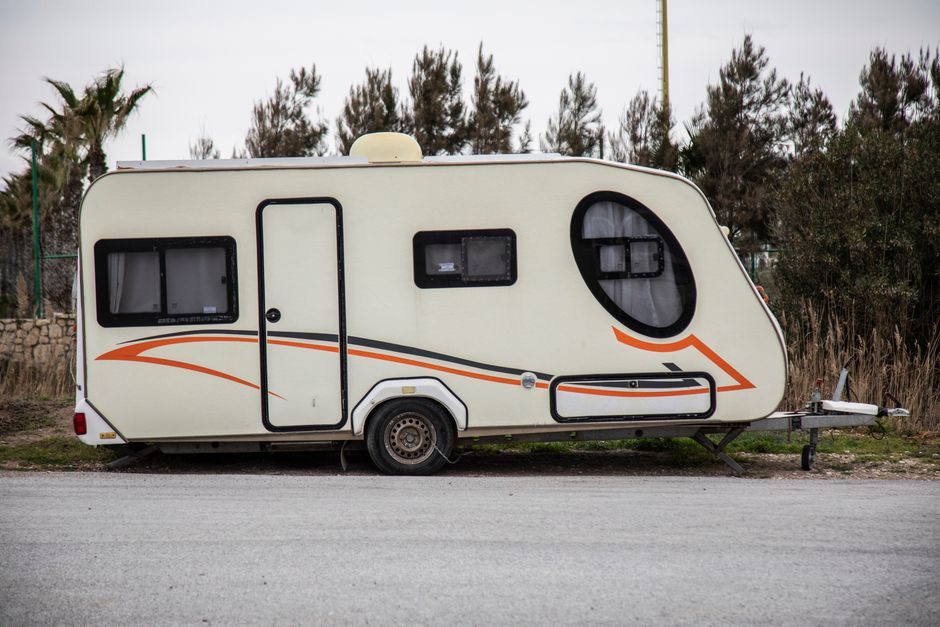
These get overlooked by full-timers who think bigger is automatically better. Don’t make that mistake. A 28-32 foot travel trailer from Airstream or Oliver Travel Trailers is built to a quality standard that the rest of the industry doesn’t touch. The Airstream Classic runs $90,000+ new, but resale value is nearly unmatched and the aluminum construction handles full-time use in a way that most fiberglass-and-staple-gun trailers do not.
For budget-conscious full-timers, a travel trailer under 30 feet towed by a mid-size truck can cut your fuel costs substantially compared to pulling a large fifth wheel.
I’ll mention these because they’re real options for solo travelers willing to trade space for flexibility. A professionally built Sprinter van conversion runs $60,000 to $100,000. A DIY build can be done for $15,000-$25,000 if you have skills and time. You won’t have a bathroom most full-timers would recognize, but you can park almost anywhere, your fuel costs are manageable, and stealth camping in cities becomes possible. This is a genuinely different lifestyle than traditional RVing, and it’s not for everyone.
A Side-by-Side Comparison for Full-Time Use
RV LIVING FOR BEGINNERS - The RV Basics You Should Know! · HappilyEverHanks on YouTube
| Type | Avg. Used Price | MPG | Full-Time Comfort | Best For |
|---|---|---|---|---|
| Class A Diesel Pusher | $80,000-$150,000 | 7-10 | Excellent | Couples, luxury seekers |
| Class A Gas | $40,000-$90,000 | 8-12 | Very Good | Budget-conscious couples |
| Fifth Wheel | $30,000-$70,000 | Truck dependent | Excellent | Families, remote workers |
| Class C | $35,000-$75,000 | 10-14 | Good | Solo/couples, ease of driving |
| Travel Trailer | $20,000-$95,000 | Truck dependent | Good to Excellent | Flexibility seekers |
| Van Conversion | $15,000-$100,000 | 18-25 | Minimal | Solo adventurers |
| Type | Avg. Used Price | MPG | Full-Time Comfort | Best For |
|---|---|---|---|---|
| Class A Diesel Pusher | $80,000-$150,000 | 7-10 | Excellent | Couples, luxury seekers |
| Class A Gas | $40,000-$90,000 | 8-12 | Very Good | Budget-conscious couples |
| Fifth Wheel | $30,000-$70,000 | Truck dependent | Excellent | Families, remote workers |
| Class C | $35,000-$75,000 | 10-14 | Good | Solo/couples, ease of driving |
| Travel Trailer | $20,000-$95,000 | Truck dependent | Good to Excellent | Flexibility seekers |
| Van Conversion | $15,000-$100,000 | 18-25 | Minimal | Solo adventurers |
These are ballpark figures for used rigs in reasonable condition. The market shifts constantly, and 2023-2024 saw post-pandemic depreciation bring prices down meaningfully from the 2021 peak.
The Systems That Actually Make or Break Full-Time Living
Forget the floor plan for a minute. The systems inside your rig determine whether full-time living is pleasant or miserable.
Electrical
A weekend RV might have one 100-watt solar panel and a single Group 27 lead-acid battery. That setup will last about four hours of real use before you’re sitting in the dark. For full-time living, especially if you work remotely, you need a minimum of 300 watts of solar and 200 amp-hours of lithium battery capacity. That’s a modest setup. Most serious full-timers run 600-800 watts of solar and 300+ amp-hours of Battle Born or Renogy lithium batteries.
Whatever you buy, get a battery monitor installed. A Victron BMV-712 gives you real-time state of charge, consumption data, and will tell you exactly when you’re going to run out of power before it becomes an emergency. (This site may earn a commission on qualifying purchases.)
Shore Power Protection
Every time you plug into a campground pedestal, you’re trusting that the park’s wiring is safe and the voltage is consistent. It often isn’t. A 30-amp or 50-amp surge protector is not optional equipment for full-timers. I’ve personally seen air conditioners fry from low voltage situations at state parks. A Progressive Industries EMS runs around $300 to $400 and has paid for itself twice over in my experience.
Water Quality
Municipal water quality varies wildly across North America. In some areas of the Southwest, the water coming through your hose will leave mineral deposits in your pipes within weeks. An inline water filter at the connection point is a $20 to $40 investment that protects your water heater, your ice maker if you have one, and your health. I use a Camco TastePURE with a secondary sediment filter and have for years.
Leveling
If you’re not level, you’re not sleeping well. Your refrigerator may not function correctly, and your slide rooms won’t seal evenly. Automatic leveling jacks are worth their weight on larger rigs. For trailers and smaller units, Lynx leveling blocks are inexpensive, stackable, and far more reliable than the wooden boards I used the first year.
What to Look for When Inspecting a Used RV
Sources
Never buy a used full-timer without doing these steps, in this order:
- Get a professional RV inspection. NRVIA-certified inspectors charge $300 to $500 and will find things you can’t. This is non-negotiable.
- Check every slide room seal by running your hand along the interior edge after it’s extended. Feel for drafts or moisture. Look at the ceiling above each slide for water stains.
- Run the air conditioner for 30 full minutes. If it struggles or trips a breaker, expect a $700 to $1,500 repair.
- Fill and dump the holding tanks. Gray and black tank sensors fail constantly on used rigs. Watch for slow draining.
- Check all exterior seams with a flashlight. Delamination, which is when the outer wall separates from the inner structure, is expensive and sometimes unfixable. Look for soft spots along the walls and roof.
- Test the generator under load. Turn on the AC, the microwave, and the slide room simultaneously. If the generator hesitates or cuts out, budget for a rebuild or replacement.
Six years and 90,000 miles later, I don’t have a perfect RV to recommend, because the right answer genuinely depends on your life. What I can tell you is that the full-timers I’ve met who are still doing this happily after several years all have one thing in common: they made their choice based on how they actually live, not the fantasy version they saw in someone’s Instagram feed. Take your time, ask hard questions, hire an inspector, and budget for the unexpected. The sunsets really are that good. Just go in with your eyes open.
Photo: Viktoria B. via Pexels