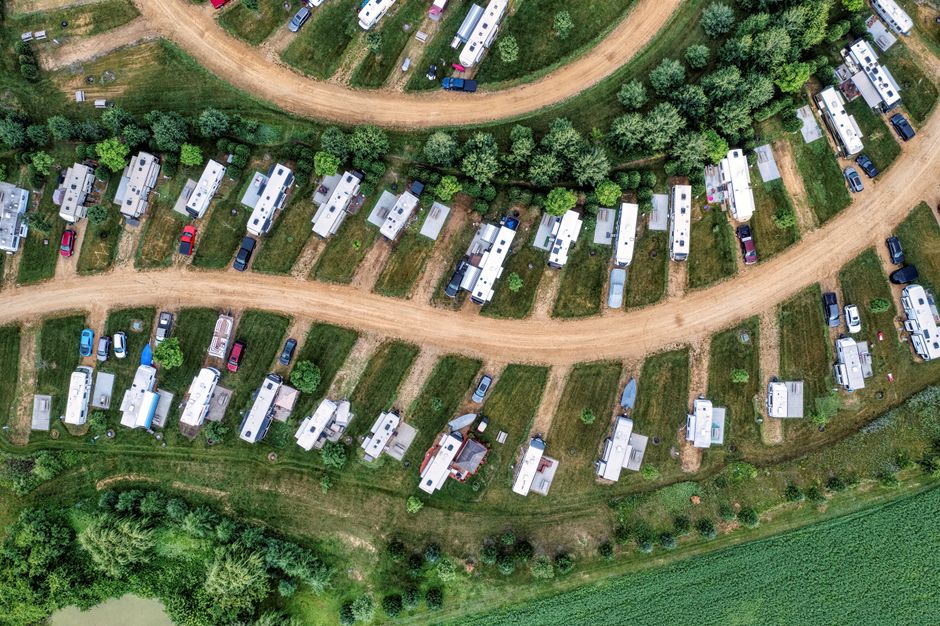
I’ve spent somewhere around $40,000 on campground fees over eight years on the road. That number made me want to lie down when I actually calculated it. And the honest part? A big chunk of that was paid before I figured out which memberships were actually worth buying and which ones were just well-marketed money traps.
Here’s what nobody tells you upfront: the RV membership game is complicated, the savings are real but context-dependent, and if you camp less than 60 nights a year, most of the premium programs won’t pay off. Let me walk you through what I’ve actually used, what broke my heart, and what I’d buy again tomorrow.
Use these annual camping night thresholds to determine which memberships will actually save you money based on your travel style.
| Membership | Annual Cost | Typical Savings Per Night | Break-Even Nights | Best For |
|---|---|---|---|---|
| Passport America | $44 | $15-$25 (50% off avg $30-$50 sites) | 2-3 nights | Any camper; lowest risk entry point |
| Good Sam Club | $29-$79 (tier-dependent) | $3-$6 (10% off at participating parks) | 5-26 nights | Fuel/retail discounts add value beyond camping |
| Thousand Trails Zone Pass | $600-$700 | $30-$45 (free nights vs avg private park) | 15-23 nights | Regional campers staying 2+ weeks per zone |
| Thousand Trails Elite (resale) | $3,000-$8,000 + $550-$700/yr dues | $35-$50 per night | 60-80 nights in year one; 12-20 thereafter | Full-timers committed to TT network |
| Harvest Hosts | $99-$179 | $25-$40 (free overnight vs budget campground) | 3-7 nights | Self-contained rigs; unique experiences over amenities |
| Boondockers Welcome | $79 | $25-$35 (free private driveways) | 2-4 nights | Flexible travelers comfortable with host interactions |
| Escapees RV Club | $50 | $5-$15 (network discounts + mail service value) | 4-10 nights | Full-timers needing domicile/mail forwarding |
General information for comparison, confirm specifics for your situation.
Passport America: The One Most People Overlook
Half-price camping sounds too good to be true. With Passport America, it mostly isn’t. You pay $44 per year (as of 2024) and get 50% off nightly rates at around 1,900 campgrounds across the U.S., Canada, and Mexico. The restrictions are real: most parks limit you to two or three consecutive nights at the discount rate, and a handful of higher-demand parks black out summer weekends. But if you’re moving frequently, which is the actual lifestyle, those restrictions rarely matter.
My first year with Passport America, I broke even in two nights. Two. I used it at a Gulf Coast park in Mississippi that normally ran $48/night and paid $24. That’s a $44 membership paid off in one weekend stop.
The directory does have some stinkers. You’ll find a few parks that are, generously speaking, not quite matching their listing photos. My process now is cross-referencing Passport America parks with Google Maps satellite view and recent reviews before booking. But the network has genuinely improved over the last four years. The $44 price point makes it the lowest-risk membership buy in this entire space. I’d tell any full-timer to grab this before anything else.
Thousand Trails: Where It Gets Complicated
Thousand Trails generates more confused questions in RV Facebook groups than anything else in this category, and honestly, the confusion is earned. The pricing structure keeps changing, the resale market for old memberships is its own rabbit hole, and the experience varies wildly from park to park.
Currently, their Zone Passes start around $545/year for a single zone (about 20 parks) and go up to $845/year for Elite membership covering 90+ parks nationwide. You can stay up to 14 consecutive days, then you’re out for a week before returning to the same park.
Whether it works depends almost entirely on your travel patterns. If you’re a westerner spending time near their Pacific or Southwest Zone parks, the math is beautiful. Seven nights at their Lake Minden park in California would normally cost $50-70/night. Seven nights there and your annual fee is paid. But if you’re roaming the Southeast away from their clusters, you’ll drive out of your way to justify the cost and still come up short.
What caught me off guard was how much quality varies property to property. Their Soledad Canyon park in California is legitimately beautiful. Some Midwest locations feel like they haven’t seen a capital improvement since 2003. Check Campendium ratings for each property, don’t trust the Thousand Trails website photos.
Here’s where I push back on conventional wisdom: the resale membership angle is worth exploring. Older Thousand Trails memberships from before their corporate restructuring pop up on eBay and RV forums for $200-400 and sometimes include perks the current products don’t. I have a friend who bought a legacy membership for $250 that gives her essentially unlimited camping across the full network with no blackout dates. That market’s thinning as old memberships expire, but if you’re patient and do the research, it exists.
Harvest Hosts and Boondockers Welcome: A Different Category Entirely
These two don’t compete with Passport America or Thousand Trails because they’re solving a completely different problem: camping in interesting places without paying for a hookup site you don’t need.
Harvest Hosts ($99/year, though promos run around $79 fairly often) connects self-contained RVers with wineries, breweries, farms, golf courses, and museums that let you park overnight for free if you buy something. I’ve stayed at a sheep farm in Virginia, a lavender farm in Oregon, and three wineries in Sonoma County. None of those nights cost me anything beyond a $25 bottle of wine I wanted anyway.
The catch: you need self-containment. No hookups, no dump stations on-site. If you’re running a 40-foot diesel pusher with three air conditioners, skip it. For Class B rigs, small Class C, or van conversions, it’s one of the best $99 spends you’ll make.
Boondockers Welcome ($50/year) works differently: you’re parking in driveways or private land from other RVers who’ve opened their spots. Stays are genuinely free. The community is generous. I’ve used it 15 times and had one awkward experience (overly hands-on host). The other 14 were excellent. It’s now merged with Harvest Hosts. You can buy both together for around $119, which is a no-brainer.
Escapees and Good Sam: The Practical Reality
Good Sam gets pushed hard because Camping World has a financial incentive. The membership (price varies from $29-$79 depending on tier) gives you 10% off at Camping World and supposedly 10% at affiliated parks. Here’s the truth: the park discounts get inconsistently honored, and many parks in their network are already charging $65-75/night for gravel and 30-amp power. I’ve had Good Sam for years, mostly out of habit and the occasional urgent Camping World parts run. If you’re not buying gear regularly there, the math doesn’t work.
Escapees RV Club ($49/year) is better. The discount network overlaps some Good Sam parks but includes independent parks that are usually better maintained. More importantly, Escapees is an actual community organization. Their SKP parks (member-owned co-ops in a handful of states) are excellent long-term options for full-timers. The mail forwarding service at around $165/year is one of the best-reviewed options if you need a permanent address. The membership opens doors beyond campsite discounts.
Boondocking and the Apps That Cost Nothing (Almost)
I’d be doing you a disservice if I only talked about paid memberships without mentioning free or nearly-free options that sometimes beat every paid program.
BLM and National Forest land in the western U.S. is free camping, no membership required. I’ve spent months on BLM land in Arizona, Utah, and Nevada without paying a single campsite fee. The Dyrt Pro ($35.99/year) and iOverlander (free) are apps that map dispersed camping with user reviews and GPS coordinates. The Pro version adds offline maps, crucial when you’re in the desert with no signal.
FreeCampsites.net is free and surprisingly comprehensive, though comments sometimes get stale.
None of this replaces a good membership if you want hookups or amenities. But if your rig can handle boondocking, BLM knowledge plus a $35 app subscription will outperform a $500 membership nine times out of ten.
Building a Stack That Actually Works
Sources
- you still need one of those
- Tom Fisk
- by Membership Type (2024 Rates)
Membership Annua My current setup, refined over three years: Passport America ($44), Harvest Hosts + Boondockers Welcome bundle ($119), and Escapees ($49). Total: $212/year. I dropped Thousand Trails after year two because my route didn’t justify it. Good Sam stays only for occasional Camping World parts runs.
That $212 stack probably saves me $3,000-4,000 annually compared to paying full rates at comparable parks. My camping costs now run around $400-500 per month, down from $900+ when I was paying rack rates everywhere with no system.
The key is matching memberships to your actual travel pattern, not the imaginary one you picture during a sales pitch or watching a YouTube video of a beautiful California property. Pull up your last 12 months of camping locations, map them, and see which membership networks actually cover where you go.
The $212 I spend on memberships every year is the best-returning line item in my entire RV budget. Better than solar upgrades, better than the fancy surge protector (though you still need one of those, an unprotected rig is a bad day waiting to happen). Get the basics dialed in, map them to your real route, and you’ll stop paying rack rates for the rest of your time on the road.
(This article contains affiliate links. RV Life & Van Living may earn a commission on qualifying purchases at no extra cost to you.)
Photo: Tom Fisk via Pexels
Note: This site shares personal experience and general research. Campground availability, road restrictions, vehicle requirements, and costs vary significantly. Always verify specifics for your route, rig, and situation.Frequently Asked Questions
Is Thousand Trails worth buying for full-timers?
It depends entirely on your travel geography. If you camp frequently in the Pacific Northwest, California, the Southwest, or the mid-Atlantic corridor where they have strong park clusters, it's an excellent value. If you roam widely across the South and Midwest, you'll struggle to justify the annual fee. Map their parks against your actual routes before committing.
Can I use multiple RV memberships at the same time?
Yes, and you should. Most experienced full-timers stack two or three memberships because they cover different park networks. Passport America and Thousand Trails don't significantly overlap, so using both makes sense if your camping volume supports it. There's no conflict between any of the major programs.
Does Passport America work at KOA campgrounds?
No. KOA runs its own loyalty program (KOA Rewards, $30/year), which gives 10% off at their locations. Passport America and KOA are entirely separate networks. If you stay at KOA frequently, their program is worth having, though I'll be honest, the price-per-night at KOA even after a 10% discount is rarely the best value on the market.
What's the best membership for occasional RVers who only camp 20-30 nights per year?
At that volume, Passport America is probably the only one that makes mathematical sense. Harvest Hosts could also work well if you're self-contained and enjoy unique stops. Skip Thousand Trails entirely unless you can identify specific parks you'll use repeatedly.
Are any of these memberships transferable if I sell my RV?
Some are, some aren't. Good Sam is tied to a person, not a rig. Thousand Trails memberships can sometimes be transferred depending on the membership type; the older legacy memberships are transferable and actually sell on eBay. Passport America is personal. Always check the transfer policy before buying, especially for anything over $200, because a non-transferable membership is a real hit when you're changing rigs or leaving the lifestyle.
 🎧Try Audible Free →Turn long drives into learning time — try Audible free8 hours on the road is 8 hours of audiobooks. Audible's library covers travel memoirs, van life stories, outdoor skills, and thousands more.
Related Articles
Full Hookup vs Partial: $240 Monthly Difference Explained
3 min read
Pebble Flow Hits 100 Units: What Real Owners Are Reporting
3 min read
RV Maintenance Budget: What to Plan Annually
3 min read
400,000 Boondocking Spots: iOverlander vs Campendium
3 min read
One Year In: What Pebble Flow Owners Have Actually Learned
3 min read
RV Black Tank Sensor Not Working: Fixes and Replacements
3 min readThis article was produced with assistance from AI tools and reviewed by Julia Davidson.
Was this helpful?Have a question about this guide?Ask Julia directly. Reader questions shape our updates and future articles.
Get useful guides in your inbox
Practical, research-backed. No spam. Unsubscribe anytime.
Recommended Products
Top PickCamco Heavy Duty RV Leveling Blocks 10-PackInterlocking yellow leveling blocks rated for single and dual wheels, hydraulic jacks, and tandem axles.
Check Price on Amazon Best ValuePower Watchdog Smart RV Surge Protector 30 AmpBluetooth-connected surge protector monitors voltage, amperage, and wattage in real time to protect your RV.
Check Price on Amazon Also GreatTireMinder i10 RV TPMS with 4 TransmittersColor-display tire pressure monitoring system that tracks up to 10 RV tires simultaneously.
Check Price on AmazonAs an Amazon Associate we earn from qualifying purchases.