 Tony Reeves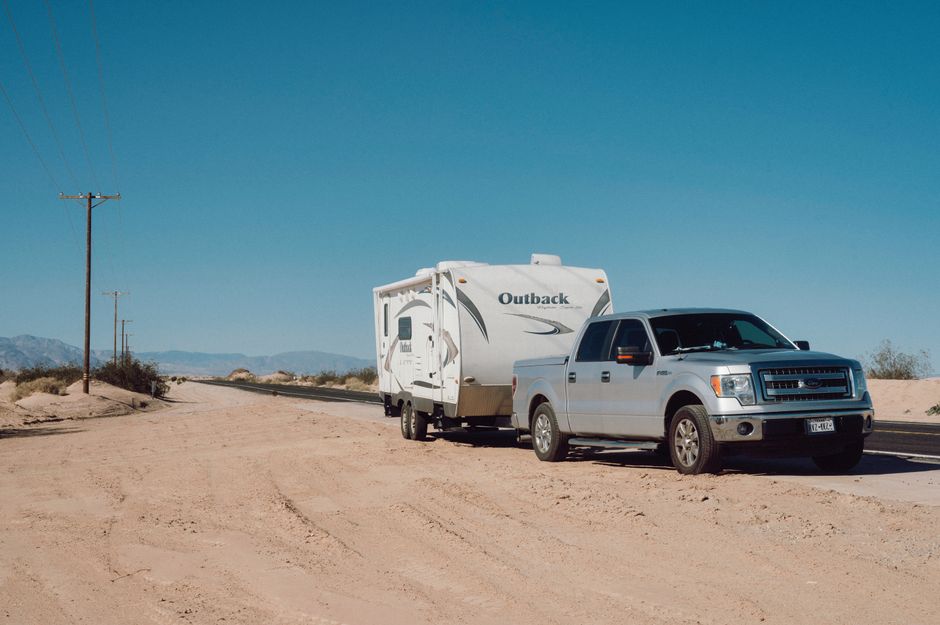
Free camping on BLM land changed my financial picture in a way I didn’t fully anticipate when I first hit the road. My first full year out west, I spent maybe $340 total on campground fees. That’s not a typo. The rest of the time I was on Bureau of Land Management land, mostly for free, mostly alone, mostly in places that looked like screensavers.
But here’s what I tell people who are just starting to research this: the hardest part isn’t finding BLM land. There’s something like 245 million acres of it spread across twelve western states. The hardest part is knowing which BLM land is worth your time, which spots require a permit or have a 14-day limit you need to actually respect, and how to find the places that aren’t already overrun by the weekend warriors who discovered dispersed camping on TikTok circa 2021. That’s what this article is really about.
Use this matrix to match popular BLM areas with your rig setup, season, and priorities.
| Location | Best Season | Cost | 14-Day Limit? | Cell Signal | Rig Clearance Needed | Crowd Level (1-5) | Best For |
|---|---|---|---|---|---|---|---|
| Quartzsite, AZ (La Posa LTVA) | Oct-Nov, Mar-Apr | $40/14 days or $180/season | No (with permit) | Strong (Verizon/AT&T) | Low clearance OK | 5 (peak), 2 (shoulder) | Long-term stays, solar charging, community |
| Quartzsite, AZ (free zones) | Oct-Nov, Mar-Apr | Free | Yes (14 days) | Moderate | Low clearance OK | 4 (peak), 2 (shoulder) | Short stays, budget priority |
| Moab, UT (Hwy 128 corridor) | Apr-May, Sep-Oct | Free | Yes (14 days) | Weak to none | High clearance helpful | 4 | Red rock scenery, hiking access |
| Moab, UT (south toward Monticello) | May-Jun, Sep-Oct | Free | Yes (14 days) | Weak | High clearance recommended | 1 | Solitude, longer dispersed stays |
| Escalante, UT (Hole-in-the-Rock Rd) | Apr-May, Sep-Oct | Free | Yes (14 days) | None to weak | High clearance required | 2 | Remote canyon access, photography |
| Ely, NV (surrounding BLM) | May-Oct | Free | Yes (14 days) | Moderate near town | Low clearance OK | 1 | Dark skies, true isolation |
| Alabama Hills, CA | Mar-May, Oct-Nov | Free | Yes (14 days) | Moderate | Low clearance OK | 3 | Sierra views, photography, rock formations |
| Sedona, AZ (Forest Rd 525 area) | Mar-May, Oct-Nov | Free | Yes (14 days) | Moderate | High clearance required | 3 | Red rock proximity, hiking |
General information for comparison, confirm specifics for your situation.
The Areas That Actually Deliver, Consistently
I’m going to give you specific places because vague recommendations are useless. “BLM land in Utah” tells you nothing.
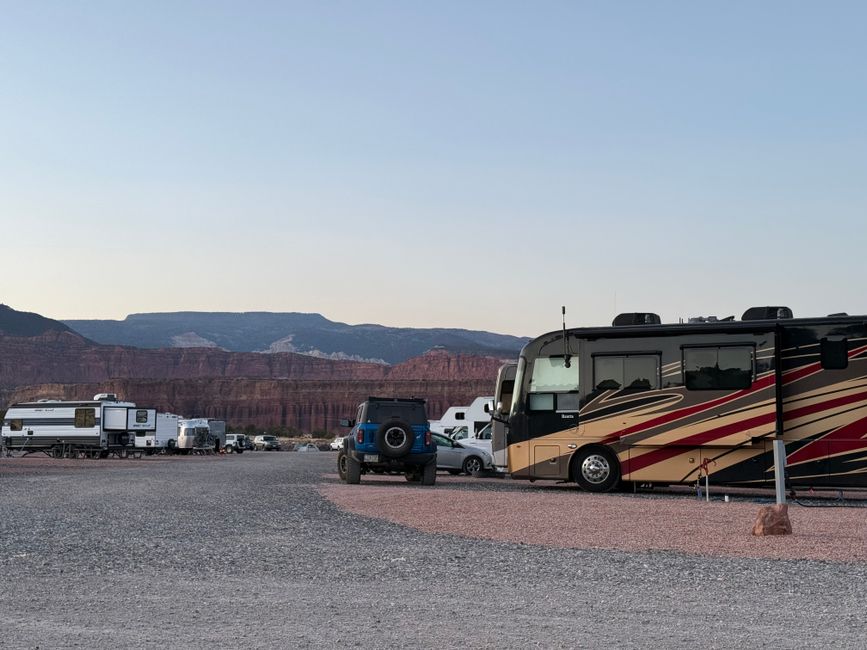
Quartzsite, Arizona. Every serious full-timer already knows about this one. January and February are absolutely packed, which is why I almost didn’t include it. But here’s the thing: step outside that window and it transforms completely. The La Posa Long Term Visitor Area (LTVA) offers a $180 seasonal permit (September 15 through April 15) or $40 for 14 days, which is absurdly cheap. Go in October or late March and you’ll have expanses of flat desert, near-perfect solar charging conditions, and maybe 40 neighbors instead of 4,000. The free zones surrounding the LTVA work too if you want to stick to the 14-day rhythm.
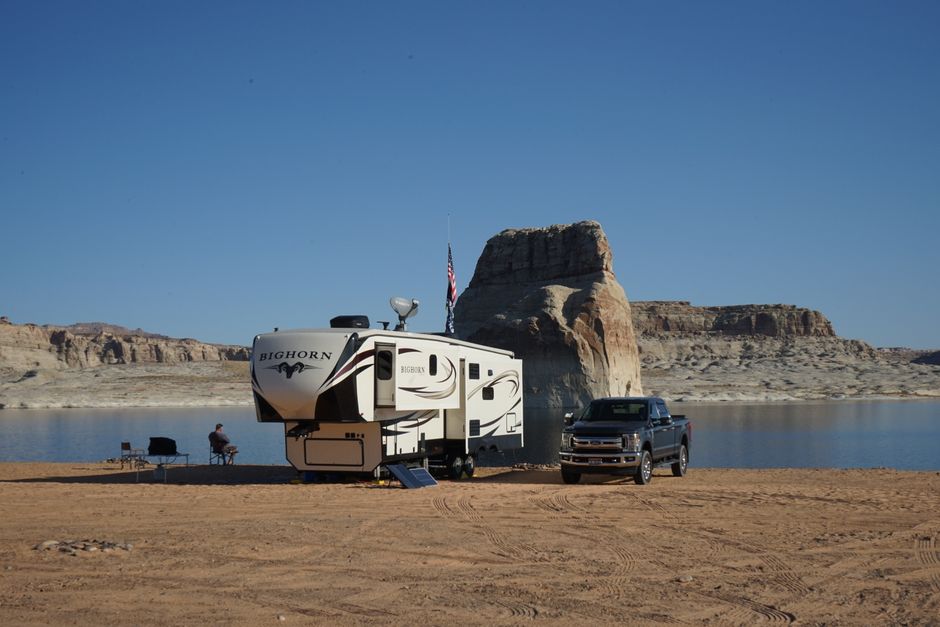
Moab, Utah area. The BLM land here is some of the most dramatic in the country. The problem is knowing where to look. Highway 128 north of town, especially around Hittle Bottom, fills up fast. Most people stop there and call it good. What they miss is heading south on Highway 191 toward Monticello, where you hit the Manti-La Sal National Forest transition zones and BLM parcels that barely get any traffic. I spent three weeks near there in fall 2020 without seeing another rig most days.
Escalante, Utah and the Grand Staircase. This is my personal favorite BLM region in the country. Full stop. The Grand Staircase-Escalante National Monument has millions of acres of dispersed camping, the roads require a high-clearance vehicle, and the scenery is the kind of thing that makes you feel like you’re dreaming. Hole-in-the-Rock Road is accessible to most rigs with decent clearance in dry conditions. Cottonwood Canyon Road is tougher. Check road conditions at the Kanab or Escalante visitor centers before you commit.
Nevada’s Basin and Range. I have a soft spot for the high desert of central Nevada, partly because almost nobody goes there. Highway 50, which Life magazine once called “the loneliest road in America,” has BLM land stretching in every direction for hundreds of miles. Near Austin, Nevada, you can set up for free with views that go to the horizon and cell service that’s exactly as bad as you’d want it to be. If you’re the kind of person who needs to truly decompress, this is your place.
The Owens Valley, California. Bishop is one of the best-positioned boondocking towns in the West. The BLM land east of the Sierra Nevada is stunning, the altitude is manageable (most spots sit around 4,000 to 5,000 feet), and you’re close enough to Bishop to resupply easily. The area around Horton Creek and Millpond is popular but has enough dispersed space that you can usually find solitude within a mile of the main cluster. Water is the limiting factor here, so plan accordingly.
How to Actually Find the Good Spots (Not Just the Famous Ones)
You might be wondering how people find the unmarked, word-of-mouth spots. Here’s the honest answer: a few specific tools and some actual legwork.
The BLM’s own maps are a starting point, but they’re dense and not always current. What I use almost every day on the road is Gaia GPS paired with the BLM surface management layer. This combination shows you exact land ownership boundaries, so you know you’re actually on BLM land and not accidentally on private or state-managed property. The overlap happens more than you’d think. A Gaia subscription runs about $40 a year and has saved me from several bad situations.
iOverlander and FreeRoam are both useful crowd-sourced apps, but take the reviews with some skepticism. A spot described as “totally isolated” in 2019 might be a well-worn gathering spot now. I use them for general area research, then find my own spot by driving around with the Gaia layer running.
The other thing that actually works: talking to people at the BLM field offices. I know this sounds old-fashioned. But I’ve gotten some of my all-time best spots from BLM rangers who were genuinely happy to point me toward areas that weren’t overloaded. The Kanab, Utah field office people in particular have always been helpful. They can tell you current road conditions and whether there are any temporary closures for wildlife or fire risk.
One practical thing: bookmark the BLM’s LandMapper tool online. It’s clunky, but it’s official, and it’ll show you current permit and fee requirements by area. Rules change. An area that was free in 2021 might now require a recreation pass. Always verify before you drive four hours into the desert.
What Your Rig Actually Needs (And What People Underestimate)
BOONDOCKING 101: Newbie guide to FREE CAMPING · Home A Roam on YouTube
Boondocking on BLM land is not the same as pulling into a KOA with full hookups. I’ve watched people arrive at dispersed camping areas completely unprepared and have terrible experiences, then blame “boondocking” when really they just weren’t set up for it.
Water is number one. You need to know your tank capacity and your actual daily usage, not the theoretical number. My 40-gallon fresh tank lasts me about five days if I’m being careful. Three days if I’m not. If you’re somewhere like the Escalante or central Nevada, the nearest potable water fill might be 60 miles away. Plan like you’re going to need more than you think.
Power is next. Solar is not optional if you want to stay more than two nights without running a generator. I run a 400-watt panel setup with a 200Ah lithium battery bank (I use a Renogy 200Ah LiFePO4, which runs around $500), and I monitor it constantly with a Victron BMV-712 battery monitor. Worth every penny at about $90. You cannot manage what you can’t see. A lot of people show up with one 100W panel and a lead-acid battery and wonder why they’re running their generator by day three.
Road access is the thing that catches people off guard most. “High-clearance recommended” is not a suggestion. I drive a half-ton pickup with my trailer and I’ve still had moments on Cottonwood Canyon Road and parts of the Escalante region where I thought carefully about whether I was making a mistake. If you’re in a Class A motorhome or a large fifth wheel with limited clearance, you will be limited to the more accessible BLM areas. Stick to areas like Quartzsite, the Owens Valley, or the flatlands east of Moab where the roads are graded regularly.
Leveling blocks are something you absolutely need in the desert where pullouts are almost never flat. I’ve used Camco Tri-Leveler blocks for years. They stack, they’re cheap (around $25 for a set), and they’ve never failed me. Pair them with a surge protector if you’re occasionally mixing in campgrounds between your boondocking stretches. The Camco leveling blocks and a Progressive Industries EMS surge protector are two products I genuinely can’t imagine being without. (Disclosure: the site may earn a commission on purchases through those links.)
The 14-Day Rule and How to Move Smart
Sources
- Camco leveling blocks
- Progressive Industries EMS surge protector
- Alfo Medeiros
- this: the hardest part isn’t finding BLM land
BLM land has a standard 14-day stay limit in most areas. After that, you’re required to move at least 25 miles before returning to the same area. Most people know this rule. Fewer people follow it.
What experienced boondockers do is string together a circuit of BLM areas that let them move every two weeks without ever paying for a campsite. My standard fall circuit in the Southwest covers spots near Moab, the Escalante, the Kanab area, and finally down to the Sonoran Desert near Ajo, Arizona, before looping up through the Owens Valley in spring. You’re covering ground, but you’re not running aimlessly. Each spot has something specific to offer at a specific time of year.
The 14-day limit is enforced more actively in some areas than others. I’m not suggesting you ignore it. What I am saying is that the BLM does periodic sweeps in popular areas, and if you’re clearly camped in the same spot past day 14 with no intention of moving, you can get cited. In less-traveled areas like central Nevada or parts of southeastern Utah, the enforcement pressure is lower, but the rule still exists.
Eight years in, I still get that specific feeling when I pull off a graded dirt road, kill the engine, and realize there’s no one for miles. It never really gets old. The West has more of this than most people realize, and most of it is sitting there waiting, completely free, for people who know how to find it.
Photo: Alfo Medeiros via Pexels